 By st20113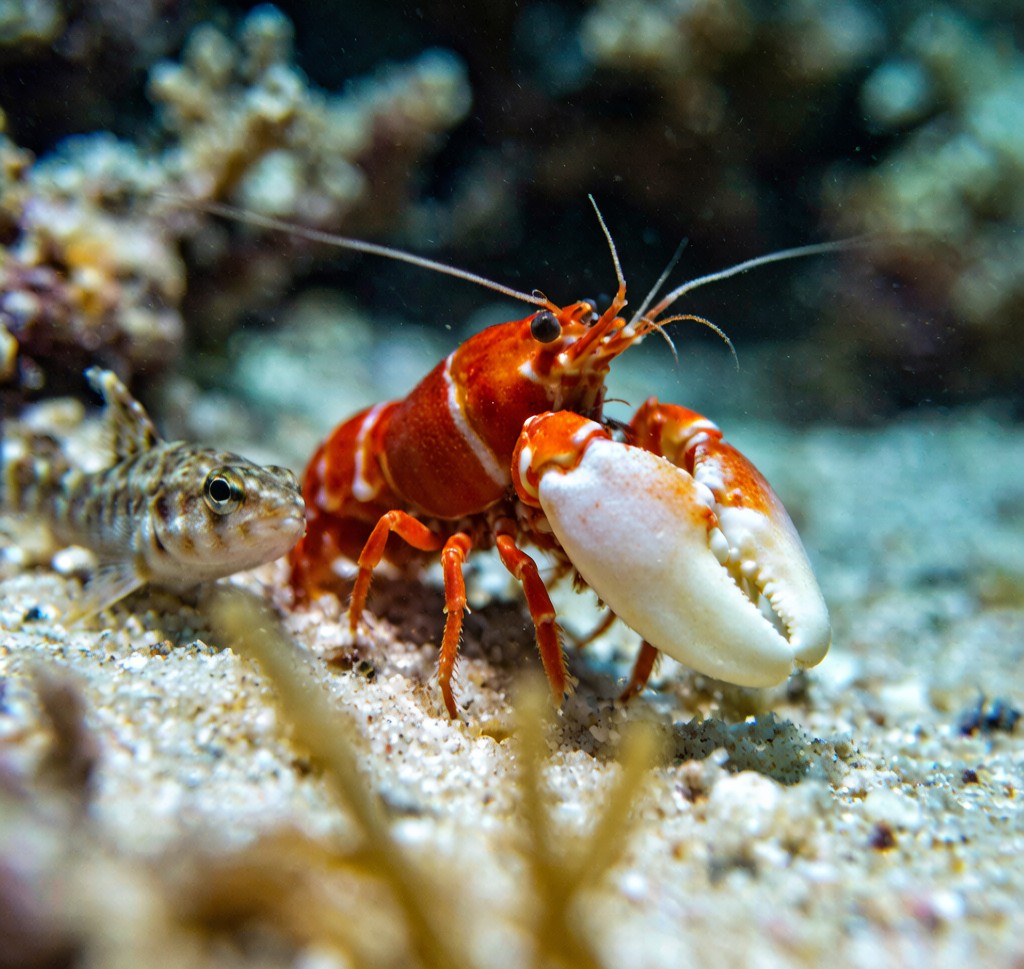
Overview
The Pistol Shrimp (family Alpheidae) is one of the most remarkable and unusual creatures in the ocean – a small, colorful shrimp that is capable of producing one of the loudest sounds in the marine world through a biological mechanism that is unique in the animal kingdom. Found in tropical and temperate oceans worldwide, from shallow coral reefs to deep-water sandy bottoms, pistol shrimp are characterized by a single massively enlarged claw – the snapping claw or pistol claw – that is capable of producing a rapid, snapping motion that generates an incredibly loud and intense sound. The snap is produced not by the claw striking against another surface but by the rapid closure of the claw’s dactyl (the movable part of the pincer), which forces a jet of water out of a specialized socket at extremely high speed, creating a cavitation bubble that collapses with a loud crack.
There are over 600 species of pistol shrimp, ranging in size from approximately 1 to 5 centimeters. They are found in almost every marine habitat – from rocky shores and coral reefs to seagrass meadows, mangrove swamps, and deep-water abyssal plains – and some species have even colonized freshwater and terrestrial environments. Most pistol shrimp are highly territorial, maintaining and defending burrows or cavities from which they ambush passing prey. The snapping claw – which can be on either the left or right side of the body (the other claw remains as a normal-sized pincer) – is used both for hunting and for territorial defense against rival pistol shrimp.
The Snap Mechanism
The pistol shrimp’s snap is one of the most remarkable biomechanical phenomena in the animal kingdom. When the shrimp closes its snapping claw, it does so with extraordinary speed – the dactyl accelerates to approximately 70 kilometers per hour in just a few hundred microseconds, generating a jet of water that moves at speeds sufficient to create a cavitation bubble. When this bubble collapses – a process that takes less than a millisecond – it produces a sound that can reach approximately 210 decibels at close range, making it one of the loudest sounds produced by any animal on Earth. To put this in context, a jet engine at full power produces approximately 140 decibels at close range, and the human pain threshold for sound is approximately 120 decibels.
The snap serves multiple functions. Most importantly, it is used to stun or kill small prey – primarily other shrimp, small fish, and marine worms – at close range, allowing the pistol shrimp to capture prey that would be too fast to catch by pursuit. The snap also generates a brief flash of light (sonoluminescence) as the cavitation bubble collapses – a phenomenon in which the extreme pressure and temperature conditions in the collapsing bubble briefly excite water molecules, causing them to emit light. The snap is also used as a territorial signal: rival pistol shrimp can distinguish the snaps of neighbors from strangers, and use this acoustic information to assess the threat level posed by potential intruders.
Symbiosis with Gobies
Perhaps the most fascinating aspect of pistol shrimp biology is the remarkable mutualistic symbiotic relationships that many species form with gobies – small, reef-dwelling fish. In these partnerships – which have evolved independently in multiple species of pistol shrimp and gobies – the shrimp maintains and lives in a shared burrow with a goby, while the goby provides a crucial service: acting as a sentry and lookout. The goby positions itself at the entrance to the burrow, watching for approaching predators with its excellent vision, while the nearly blind shrimp – which has very poor eyesight – maintains and extends the burrow tunnel, creating a safe home for both partners.
The communication between the pistol shrimp and goby is remarkably sophisticated. The goby maintains physical contact with the shrimp using its pectoral fins – a constant tactile connection that allows the shrimp to monitor the goby’s behavior. When the goby spots a threat and swims back into the burrow, the shrimp immediately recognizes the signal and retreats deeper into the tunnel. When the danger has passed, the goby returns to the burrow entrance and the shrimp resumes its work. This partnership – in which two completely unrelated animals share shelter and provide complementary services to each other – is one of the most elegant examples of mutualism in the marine world.
Conservation
Pistol shrimp are not considered globally threatened and are listed as Least Concern on the IUCN Red List. However, they face the same conservation challenges as the marine ecosystems they inhabit: coral reef degradation, coastal development, ocean warming, and pollution. As relatively small, bottom-dwelling organisms that depend on stable, structured habitats such as coral reefs, rocky outcrops, and seagrass meadows, pistol shrimp are sensitive to physical habitat disturbance and to changes in water quality that affect the invertebrates on which they feed.
As bioindicators of reef health, pistol shrimp populations can provide valuable information about the condition of the marine ecosystems they inhabit. Their sensitivity to pollution and habitat degradation, combined with their importance as prey for larger fish and their role in the complex symbiotic relationships that characterize healthy coral reef communities, makes them important indicators of ecosystem condition. Conservation efforts that protect and restore coral reef and seagrass habitats benefit pistol shrimp along with the many other species that depend on these ecosystems.