 By st20113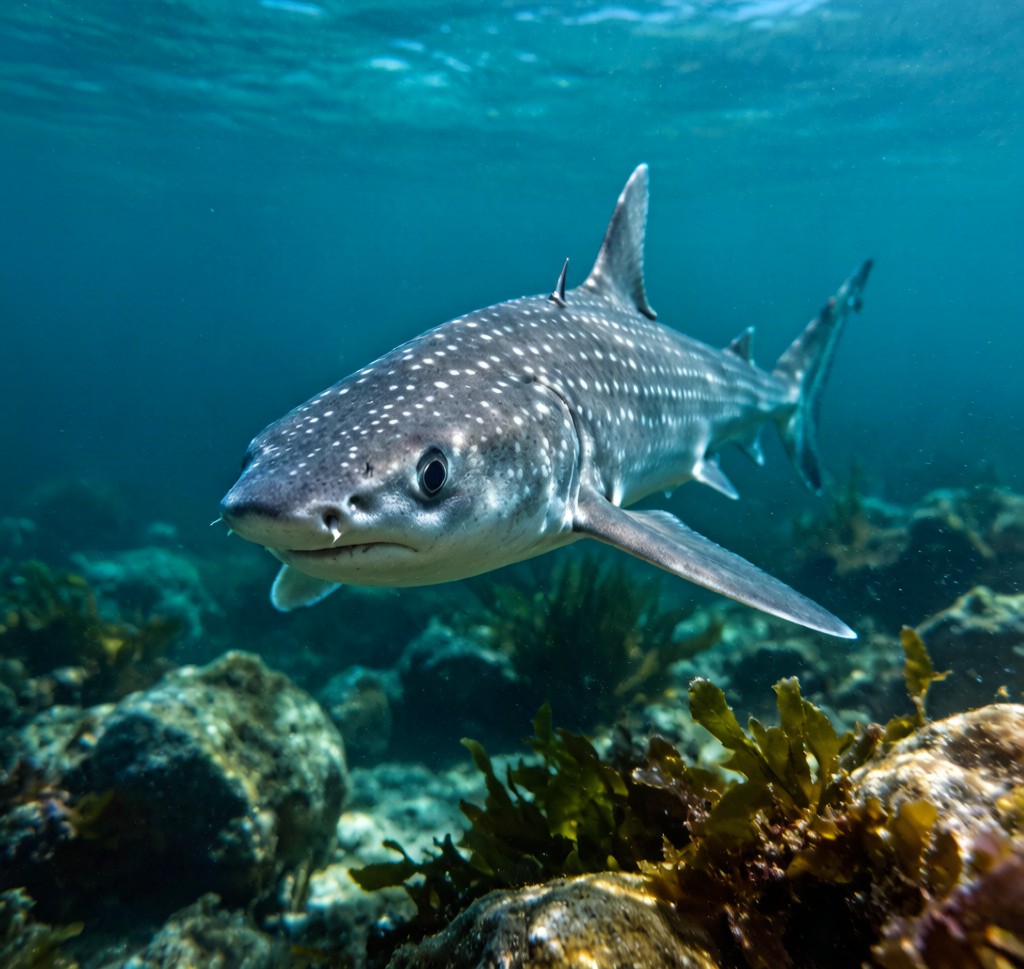
Overview
The Spiny Dogfish (Squalus acanthias) is one of the most abundant and widely distributed sharks in the world – a small, opportunistic predator that is found in cold and temperate ocean waters worldwide, from the surface to depths of approximately 1,200 meters. Despite its small size – adults typically reach 80 to 120 centimeters in length and weigh 5 to 10 kilograms – the spiny dogfish is one of the most prolific and successful shark species on Earth, forming enormous, highly mobile schools that can contain thousands of individuals. The species gets its name from the two sharp, spine-like dorsal fins – each preceded by a stout, pointed spine – that are used for defense against predators.
The Spiny Dogfish is a distinctive-looking shark with a slender, streamlined body that is grey to brownish-grey on the back and sides, fading to a pale grey or white belly. A series of small, irregular white spots – more prominent in younger individuals – decorate the flanks and dorsal surface. The snout is long and pointed, the eyes are large and dark, and the teeth are small, sharp, and斜 in the upper jaw. The species lacks an anal fin – a characteristic shared with other members of the dogfish family (Squalidae) – which helps distinguish it from other small sharks.
Habitat and Distribution
The Spiny Dogfish has one of the broadest geographic distributions of any shark species, occurring in cold and temperate waters of the North Atlantic, South Atlantic, Pacific, and Indian Oceans. In the North Atlantic, the species ranges from Labrador and Greenland in the north to Florida and Cuba in the south, while in the Eastern Atlantic it is found from the Barents Sea and Iceland to South Africa. In the Pacific, the species ranges from Alaska and the Bering Sea to Baja California in the east and from Russia and Japan to New Zealand and Chile in the west. This vast distribution reflects the spiny dogfish’s tolerance for a wide range of temperatures and salinities.
Spiny dogfish are highly migratory, moving north in summer and south in winter in response to seasonal temperature changes and prey availability. In some regions – such as the northwestern Atlantic – the species forms distinct subpopulations that do not mix with one another, each with its own migration patterns and life history characteristics. The spiny dogfish occupies a wide range of marine habitats, from shallow coastal waters to deep offshore waters, and is most commonly found over continental shelf and slope habitats at depths of 50 to 300 meters.
Ecology and Behavior
The Spiny Dogfish is an opportunistic predator with a varied diet that reflects its wide geographic range and migratory behavior. The species feeds primarily on small schooling fish – including herring, mackerel, sardines, capelin, and hake – as well as squid, octopus, crab, shrimp, and other marine invertebrates. Spiny dogfish are known to hunt cooperatively in packs, using their speed and numbers to herd and exhaust schooling fish before attacking. The species is also an important prey item for larger marine predators, including larger sharks, orcas, and seals.
Spiny dogfish have a remarkably long lifespan for their size – individuals can live for more than 40 years, with females typically living longer than males. The species is also highly productive for a shark: females give birth to litters of 2 to 20 pups after a gestation period of 18 to 24 months – one of the longest of any vertebrate animal – and females can store sperm from a single mating event for use in multiple pregnancies. These life history characteristics – long lifespan, late maturity, and extended gestation – make spiny dogfish populations relatively vulnerable to overfishing.
Conservation
The Spiny Dogfish is listed as Vulnerable globally on the IUCN Red List, reflecting significant population declines in parts of its range, particularly in the North Atlantic where historical overfishing caused severe population crashes in the late 20th century. The species was heavily targeted for its meat – which is sold as “rock salmon” or “flake” in fish and chip shops in the United Kingdom and Australia – and for its liver oil, which was historically used in cosmetics and as a source of vitamin A. Following decades of heavy fishing pressure, many spiny dogfish populations remain depleted and have been slow to recover due to the species’ inherently low productivity.
In the United States, the spiny dogfish fishery is managed under a federal fishery management plan that sets annual catch limits based on population assessments. In recent years, the species has become a model for sustainable seafood in some regions: well-managed spiny dogfish fisheries in the U.S. and Canada have earned certifications from the Marine Stewardship Council, and the species has been promoted as a sustainable alternative to overfished groundfish species. Consumers are increasingly encouraged to choose spiny dogfish as a sustainable seafood option, provided it is sourced from well-managed fisheries.