 By st20113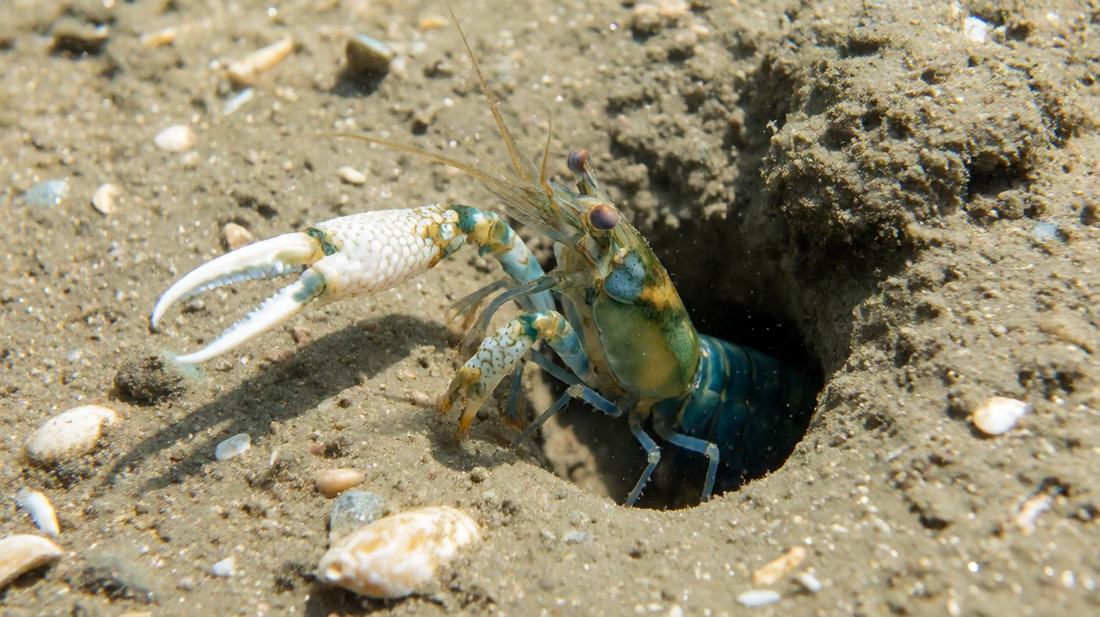
Alpheus heterochaelis | Bigclaw Snapping Shrimp
Species Profile · Alpheidae
Bigclaw Snapping Shrimp
A small shrimp with one claw so large it fires a bubble that cracks like a pistol and briefly glows.
Not evaluated
Length
Claw
Sound
Flash
Burrow
Rating
The Bigclaw Snapping Shrimp
A pistol in the mud
This is the largest snapping shrimp. Adults run 1 cm to 5.5 cm. Most measure about 3 cm. One claw is far bigger than the other.
Its big claw works like a piston. It fires a jet of water. Because the jet forms a bubble that then collapses, the shot cracks like a pistol and briefly glows. The sound tops 200 decibels.
Those halves never touch each other. Though the animal makes a racket that can drown out sonar, it has no ear that anyone has found.
Family tree
Alpheidae, the snapping shrimps
This shrimp belongs to the family Alpheidae. Say described it in 1818. All snapping shrimps share the odd claw, though its shape varies.
About 600 species exist worldwide. A claw may sit on the left or the right. That varies between individuals.
Its family name comes from a Greek river god. The Pistol Shrimp group is the largest part of it. Because the family has been revised so often, the count of species keeps rising, and many named kinds may still hide twins.
5.5 cm with one huge claw
How to tell one
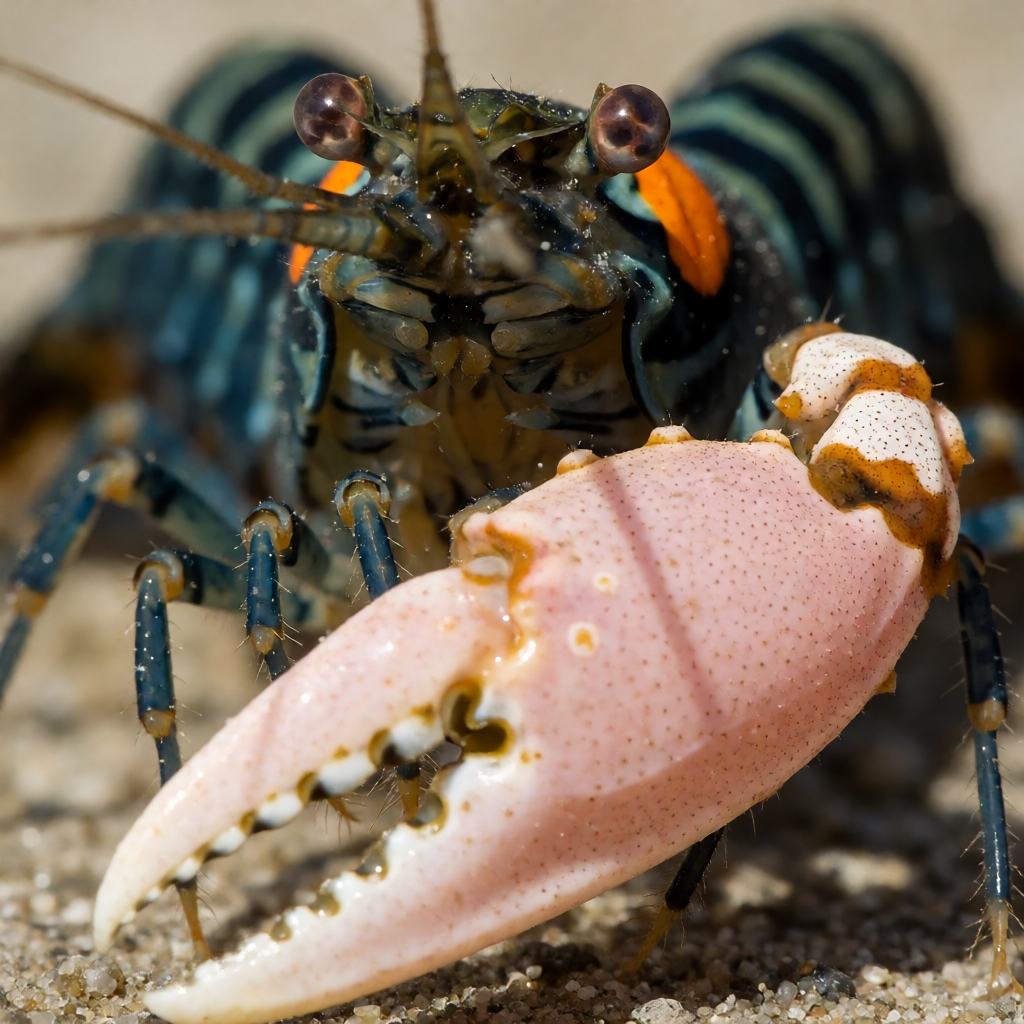
Adults reach 5.5 cm. Colour runs from dark blue green to grey. Orange patches sit behind the eyes. Another patch marks the tail tip.
Its body looks translucent. Dark spots speckle the shell, though the colour varies with the mud. Two sets of antennae feel the water. Both claws carry bristles.
The small claw handles food, while the big one handles trouble. Because the body is soft and the armour thin, the shrimp relies on its burrow rather than on its shell for safety.
1
2
3
Muddy bays and oyster reefs
Where it lives
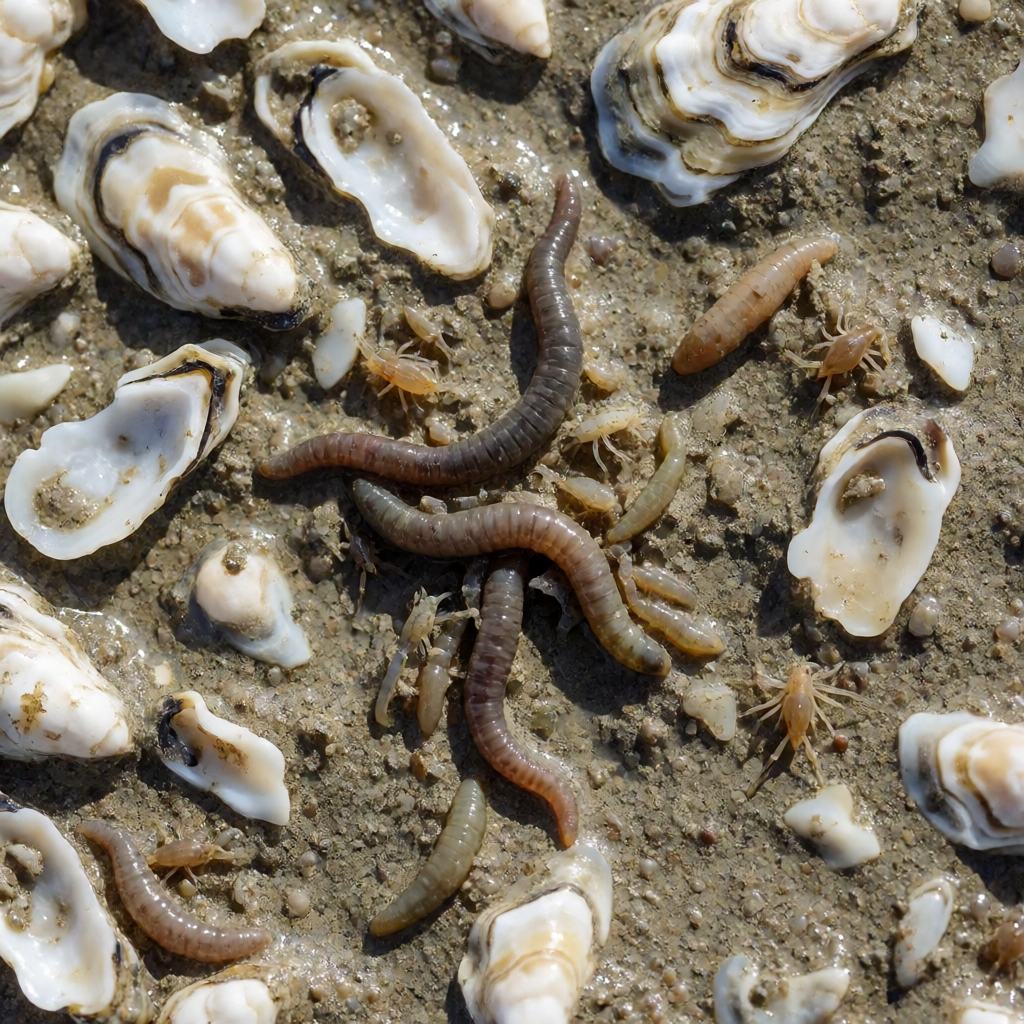
Shallow bays are the main home. Mud bottoms with oyster shells suit it best. Rocks and rubble also work. Salt marsh creeks hold many.
Its range covers the western Atlantic. Gulf of Mexico waters also have them. The animal digs a burrow. It often shares one with a goby, since both gain from the deal.
Some live in crab burrows, while others dig their own. Although the shrimp can swim, it rarely leaves its tunnel, and it spends most of the day inside.
Worms and small crustaceans
What it eats
It eats almost anything. Small worms and crustaceans are taken. Detritus is filtered from the mud. Algae form part of the meal, though meat is preferred.
A small claw passes food to the mouth. That big claw is rarely used. Hunting happens at night, while the day passes in the tunnel. It stays near the burrow mouth.
A quick grab is the whole method. Because the shrimp eats whatever settles nearby, it plays a large part in clearing the seabed around its tunnel.
A pair that stays together
The breeding cycle
Pairs stay together for months. A male guards a larger burrow. Females prefer a mate with shelter, though size matters too.
Courtship involves touch and scent. The male passes sperm indirectly. Eggs stick to the female’s legs.
She carries them while they develop, and she rarely leaves the burrow. Larvae drift before settling. Young shrimps then dig their own homes.
No global rating
Conservation
No IUCN rating exists for this shrimp. No special status applies anywhere. Numbers, however, are thought to be stable. Few people count them.
The pet trade takes some. Dredging destroys burrows. Oyster reef loss removes habitat. Nutrient runoff changes the mud.
Warmer water, though, may shift the range. Because counts of the species are so thin, nobody can say whether the population is rising or falling, and the honest answer is that no one knows.
Side by side
How It Compares
| Trait | Bigclaw Snapping Shrimp | Tiger Pistol Shrimp |
|---|---|---|
| Length | 1 cm to 5.5 cm | up to 5 cm |
| Range | western Atlantic | Indo Pacific |
| Partner | gobies | gobies |
| Colour | blue green with orange patches | dark with a fine maze pattern |
| Snapping claw | left or right | left or right |
| IUCN status | not assessed | not assessed |
Common misreadings
What People Get Wrong
- A crack comes from the two halves striking. The collapsing bubble does it.
- Snapping shrimps are deafening to themselves. They have no ear.
- Every pistol shrimp pairs with a goby. Many live alone.
Going further
Sources and Further Reading
- IUCN Red List entry for Alpheus heterochaelis
- Wikipedia, Alpheus heterochaelis
- Versluis, M. et al. 2000. How snapping shrimp snap: through cavitating bubbles. Science.
- Froese, R. and Pauly, D. (eds). SeaLifeBase species account for Alpheus heterochaelis.
Quick hits
Five things to remember
- Its claw crack tops 200 decibels.
- A flash from the bubble approaches 5,000 K.
- It keeps one antenna on its goby partner.
- Its two halves never strike each other.
- No ear has ever been found on it.