 By st20113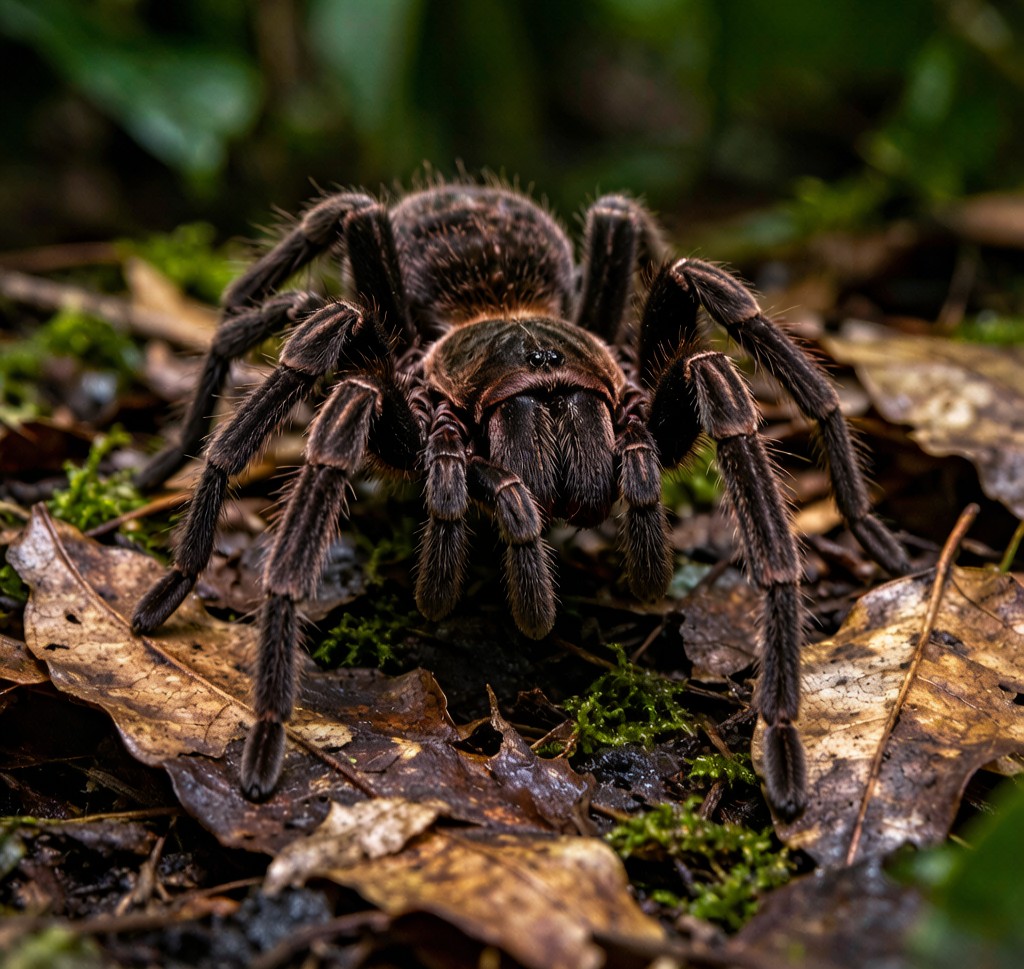
Overview
The Goliath Birdeater (Theraphosa blondi) holds the title of the world’s largest spider by mass – a massive tarantula that can reach a leg span of up to 30 centimeters and weigh up to 175 grams, roughly the weight of a small puppy. Found in the rainforests of northern South America – particularly in the Amazon basin of Brazil, Guyana, Suriname, French Guiana, Venezuela, and Peru – the Goliath Birdeater is an impressive and formidable creature, with a body covered in dense, urticating (irritating) hairs and two large, curved fangs capable of delivering a venomous bite. Despite its fearsome reputation and its name – which derives from an early naturalist’s report of one eating a hummingbird – the Goliath Birdeater’s diet consists primarily of insects, worms, and other invertebrates, with vertebrate prey (including frogs, mice, and occasionally small birds) making up only a small portion of its diet.
The Goliath Birdeater belongs to the tarantula family (Theraphosidae) – a group of large, mostly tropical spiders known for their impressive size, urticating body hairs, and relatively long lifespan (some tarantula species can live for 30 years or more). Like all tarantulas, the Goliath Birdeater does not spin webs to catch prey; instead, it is an ambush predator that waits in its burrow – typically a deep hole in the rainforest floor lined with silk – to ambush passing prey. When a suitable victim comes within range, the spider lunges forward with remarkable speed, seizing the prey with its pedipalps and front legs before delivering a venomous bite.
Defensive Behaviors
The Goliath Birdeater’s primary defense mechanisms are impressive and uncomfortable rather than dangerous to humans, though the species’ size alone makes it an intimidating encounter. When threatened, the Goliath Birdeater raises its front legs and exposes its large fangs in a threat display – a behavior called a “threat pose” or “defensive posture” – while simultaneously rubbing its hind legs against its abdomen to release a cloud of microscopic, barbed urticating hairs into the air. These hairs – which are infinitesimally small but highly irritating – can cause severe skin and eye irritation in humans and other mammals, and can be inhaled, causing respiratory distress. This urticating hair defense is shared by many New World tarantulas and is one of the most effective anti-predator adaptations of any spider.
The Goliath Birdeater’s bite, while painful and venomous, is not considered dangerous to healthy humans. Like all tarantula bites, it causes local pain, swelling, and redness at the bite site, but systemic effects are rare in healthy individuals. Some people may experience allergic reactions to the venom, and anyone bitten should seek medical attention. The Goliath Birdeater’s venom is primarily neurotoxic, designed to paralyze invertebrate prey rather than to cause systemic harm to vertebrates, and the spider’s large fangs (up to 2.5 centimeters long) are more intimidating than the actual harm they can inflict on humans.
Ecology and Lifecycle
The Goliath Birdeater plays an important ecological role in the Amazon rainforest as a predator of large insects and other invertebrates, helping to regulate populations of beetles, cockroaches, and other arthropods. It also serves as prey for a variety of vertebrate predators, including large snakes, birds of prey, and coati (raccoon relatives). The spider’s burrow – which can be up to 60 centimeters deep – provides shelter from predators and from the extreme humidity of the rainforest environment, and is maintained and expanded over the spider’s lifetime.
Goliath Birdeaters have a remarkably long lifespan for a spider – females can live for 15 to 25 years, while males typically live for only 3 to 6 years and die shortly after reaching sexual maturity. Males seek out females in their burrows, and if accepted, the female allows the male to mate with her before typically eating him – a fate that is common among many spider species. The female produces an egg sac containing approximately 100 to 200 eggs, which she guards aggressively within her burrow until the spiderlings hatch after approximately 6 to 8 weeks. The young spiders disperse from the mother’s burrow over the following weeks and establish their own burrows, reaching maturity after approximately 3 to 5 years.
Conservation
The Goliath Birdeater is listed as Least Concern on the IUCN Red List, reflecting its relatively wide distribution across the Amazon basin and its apparent ability to survive in disturbed as well as intact rainforest habitats. However, the species is collected from the wild for the international pet trade, where it commands high prices as one of the most impressive and sought-after tarantulas in the hobby. While tarantulas are generally considered to be long-lived and relatively easy to breed in captivity, large-scale commercial collection from wild populations may have localized impacts on population density.
Conservation efforts for the Goliath Birdeater focus on protecting its Amazonian rainforest habitat from deforestation and degradation, which remains the primary long-term threat to all rainforest biodiversity. The species’ occurrence in numerous protected areas throughout its range – including national parks and indigenous territories in Brazil, Guyana, Suriname, and Venezuela – provides some level of population protection. Responsible tarantula husbandry and breeding in captivity, combined with regulation of international trade, can help reduce pressure on wild populations while allowing enthusiasts to appreciate this remarkable spider.