 By st20113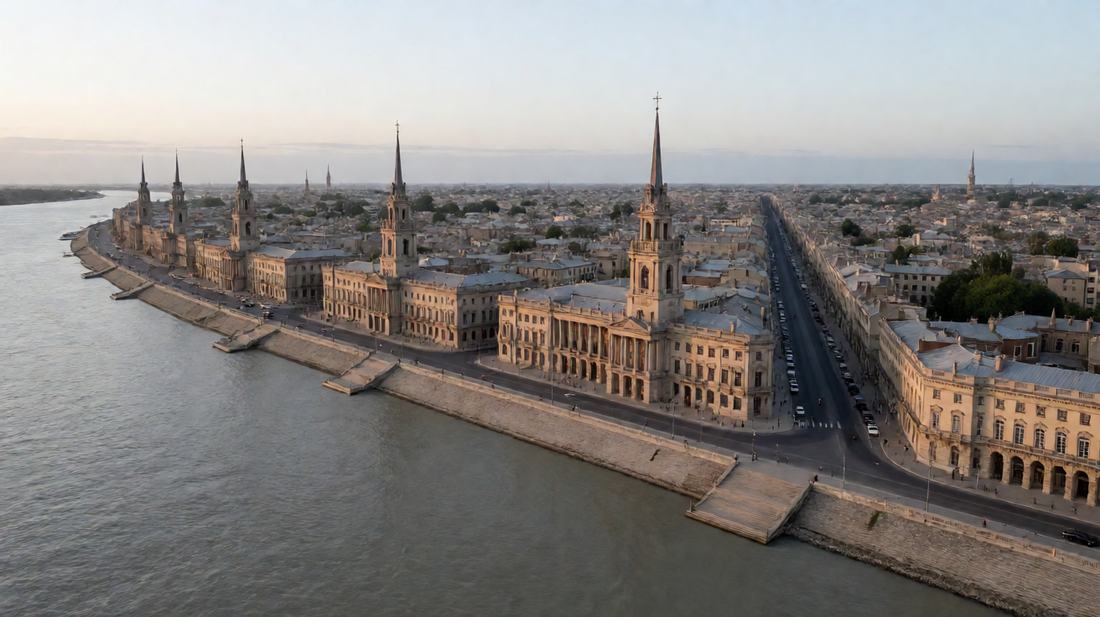
Peter the Great | The Window on the West
Historical Profile · Russia
Peter the Great | The Window on the West
A tsar who forced his court to look west, built a navy from nothing and planted a new capital on low wet ground at the mouth of the Baltic.
AD 1672-1725
Ruled
Journey west
New capital
Poltava
Table of ranks
The big picture
Introduction
Peter the Great was tsar of Russia from 1682 to 1725. For most of that time he drove a set of changes. They turned a backward inland kingdom into a great power. He was six feet eight inches tall.
He worked in his own shipyards. He spent a year and a half travelling through Europe in disguise. He built a new capital on a swamp at the mouth of the Baltic. He beat Sweden in a war that lasted twenty years.
He forced his nobles to cut off their beards. When he died Russia had a navy, a rebuilt army and a new script.
Setting
Historical Context
Russia in the 1600s was a large but poor state. Its lands ran from Ukraine to the Pacific. The country had no sea coast in the west that was free of ice. Its trade with Europe went through the port of Archangel. That port was frozen for half the year. The Baltic coast belonged to Sweden.
The south belonged to the Ottoman lands. The state was governed by the tsar with a small administration. Most of the population were farmers bound to the land. The great families held estates and offices by right of birth. The church was rich and largely independent of the crown. The army was of the old kind.
It had done badly against better organised neighbours. There was a long history behind the court. The rulers traced their line back to the traders and raiders of the Viking Age. Moscow grew strong in the shadow of the Mongol empire to the south and east.
Turning points
Key Events
Peter became tsar in 1682 at the age of ten. He ruled at first beside his half brother. The real power lay with his half sister. That arrangement ended in 1689. From 1696 he was sole ruler. His first campaign was against the Ottoman Empire. He wanted a port on the Black Sea. In 1695 a Russian army failed to take the fortress of Azov. Peter built a fleet in one winter. He took it the next year.
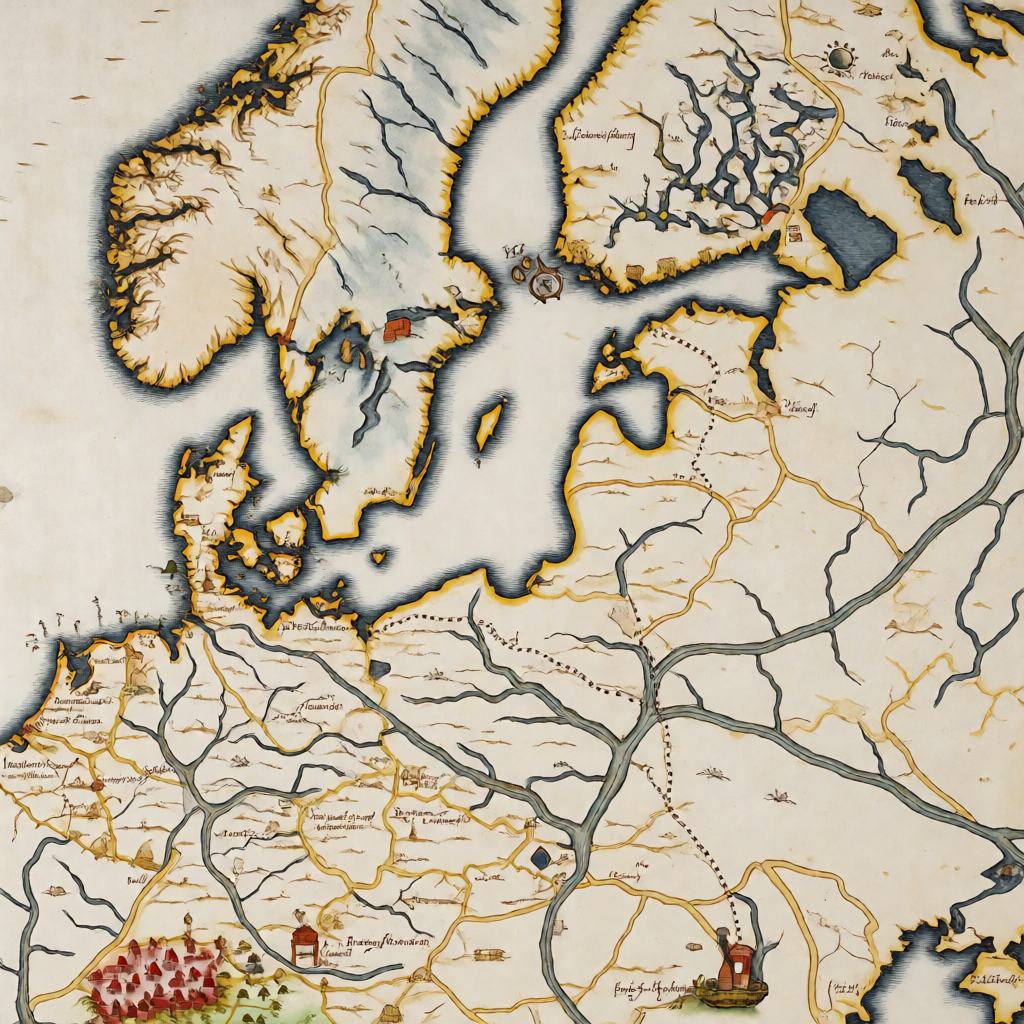
Then he found that he could not hold it without allies. So he went to look for them. In 1697 he set out on a journey through Europe. He travelled under a false name. He worked as a shipwright in the yards of Holland and England. He hired engineers, doctors and officers. He took them back with him. The great war of his reign was fought in the north. In 1700 he joined a coalition against Sweden. At first the allies were beaten badly.
Peter rebuilt his army. In 1703 he began work on a new city at the mouth of the Neva. In 1709 at Poltava his army destroyed the Swedish force. In 1721 the war ended with Russia holding the Baltic coast. That year he took the title of emperor. He kept expanding to the south as well. A campaign down the Pruth in 1711 went badly. He took land on the Caspian from Persia in 1722 and 1723. He died in 1725, having ruled for 43 years in all.
1
2
3
Who held power
People and Powers
Peter ran the state himself. He expected his officials to work as he did. He set up a group of colleges, each with a fixed field of business. He divided the country into provinces with governors of his own choosing. He took the church in hand.
He replaced its head with a council of appointed men. The most lasting change was in the ranks. In 1722 he set out a table of fourteen steps for service. He ruled that a man rose in it by merit rather than by birth. A commoner who reached a certain step became a noble.
A noble who never served lost his standing. His closest colleague was Alexander Menshikov. He was a man of humble origin who became a general and a prince. The old families still held wealth and land. They had to compete for office with people whose rank came from service.
Everyday world
Daily Life and Society
The changes reached into ordinary life. Not everyone wanted them. Peter ordered the nobles to shave. He set a tax on beards for those who would not. He ordered European dress at court. He changed the start of the year from September to January. He set up schools for a new kind of education.
He required the sons of great families to learn navigation, arithmetic and foreign languages. The new capital was his greatest single act. The site was low, wet and unhealthy. The work was done in terrible conditions. Labour came from all over the country. Thousands died. The city was laid out on a grid.
It was meant to show what Russia was becoming. For most people the changes were lighter. Most Russians were farmers. They went on working the land much as before. Serfdom was not abolished.
Craft and ideas
Trade, Technology and Ideas
Peter’s first love was the sea. He built a fleet from nothing, first in the south and then in the Baltic. He brought in foreign shipwrights to teach his own men. By the end of his reign Russia had a navy of its own build. He also built canals to link the rivers of the interior. Industry was pushed forward by the state.
Iron works were set up in the Urals. By the end of his reign Russia was producing iron in large amounts. Cloth works were founded to supply the army. Most of these works were owned by merchants or by the crown. Learning was part of the same plan. He founded a school of mathematics and navigation.
He brought foreign specialists to teach. He set up a press that turned out books on practical subjects. In 1710 he brought in a simpler alphabet for everyday use. It was cut down from the older church letters. In 1724 he agreed to set up an academy of sciences. It opened the year after he died.
What lasted
Legacy
Peter did not finish what he began. His reforms left deep divisions in Russian society. Some took up the new ways and some held to the old. The split lasted for centuries.
He also left the throne uncertain. The next thirty years saw a series of short reigns and palace plots. What he did achieve was a change in Russia’s place in the world. The Baltic coast was his.
The new capital gave the country a port that was open all year. Russia was now part of European politics. The title of emperor, taken in 1721, was recognised over the next decades by the other powers. Russia kept it until 1917.
Quick hits
Five Things to Remember
- Peter the Great ruled Russia from 1682 to 1725.
- He worked in the shipyards of Holland and England during his journey of 1697 and 1698.
- He founded St Petersburg in 1703 and beat Sweden at Poltava in 1709.
- The war in the north ended in 1721, when Russia gained the Baltic coast.
- In 1722 he set out a table of ranks that tied noble standing to service.