 By st20113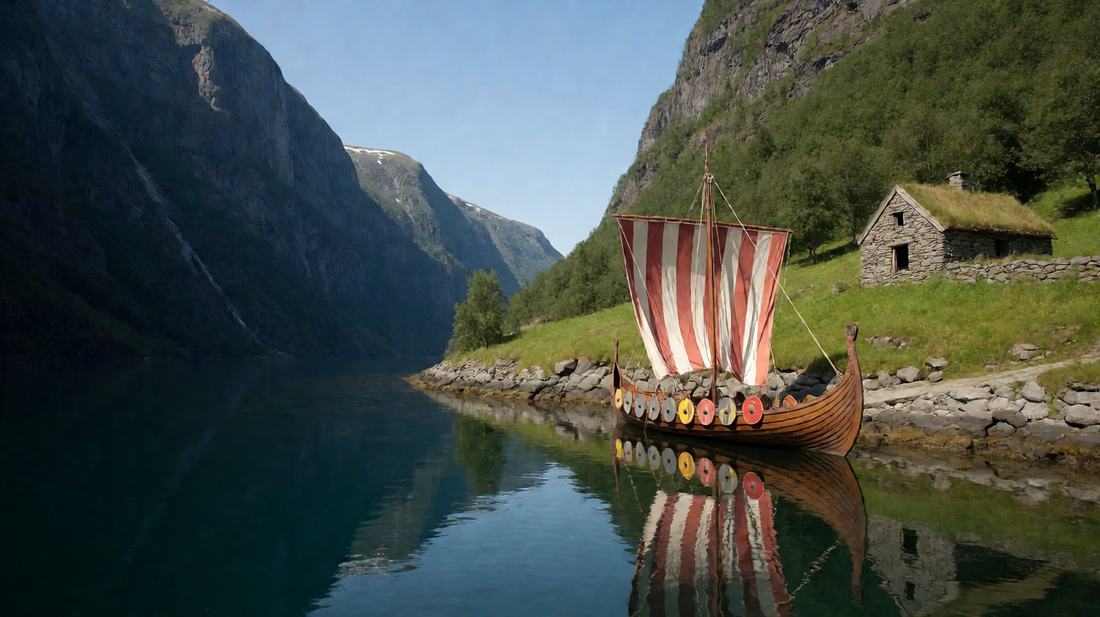
The Viking Age | Vikings
Historical Profile · North Atlantic
The Viking Age | Vikings
In under three centuries, Norse seafarers raided and settled from Baghdad to the coast of North America, using ships that crossed open sea and could still be rowed up a river.
AD 793-1066
Period
Homeland
Reach
Main export
Longship
The big picture
Introduction
The Viking Age lasted about 270 years. It ran from the late 8th century to the mid-11th. Norse sailors left their home waters and changed Europe.
They raided rich shrines and traded furs and walrus ivory. They founded towns and settled empty islands. They reached the coast of North America as well.
They were not one people or one kingdom. Danes, Norwegians and Swedes all sailed.
Setting
Historical Context
Scandinavia in the 8th century held many small kingdoms and chiefdoms. The population was growing. Good farm land was scarce. Inheritance went to the eldest son. Younger sons were left with nothing. That pushed bold men towards the sea.
Their neighbours were weak as well. The Frankish empire was split among quarrelling heirs. The kingdoms of the British Isles were small and often at war. The ships were ready. Norse builders had made a hull that could be rowed or sailed. It could carry a heavy load.
It drew so little water that it could be beached on sand. It could also be rowed far up a river. That mix of range and flex was the real weapon of the age. It turned a long coastline into one connected world.
Turning points
Key Events
The usual start is the raid on Lindisfarne in AD 793. It was a shrine off the north-east coast of England. Monks were killed or carried off and the shrine was looted. News of it shocked courts across Europe. Raids became invasions. A great Viking army fought in England from 865. By the end of the century the north and east were under Danish law.
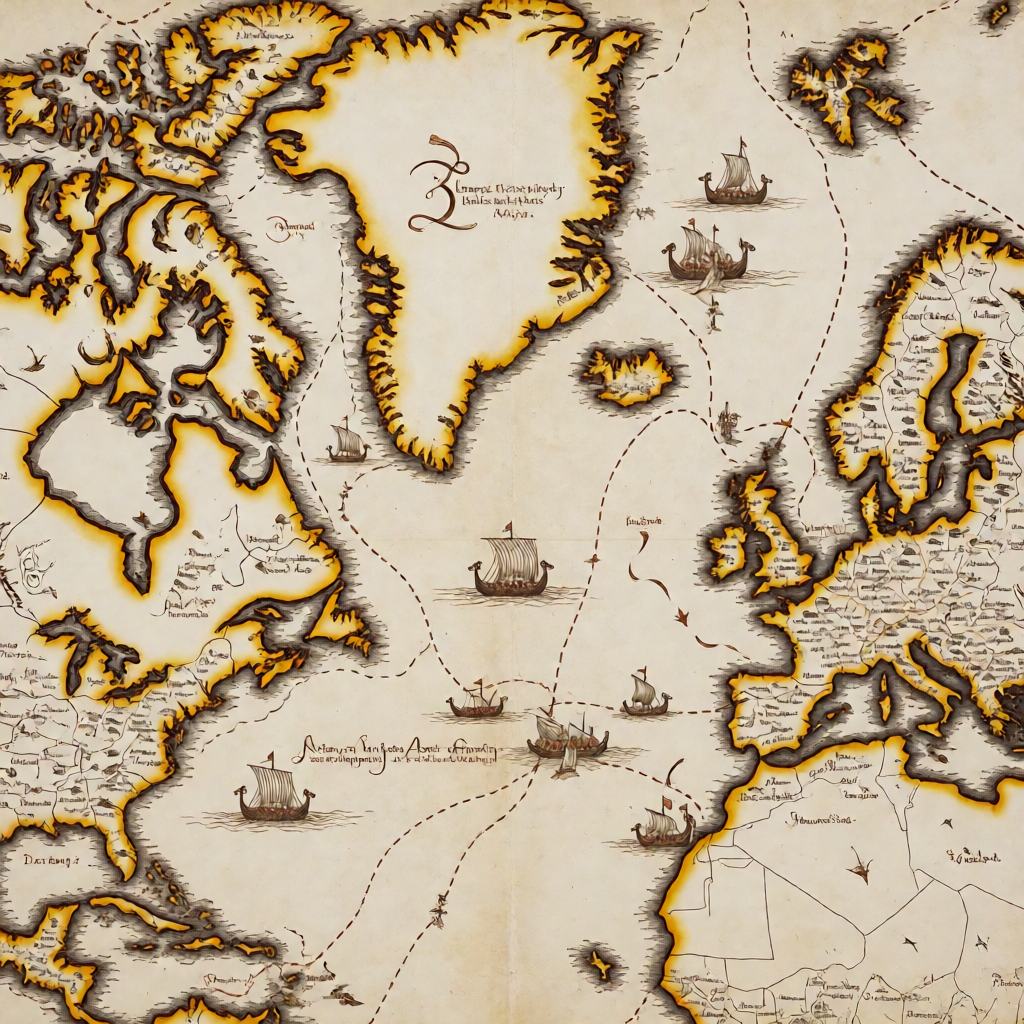
In Ireland, Norse traders founded a port at Dublin in 841. In Francia, Viking fleets rowed up the Seine and besieged Paris in 885 and 886. The Frankish king paid them to leave. Settlers moved into the empty north Atlantic. Norse farmers reached Shetland and Orkney early. They took Iceland between about 870 and 930. Erik the Red led a colony to Greenland in 985.
Around the year 1000 his son Leif Erikson sailed on to a land he called Vinland. A Norse camp at L’Anse aux Meadows in Newfoundland has been dated to AD 1021. It is the oldest known European site in the Americas. The age ends in 1066. King Harald Hardrada of Norway invaded England. He was killed at Stamford Bridge. Three weeks later the Normans took England.
1
2
3
Who held power
People and Powers
Viking society had three broad ranks. At the top were chiefs and kings. Then came free farmers and craftsmen. At the bottom were thralls, who were slaves. Law was settled at local meetings called things.
Free men carried weapons and had a voice there. Power was personal, not official. A king ruled only as far as his ships and his name reached. The voyages were rarely the work of one crown. Single chiefs paid for expeditions and shared the profits.
The same crew might farm in summer and raid in the autumn. In the east, Swedish traders went down the rivers of Russia to the Black Sea. They founded the settlements that became the Rus’ state. Norse fighters served as guards to the emperor at Byzantium. Norse traders sold goods as far away as Baghdad.
Everyday world
Daily Life and Society
Most Norse people were farmers. Most of what we know comes from digs, not from written records. A farm had a longhouse of timber and turf. People and animals lived under one roof at opposite ends. A central hearth gave heat and cooked the food. Earthen benches along the walls were used for sleeping. Food was plain and preserved.
There was salted or dried fish, porridge, bread, butter, cheese, dried meat and ale. Cloth was woven at home from wool and flax. The sail of a warship was the single most costly object a community could make. Religion was part of everyday life. People honoured gods such as Odin and Thor. They used the 16-letter runic alphabet for stone memorials, not for books. Women ran farms and households while the men were away.
Norse law gave them rights that were rare at the time. A woman could own land in her own name. She could refuse a marriage and divorce her husband. Children were raised at home. Boys of good family learned to handle weapons and to row and sail young. Boats were built in the open air, and a skilled shipwright was held in high regard.
Craft and ideas
Trade, Technology and Ideas
Norse trade rested on goods that travelled well. From the north came furs, walrus ivory, amber, honey, iron and slaves. In return came silver, glass beads, wine, silk and spices. Huge numbers of Arabic silver coins have been found in Norse hoards. That shows how far the trade network reached. The most vital export may have been fish.
The Atlantic cod was split open and dried in the cold air of the north. It went as hard as wood. The method needs no salt and keeps the flesh for years. Dried cod from Norway, called stockfish, was shipped to markets in Germany and England. It fed crews on long voyages. The fishery that grew from this trade would rule the north Atlantic economy for a thousand years.
Ships and navigation were the other great skill. A large longship such as the one found at Gokstad was about 23 m long. It carried 16 pairs of oars and a crew of 60 to 70 men. The broader, deeper knarr carried cargo instead. Norse sailors steered by the sun, the stars and the coast. They learned to read the flight of seabirds to find land.
What lasted
Legacy
The Vikings left behind more than a name for violence. They founded or grew towns such as Dublin, York and Kiev. They settled Iceland and the Faroe Islands. They gave the English language a long list of everyday words. The Norman conquest of 1066 put a Viking-descended line on the English throne.
The Normans then carried their own brand of Norse drive into Wales, Ireland and Sicily. The Norse homeland itself turned Christian during the period. The Danish king Harald Bluetooth was converted around 965. Iceland accepted Christianity in AD 1000. The old religion faded.
It lived on in literature and in the names of the days of the week. The stories were written down long afterwards. Scribes in Iceland recorded the sagas in the 13th century. Those prose tales of feuds, voyages and kings are now the main written source for the period.
Quick hits
Five Things to Remember
- The age ran from the raid on Lindisfarne in AD 793 to Stamford Bridge in 1066.
- A large longship was about 23 m long and carried 16 pairs of oars.
- Norse settlers reached Iceland between 870 and 930 and Greenland in 985.
- A Norse camp in Newfoundland has been dated to AD 1021.
- Dried cod kept for years without salt, so it made ideal cargo.
[…] was itself a state built by settlers from the north. Its rulers were descended from the raiders of the Viking Age. They had been given land in France in return for […]