 By st20113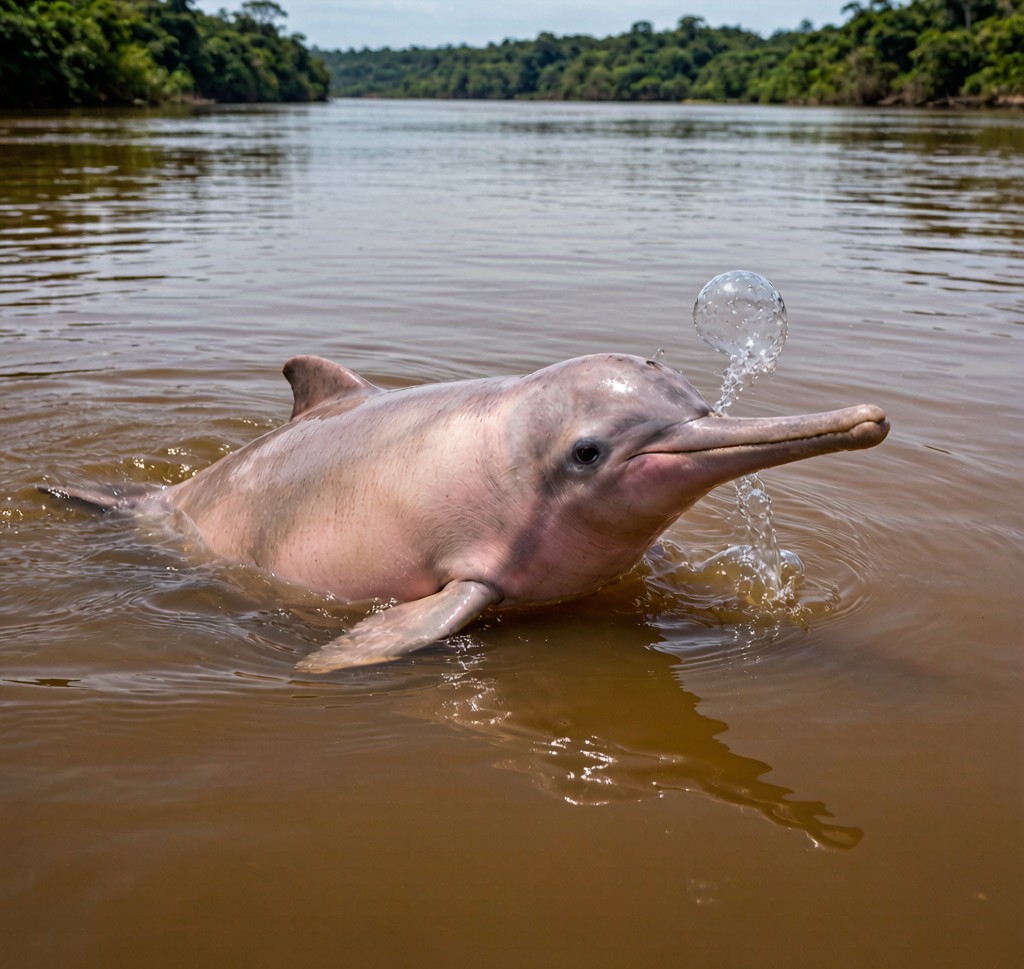
Overview
The Amazon River Dolphin (Inia geoffrensis), known locally as the boto, is one of the most distinctive and enchanting dolphins in the world – and one of the most unusual-looking. Found throughout the Amazon and Orinoco River basins in South America, the Amazon River Dolphin is the largest river dolphin in the world, with adult males reaching lengths of 2.5 meters and weighing up to 185 kilograms. Unlike the familiar grey ocean dolphins, the Amazon River Dolphin is known for its extraordinary color variation: young dolphins are dark grey to blue-grey, while adults range from pale grey to vivid pink – a color that intensifies with age and is most pronounced in adult males. This pink coloration – which can range from a pale blush to a deep, saturated rose – is one of the most striking and beautiful sights in the animal kingdom.
The species is also distinguished by its unusually long, slender snout – the longest of any river dolphin – and by its flexible neck, which allows it to move its head from side to side with remarkable freedom. The Amazon River Dolphin has a rounded forehead (melon), a moderate-sized dorsal fin, and broad, paddle-like flippers. The species’ unusual coloration, distinctive shape, and frequent surfacing behavior have made it one of the most celebrated animals of the Amazon Basin, featuring prominently in indigenous mythology and folklore throughout its range.
Habitat and Distribution
The Amazon River Dolphin occurs throughout the Amazon River system and its major tributaries – including the Amazon main stem and the rivers of Brazil, Peru, Colombia, Ecuador, Bolivia, Venezuela, and Guyana – and also in the Orinoco River system. Within these vast river systems, the species is found in a remarkable variety of freshwater habitats, including main river channels, flooded forests (várzea) during the rainy season, narrow tributaries, rocky rapids, and oxbow lakes. The species’ distribution is closely tied to water levels: during the wet season, when rivers flood the surrounding forest, dolphins move into the flooded woodland to feed, while during the dry season they are concentrated in the main river channels and deeper lakes.
The Amazon River Dolphin’s habitat is one of the most biodiverse freshwater environments on Earth, supporting an extraordinary diversity of fish, turtles, caimans, and other aquatic and semi-aquatic species. The dolphins share this habitat with the smaller tucuxi dolphin (Sotalia fluviatilis) – a species so similar in appearance to the boto that it was long confused with it – and with a wide variety of other iconic Amazonian species including anacondas, giant otters, and pink river turtles.
Behavior and Diet
The Amazon River Dolphin is a highly social and playful species, known for its curious and approachable behavior toward humans and its frequent aerial displays. Groups of 2 to 4 individuals are most common, though larger aggregations of 10 to 20 dolphins may form in areas of abundant food. Unlike many dolphin species, Amazon River Dolphins are largely solitary or form fluid, non-bonded groups rather than the stable pods seen in ocean dolphins. The species is known for its playful behavior – individuals frequently play with floating objects, throw fish into the air, and ride the waves of boats. Young dolphins have been observed carrying objects on their snouts, apparently for entertainment.
The species feeds on a wide variety of fish – over 30 species have been documented in its diet – including piranhas, characins, cichlids, catfish, and tetras. The dolphins locate prey using echolocation – producing clicks and listening to the returning echoes – as well as by sight and perhaps electroreception. Unlike some dolphin species, Amazon River Dolphins do not cooperate in coordinated hunting, and each individual hunts independently. The flexible neck and long snout are thought to be adaptations for maneuvering through flooded forest vegetation to catch fish hiding among the roots and submerged branches.
Conservation
The Amazon River Dolphin is listed as Endangered on the IUCN Red List, with populations declining throughout its range as a result of accidental mortality in fishing gear, habitat degradation from dam construction and gold mining, and direct persecution by fishermen who view dolphins as competitors for fish. The most significant threat is incidental capture in gillnets and other fishing gear: each year, thousands of Amazon River Dolphins die after becoming entangled in fishing nets, and population modeling suggests that current mortality rates may exceed the species’ capacity to recover.
Climate change poses an additional long-term threat to the Amazon River Dolphin: as rainfall patterns shift and the frequency of severe droughts increases in the Amazon Basin, dolphins face periodic mass mortality events during extreme low-water periods when large numbers become trapped in shrinking pools. The species is protected under national wildlife laws in all range countries, and international trade is regulated under CITES Appendix II. Conservation efforts focus on reducing bycatch mortality, protecting key habitat areas including floodplain lakes and river confluences, monitoring population trends through systematic surveys, and reducing pollution from gold mining and agricultural runoff.
[…] pair usually leads the group and coordinates daily movements. Sharing the waterways with the Amazon river dolphin and the massive green anaconda, giant otters rely on healthy, connected […]