 By st20113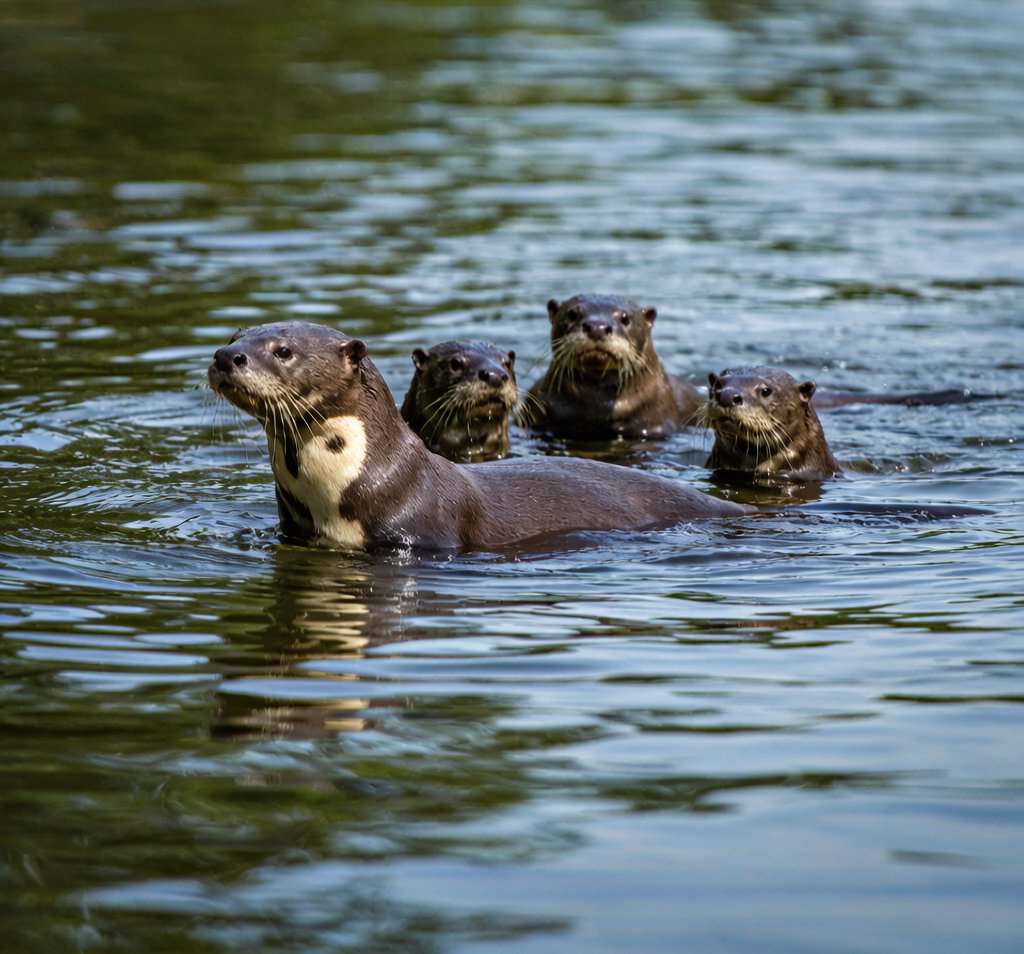
Introduction
The giant otter (Pteronura brasiliensis) is the longest member of the weasel family and one of the most charismatic inhabitants of South American rivers and wetlands. Reaching up to 1.8 meters in length, it is a highly social, diurnal predator that lives in close-knit family groups. Often called the river wolf, it plays a vital role as a top predator in freshwater ecosystems of the Amazon and Orinoco basins. Unlike most otters, which are largely solitary, it depends on group cooperation to hunt, defend territory, and raise its young successfully.
Taxonomy
Giant otters belong to the family Mustelidae and are the only living species in the genus Pteronura. They are most closely related to other otters but are distinct in their size, social structure, and flattened tail. No subspecies are recognized, although Amazonian and Orinoco populations show minor differences. Molecular studies place them firmly within the otter lineage of the New World.
Physical Characteristics
Giant otters have sleek, chocolate-brown bodies with a distinctive cream-colored throat patch unique to each individual, useful for identification. They weigh 22 to 32 kilograms and have a long, flattened tail that acts as a rudder. Their webbed feet and powerful limbs make them agile swimmers, while whiskers help detect prey in murky water. Unlike many mustelids, they have small ears and eyes adapted to a largely aquatic life. Dense, water-repellent fur traps a layer of air that keeps the skin dry and warm during long dives.
Habitat
These otters inhabit slow-moving rivers, oxbow lakes, creeks, and flooded forests across the Amazon, Orinoco, and La Plata river systems. They prefer clear, unpolluted water with abundant shoreline for resting and dens. Family groups defend large territories along a stretch of riverbank. A dominant breeding pair usually leads the group and coordinates daily movements. Sharing the waterways with the Amazon river dolphin and the massive green anaconda, giant otters rely on healthy, connected wetlands.
Diet
Giant otters are piscivorous, feeding mainly on fish such as catfish, characins, and cichlids, which they catch by chasing and herding. They may also take crustaceans, snakes, and small caimans on occasion. A family group can consume several kilograms of fish per day. Cooperative hunting allows them to tackle larger prey, and they often feed together on a shared catch along the bank, much like the cooperative capybara that grazes nearby. After eating, they groom thoroughly and rest on logs, where the group keeps a constant lookout for danger.
Reproduction
Breeding can occur year-round, though it often peaks in the dry season. After a gestation of about 65 to 70 days, females give birth to one to six pups in a riverside den. Both parents and older siblings from previous litters help raise and teach the young to swim and fish. The father often brings food to the mother while she nurses the pups. Pups stay with the family for up to two years, learning the complex vocal communication and territory defense essential for survival.
Conservation
Classified as Endangered, giant otters have been devastated by hunting for their fur, habitat degradation, and mercury pollution from gold mining. They are protected across their range, but enforcement is uneven. Ecotourism and community reserves in countries like Brazil and Peru have helped some populations recover. Local guides who once hunted them now earn income by showing visitors these otters, turning former poachers into protectors. Their presence is a strong indicator of river health and clean freshwater.
Fun Facts
Giant otters are among the noisiest otters, with at least nine distinct vocalizations for alarm, greeting, and coordination. Their throat patches are as unique as human fingerprints. A family group works together to drive off caimans and even the formidable jaguar from the water’s edge. They can hold their breath for several minutes while diving for fish. Groups greet one another with joyful chirps and blows, and a lost pup’s whistle can bring the whole family rushing back to help. This strong social bond is the key to their survival in dangerous rivers.