 By Iris
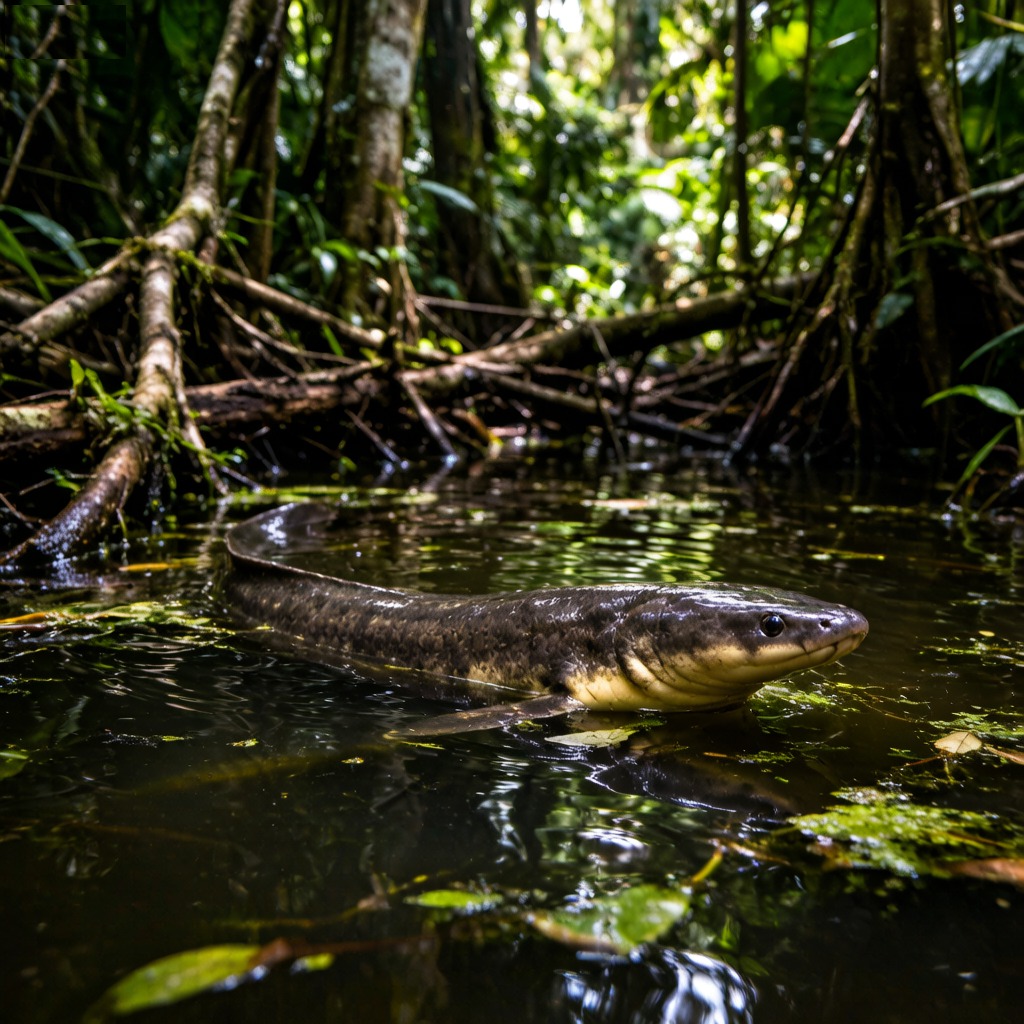
Electrophorus electricus | Electric Eel
Species Profile · Gymnotidae
Electric Eel
It is not an eel at all but a knifefish that carries a battery of muscle cells and reads the dark with current.
Least Concern
Length
Discharge
Organ
Prey
Air
Rating
A battery built from muscle
A fish that reads the dark with current
A fish that carries its own battery should not work. Yet this one does. It lives in the slow muddy water of the Amazon and Orinoco basins. Because sunlight barely reaches that water, eyes are of little use.
The animal reads the dark with electricity instead. A weak pulse leaves its body at a steady rate, and the field around it reports what lies ahead. Anything that conducts better than water disturbs that field, but the fish notices at once. Prey is a different problem.
A stronger burst locks a fish in place, and the shock can hurt a person badly. Adults of this species can drive a discharge past 600 volts, and few animals can match that output. Nothing about the fish looks electrical, which is why early observers doubted the reports.
Three species, one old name
Where the electric eel really sits
Its scientific name is Electrophorus electricus, and the fish belongs to the family Gymnotidae. That family holds the knifefishes, which sit in the order Gymnotiformes. True eels sit in another order entirely, though the common name has stuck.
Catfish and characins are closer relatives than any eel. A 2019 revision split the genus into three species, yet the animal on this page keeps its old name. One of the two newer species can reach 860 volts, the strongest shock recorded from any living animal.
Telling the three apart takes an expert and a careful count. This page covers the widespread form, since that is the one most often described. A Red-bellied Piranha shares that water and hunts by bite, while this animal hunts by current.
Four fifths of the body
The organ, the cells and the pulse
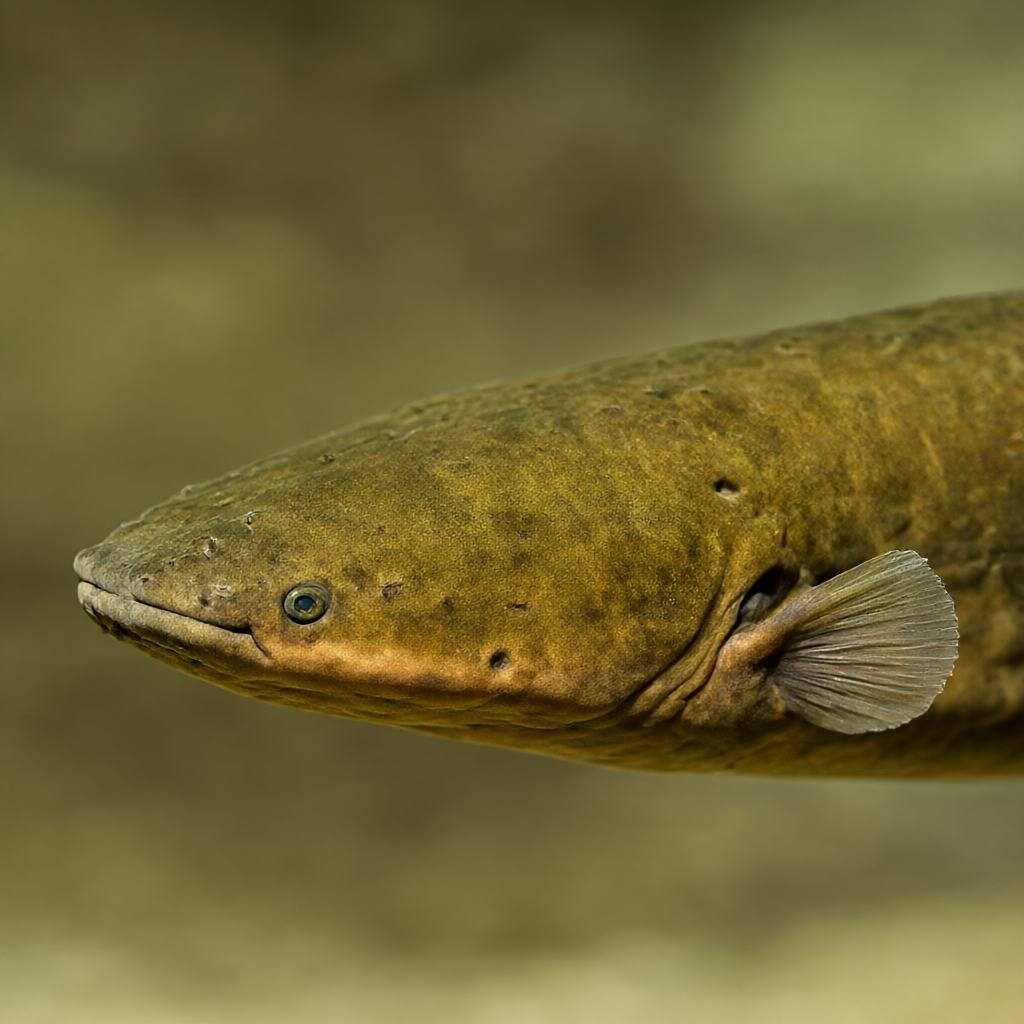
Adults reach 2 to 2.5 m, which makes them the largest fish in their order. Bodies are long and round, with no scales at all. Colour runs dark grey or brown along the back and yellow orange beneath. Most of the animal is battery.
Its main organ fills about four fifths of the body length. Thousands of disc shaped cells called electrocytes make up that organ. Each cell began as muscle, and each one holds a small charge across its membrane. A nerve signal fires the whole stack together, so the cells add up like batteries in a row.
Stack enough of them and a small charge becomes a dangerous one. One organ does the sensing. A smaller battery near the head sends the weak pulses and reads the return. Skin is smooth and pore studded, yet it passes current into the water.
1
2
3
Warm mud and low oxygen
Where it lives and why it surfaces
Water sets the limit. Slow backwaters, flooded forest and muddy creeks make up the range. Water there holds very little oxygen, especially after dark.
Gills alone cannot supply enough, so the fish takes air at the surface. It rises every few minutes for a gulp that lasts a second or two. Its mouth lining pulls oxygen straight into the blood, because a fish held under water drowns in minutes.
An animal that must surface cannot hide in deep water for long. Young fish stay in shallow edges choked with plants, since the current there is weak. Adults work the open channel and the flooded roots.
One burst, one swallow
How the hunt works
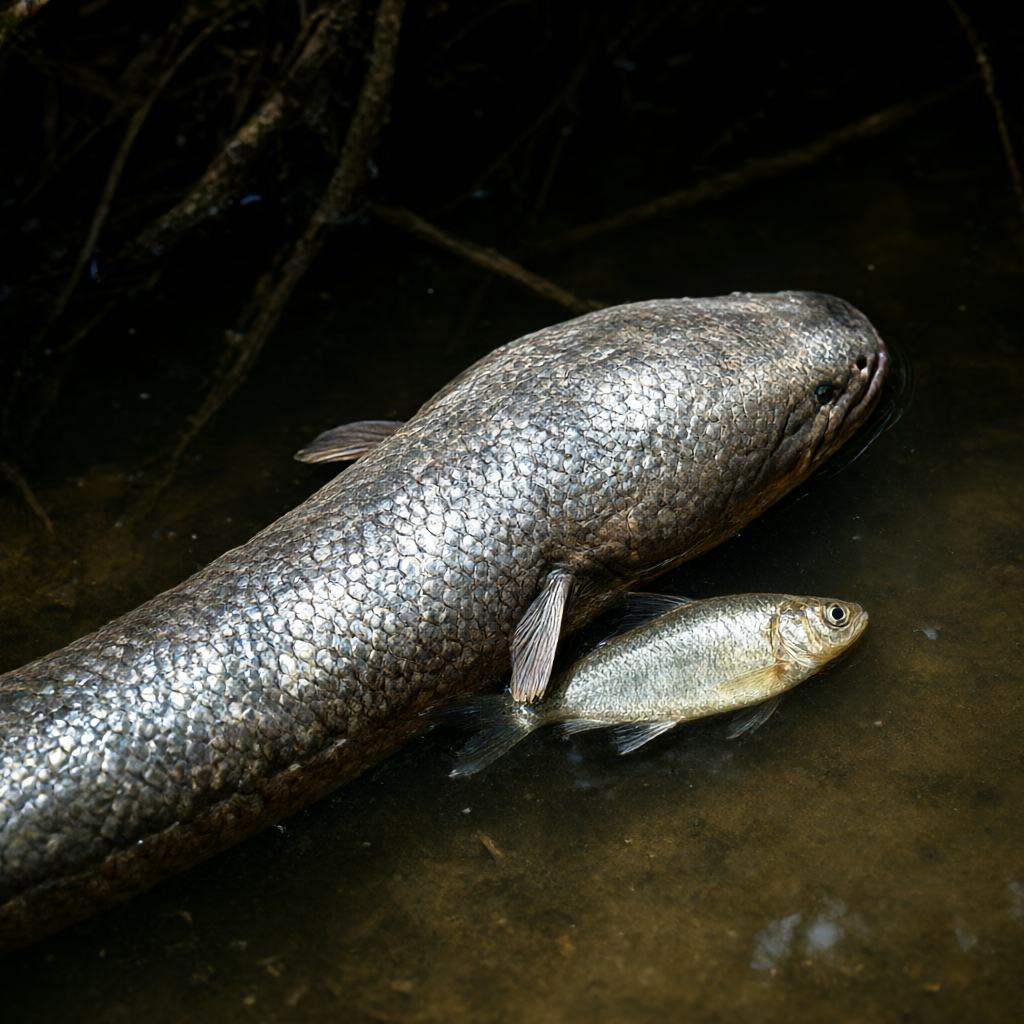
Fish is almost the whole diet. Each hunt opens with a sweep of low pulses. When the field reports a body, the hunter closes in and fires a full burst. The shock makes prey twitch, and that twitch betrays any fish hiding in the mud.
Muscles lock, the prey stops swimming, and the hunter swallows it whole. There is no chewing, because the teeth are small and built for grip. Turning the same burst on a threat works as well, and a person who steps on the fish takes the full charge. Each shock drains the battery, so the fish rests between attempts.
In the same water, the Amazon River Dolphin finds fish by sound, which shows how many ways the dark can be read. Two hunters share one murky river.
A nest of spit and foam
The breeding cycle
Breeding starts when the water drops and the current slows. Males clear a patch of mud. Nests are built from saliva and plant bits.
Foam holds the eggs steady while the water around them moves. Females lay in that nest, and the male guards the cluster. He stays close for days and drives off anything that comes near.
Eggs hatch into larvae with no electric organ worth the name. Young fish grow the organ as they grow, so the first shocks are weak. Most young never reach adulthood, since larger fish and wading birds take a heavy share.
Wide range, weak data
Conservation
The IUCN lists the species as Least Concern. That rating rests on a wide range and a large population, and not on any protection measure at all. Every threat runs to the water rather than to the animal itself. Forest clearing sends silt into the creeks where young fish grow.
Dams turn free flowing river into a still pool. The fish then loses the slow water it needs. Mercury from small gold mines settles in the mud, but it also works up the food chain. Farm runoff arrives the same way.
Nobody counts this species, so a decline would be easy to miss. Protected stretches of river do more for it than any single measure.
Side by side
How It Compares
| Trait | Electric Eel | Red-bellied Piranha |
|---|---|---|
| Length | 2-2.5 m | about 30 cm |
| Weapon | 600+ volt burst | shearing teeth |
| Sense | electric field | smell and sight |
| Diet | mostly fish | fish and insects |
| Hunt | one ambush burst | group attack |
| Water | muddy and low oxygen | murky rivers and lakes |
Common misreadings
What People Get Wrong
- Most people call the animal an eel, yet it belongs to the knifefishes instead. True eels sit in a different order, and the two groups only share a shape.
- Many accounts say the shock kills prey outright, but the first burst only locks the muscles. Stunned fish are swallowed whole, and the hunter never needs to bite or tear.
- Some guides describe one species only, though a 2019 study split the genus in three. The largest shocks come from a relative, while this species stays near 600 volts.
Going further
Sources and Further Reading
Five things to remember
Quick hits
- Four fifths of the fish is battery.
- One 2019 species can deliver 860 volts.
- Adults must surface for air every few minutes.
- Organ cells started out as plain muscle.
- The name eel is wrong, since it is a knifefish.