 By st20113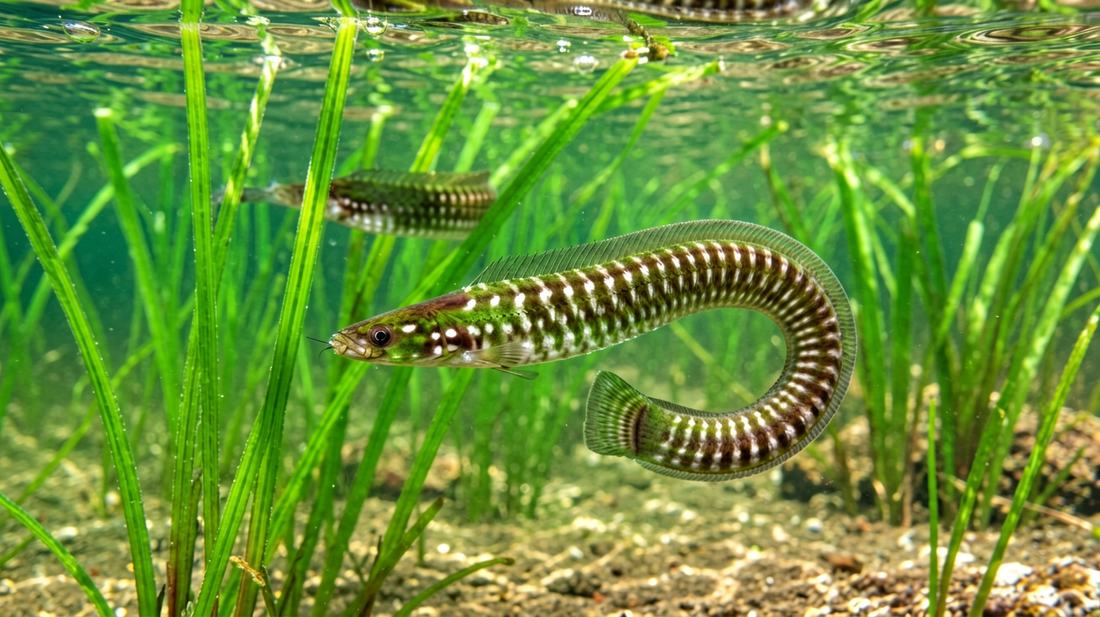
Syngnathus acus | Greater Pipefish
Species Profile · Syngnathidae
Greater Pipefish
A long, ringed fish that hides in eelgrass and leaves the egg-carrying to the male.
IUCN: Least Concern
Range
Size
Depth
Brooding
Status
A fish like a cord
The greater pipefish
The greater pipefish looks like a green cord that learned to swim. Its body is long and stiff. It is ringed with bony plates. It moves in slow waves among eelgrass and seaweed. It is in the same family as the seahorse.
It shares their oddest habit. The male gets pregnant. A female lays her eggs in a pouch under his tail. He carries them until tiny pipefish swim out. It is the biggest pipefish in Europe.
It is the type species of its genus. It is easily missed because it hides well in plants. It lives in shallow coastal water, estuaries and lagoons. Its range runs from Norway down to West Africa.
Family tree
Cousin of the seahorse
The greater pipefish is in the family Syngnathidae. This family holds the pipefishes, the seahorses and the seadragons. Its close kin, the Spotted Seahorse, shares its traits. It has the same tube snout and the same ringed armour. Its male also gets pregnant. The genus Syngnathus is the largest in the family.
Syngnathus acus is its type species. That makes it the type for the whole group. The name comes from Greek words meaning grown-together jaws. The Latin word acus means needle. Pipefishes and seahorses are the only fishes whose male gets pregnant. This trait seems to have evolved once, early in the family.
Linnaeus described the fish in 1758. For a long time the southern African pipefish Syngnathus temminckii was treated as the same species. Genetic work has shown it is a different animal. It is not even the closest kin of the greater pipefish.
Rings and armour
A body that feels rigid
Most adults are 33 to 35 centimetres long. The longest one on record is about 45 to 50 centimetres. The body is long and slim. It feels stiff and boxy when held. Each ring on the trunk is roughly square in shape. There are 18 or 19 body rings between the head and the dorsal fin. A small bump rises on top of the head behind the eye.
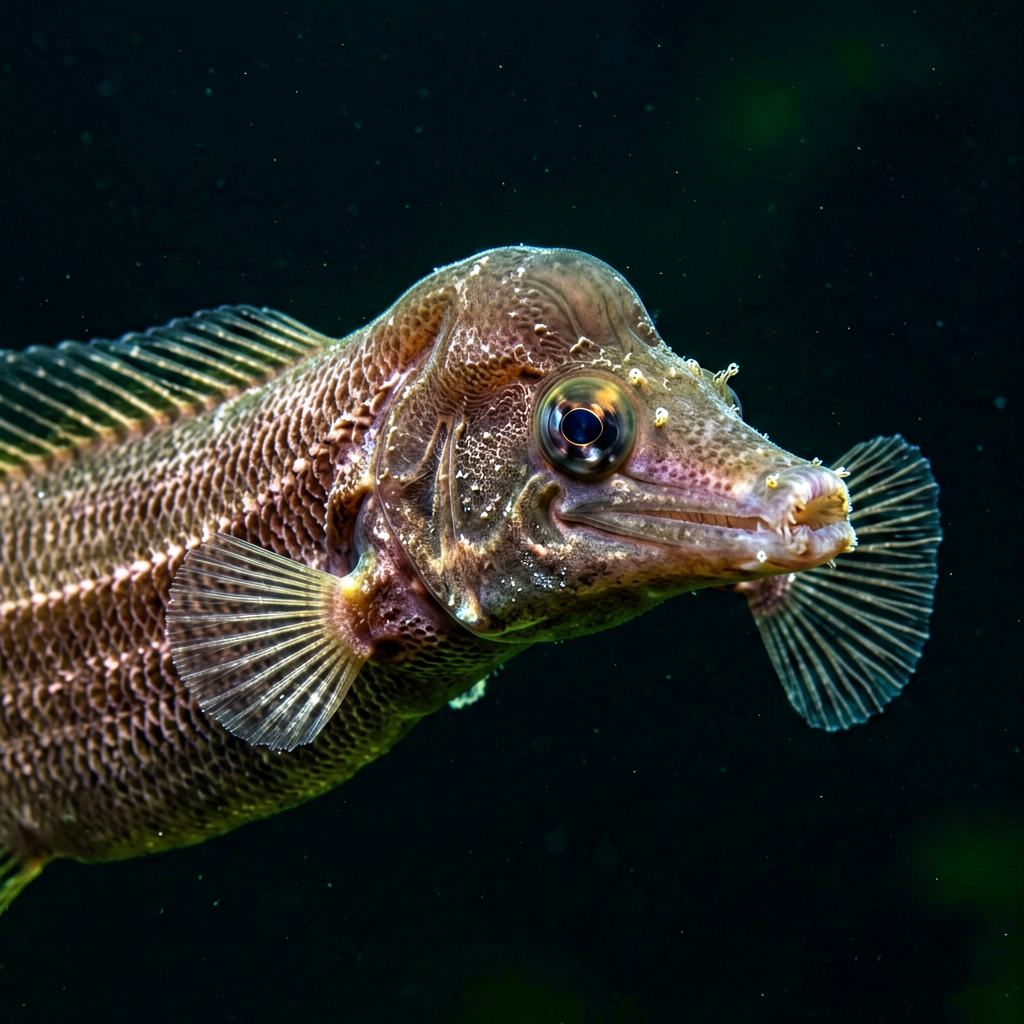
The snout is tube-shaped and short. It is no longer than the width of the eye. This is the quickest way to tell it from the long-snouted pipefishes. The dorsal fin has 33 to 42 soft rays. It sits over the middle of the body. Small side fins sit behind the gills. There is a small fan-shaped tail fin.
Seahorses lack this tail fin. The colour ranges from light green to dark brown. Often there are pale and dark bars across the rings. The fish blends into whatever weed it is holding. Unlike seahorses, the greater pipefish cannot grip with its tail. It holds position by swimming and by pressing against plants.
1
2
3
Among the eelgrass
Life in shallow water
The greater pipefish lives in the east Atlantic. Its range runs from Norway, the Faroes and the British Isles. It reaches south to Western Sahara and Senegal. The same species is found off Namibia and South Africa. It occurs throughout the Mediterranean, the Aegean and the Black Sea. It is a coastal animal.
It lives from the shallows down to about 110 metres. It enters estuaries and brackish lagoons. Eelgrass beds of the genus Zostera are its favourite home. It also uses rocky ground, mud, sand and beds of green algae. It does not migrate. The eelgrass meadows that shelter it have shrunk across Europe.
Dredging, coastal building, nutrient pollution and disease caused this. Pipefish numbers fall when the weed goes. In the Baltic it is listed among the region’s threatened and falling fish. Yet it remains widespread further south and west.
What it eats
Snapping up tiny shrimps
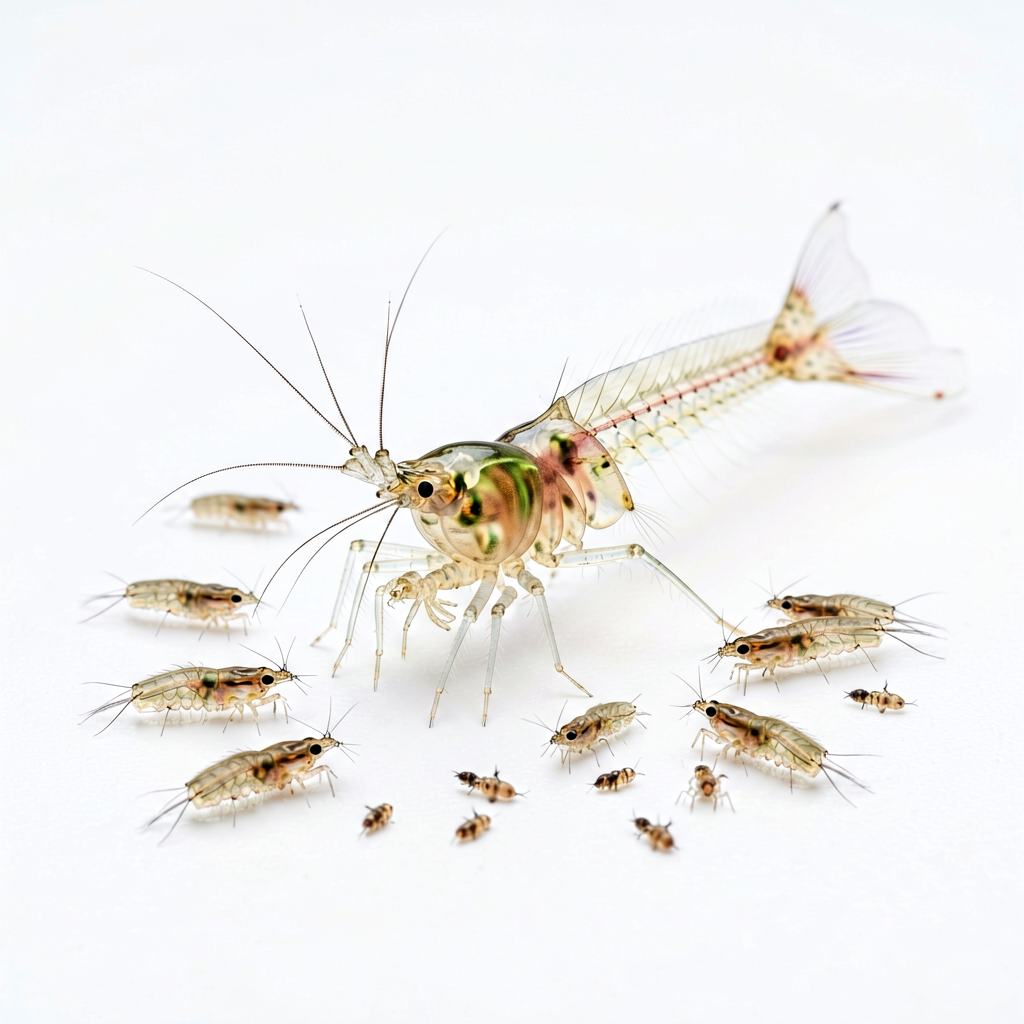
The greater pipefish is a patient hunter that waits in ambush. It hangs almost still in the weed. It waits for small animals to come near. Its prey is mostly small crustaceans. These include mysid shrimps, tiny prawns, amphipods and isopods. They also include fish larvae and other small plankton. It feeds by opening its mouth very fast.
This sucks the victim in with a snap. The snap lasts only a few thousandths of a second. The mouth is a narrow tube, so it cannot swallow anything large. It must eat often and takes many small meals a day. Its eyes work alone. It can watch two ways at once while waiting. It cannot chew.
It must take prey small enough to pass down the snout whole. A hungry pipefish may eat dozens of mysid shrimps in a day. When the shrimps hide, the pipefish drifts to the next clump of weed. In turn the pipefish is eaten by wrasse, cuttlefish and cormorants. Other fish-eating birds eat it too. It is an awkward meal because of the bony rings.
The pregnant father
Up to 400 eggs in a pouch
Breeding starts in spring and lasts into summer. The species may nest two or three times in a year. A female passes her eggs to the male’s brood pouch. This is a pair of skin folds under the tail. They close over the eggs and swell as they grow. Up to about 400 eggs are carried at once. A single pouch may hold the eggs of more than one female.
The eggs take roughly three to five weeks to grow. The young are released as tiny pipefish. They measure 22 to 35 millimetres. From that moment they are on their own. The male gives no more care. During brooding he is easy to spot. The swollen pouch makes his tail look fat.
The pouch is rich in blood vessels. Its folds close over the eggs. The young grow in a safe, oxygen-rich chamber. They do not grow in open water. A flatworm, Gyrodactylus eyipayipi, lives on the skin. It has been found inside the pouch as well.
Habitat under pressure
Vanishing seagrass
The greater pipefish is rated Least Concern. This is true both worldwide and in Europe. It is common across a large range. The 2014 European Red List of marine fishes gave it the same rating. It noted a falling population trend. The real threat is its home.
Eelgrass beds and coastal lagoons are the most damaged sea homes in Europe. They are the nurseries the pipefish needs. Nutrient runoff, dredging, land reclamation and coastal building remove weed. They also muddy the water. Pipefish cannot travel far and do not migrate. Local losses are not easily replaced from other places.
Conservation works through home protection. This means marine protected areas and no-anchor zones over seagrass. It also means rules that limit dredging and nutrient input. In the Baltic the species is limited. It is treated as a species of concern under regional agreements.
Quick hits
Five things to remember
- The male carries the eggs. The pouch under his tail can hold up to 400 of them.
- The snout is no longer than the eye is wide. This is how experts tell it from long-snouted pipefish.
- It is the type species of Syngnathus, the largest genus in the pipefish family.
- Its body is armoured with bony rings and feels stiff. It is almost like a piece of wire.
- Young are released at 22 to 35 millimetres. They are already complete tiny pipefish.
[…] But lives in the same water and is often caught with one. It is usually named alongside the greater pipefish. Another long. Thin European fish with a tubular snout and a greenish skeleton. The pipefish is […]
[…] Atlantic. Three of them are found around the British Isles. Our fish shares its family with the Greater Pipefish, a much larger animal of the same weedy shallows. That species has a brood pouch under the tail of […]