 By st20113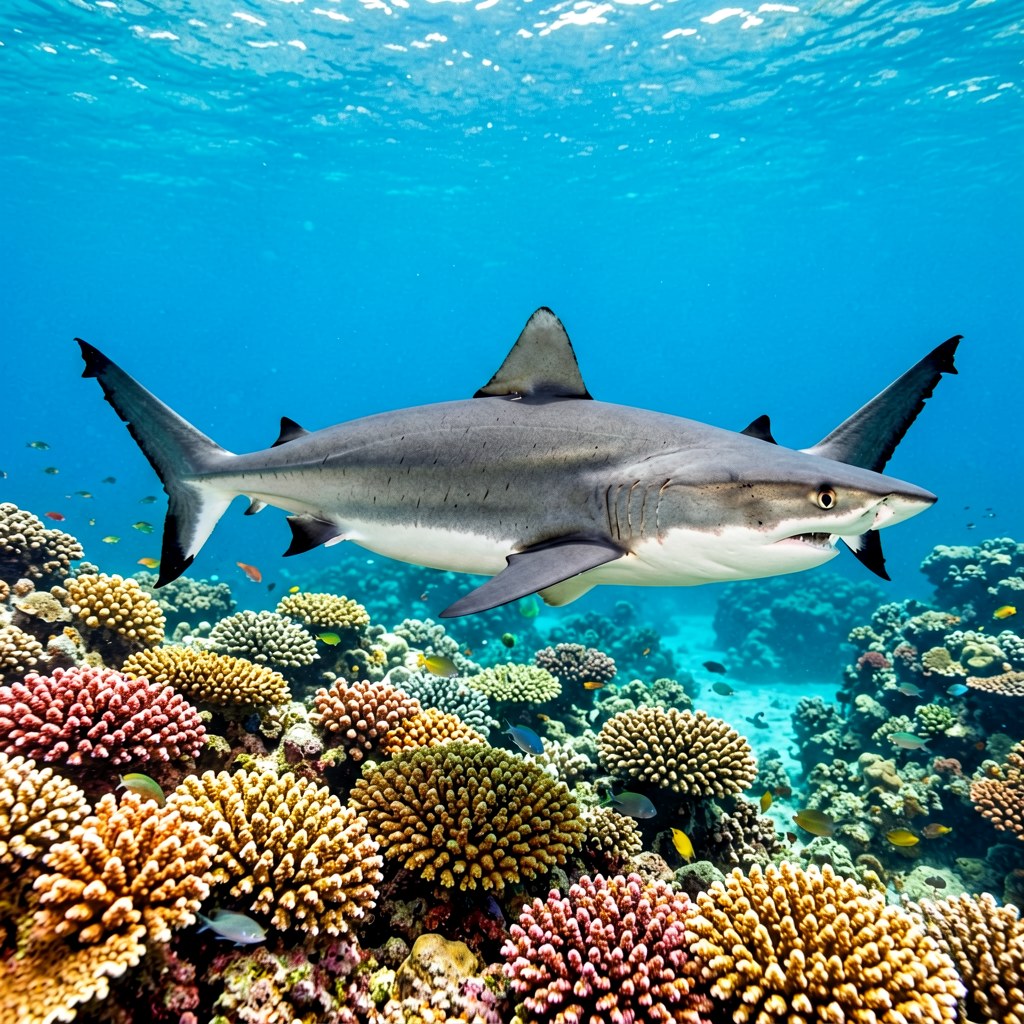
Carcharhinus amblyrhynchos | Grey Reef Shark
Introduction
The grey reef shark, Carcharhinus amblyrhynchos, is one of the most frequently encountered sharks on coral reefs of the Indo-Pacific, and for many divers it is the quintessential reef shark. Typically measuring between one and two metres, it is sleek, fast, and supremely confident in its home territory, often approaching divers with apparent curiosity before peeling away. As an apex predator it helps structure reef communities by keeping populations of smaller fishes in balance, and its presence is a reliable sign of a healthy coral ecosystem. Found from the Red Sea and East Africa across the Indian and Pacific Oceans to the central Pacific, the grey reef shark is both ecologically vital and economically important, supporting dive tourism worth far more alive than as fishery product. Its bold nature, however, has also made it vulnerable, and throughout much of its range its numbers have declined under pressure from expanding reef fisheries.
Taxonomy
Carcharhinus amblyrhynchos belongs to the family Carcharhinidae, the requiem sharks, within the genus Carcharhinus, which also includes many other common tropical sharks. Like the [Great White Shark](https://www.gloencyc.com/carcharodon-carcharias-great-white-shark/), it is a cartilaginous fish belonging to the class Chondrichthyes, meaning its skeleton is made of cartilage rather than bone. The two species are not close relatives—the great white sits in a different family—but they share the ancient chondrichthyan body plan of a streamlined body, multiple gill slits, and a skeleton built for flexible, energy-efficient swimming. The genus name Carcharhinus combines Greek roots meaning “sharp point,” and the species epithet amblyrhynchos means “blunt snout,” a useful field character. First described scientifically in the nineteenth century, the grey reef shark was long confused with similar species before its distinct identity was firmly established.
Physical Characteristics
The grey reef shark has a classic requiem-shark silhouette: a fusiform, hydrodynamic body coloured slate-grey above and abruptly white below, a colour scheme that hides it from both prey above and predators below. A prominent black edge often marks the trailing margin of its caudal fin, and the first dorsal fin is tall and smoothly curved rather than hooked. A key identification feature is the ridge of skin running along the back between the first and second dorsal fins, present in this species but absent in several look-alikes. The eyes are large and round, the snout is blunt, and a nictitating eyelid protects the eye during feeding. Rows of serrated, triangular teeth are replaced continuously throughout life. Adults generally weigh between twenty and thirty kilograms, with females slightly larger than males, and the species shows the countershading and keen senses—especially smell and electroreception—typical of an active predatory shark.
Habitat
Grey reef sharks are intimately tied to coral reefs and the clear, warm waters that surround them. They favour the outer reef slopes, reef flats, lagoons, and the drop-offs of atolls and continental shelves, typically from the surface down to depths of about sixty metres, though they can range deeper. Unlike truly pelagic sharks, they are strongly site-attached, with individuals and small groups defending home ranges along particular stretches of reef for years at a time. They tolerate the warm, nutrient-poor waters of the tropics and are most abundant where reef structure is complex and fish life is rich. At night they may move off the reef to hunt in deeper, darker water, returning to shallow cleaning stations by day. Their dependence on healthy reef habitat makes them especially sensitive to reef degradation from bleaching, dynamite fishing, and coastal development.
Diet
An opportunistic predator, the grey reef shark feeds mainly on bony reef fishes such as cardinalfish, damselfish, and groupers, supplemented by cephalopods like squid and octopus and, occasionally, crustaceans. It often hunts cooperatively, with small groups herding schools of fish against the reef and taking turns to strike, a behaviour that dramatically improves individual success. Prey is seized in the jaws and shaken or sawed apart with the serrated teeth rather than chewed. As an apex predator it helps suppress mid-level predatory fishes, indirectly protecting the smaller herbivores that keep algae from overgrowing corals. Its diet shifts with size and location, and younger sharks take more invertebrates until they are large enough to handle vertebrate prey. Energetically efficient, the species can survive on relatively infrequent large meals thanks to its slow metabolism.
Reproduction
Reproduction in the grey reef shark is viviparous with a yolk-sac placenta, meaning the young develop inside the mother and are born live rather than hatching from eggs. After a gestation of roughly nine to fourteen months, females give birth to litters of one to six pups, each about fifty to sixty centimetres long and already fully capable of independent hunting. There is no parental care after birth; the pups are born in sheltered, shallow nursery areas such as reef lagoons where predation risk is lower. Females typically reproduce only every other year, a slow rate that makes population recovery painfully slow once numbers are reduced. Males reach maturity around the age of five to seven years and females somewhat later, and the species can live for two to three decades, a life history typical of long-lived sharks and one that magnifies its vulnerability to overfishing.
Conservation
The grey reef shark is currently assessed as Vulnerable to Endangered by the IUCN depending on region, with steep declines recorded across much of its range. Its misfortune is that it is caught in both targeted fisheries—valued for meat, fins, and liver oil—and as bycatch in gillnets and longlines. Because it is abundant, conspicuous, and readily takes bait, it was historically one of the most heavily fished reef sharks. The rise of shark finning, in which only the fins are kept, has been especially damaging. On the positive side, the species is a flagship for marine protected areas and no-take reef reserves, where populations can recover visibly within a few years; ecotourism centred on shark diving now provides a powerful economic incentive to keep reefs—and their sharks—intact. Sustainably managed protected areas remain the single most effective tool for its conservation.
International trade in grey reef shark products is now regulated under CITES Appendix II, which requires that exported fins and meat be accompanied by proof of legal and sustainable origin, a measure that has pushed some fisheries toward traceability systems. Meanwhile, the growth of shark-diving tourism in places such as the Maldives and the Coral Triangle has demonstrated that a single living reef shark can generate far more revenue over its lifetime than its sale as meat, gradually shifting local incentives toward protection. Continued investment in reef reserves and Fishery Improvement Projects remains essential to reverse the declines of recent decades.
Fun Facts
- The grey reef shark performs a dramatic threat display when uneasy: it hugs its pectoral fins downward, arches its back, and swims in tight figure-eight loops before potentially striking.
- Despite living on reefs, it undertakes regular vertical migrations, moving into deeper water at night to hunt and returning shallower by day.
- Its skeleton is made entirely of cartilage, the same flexible tissue in human noses and ears, not bone.
- Like other sharks, it constantly replaces lost teeth, running through thousands in a lifetime on a conveyor-belt system.
- Tagging studies have shown individuals can remain faithful to a single reef tract for over a decade, behaving almost like territorial residents.