 By st20113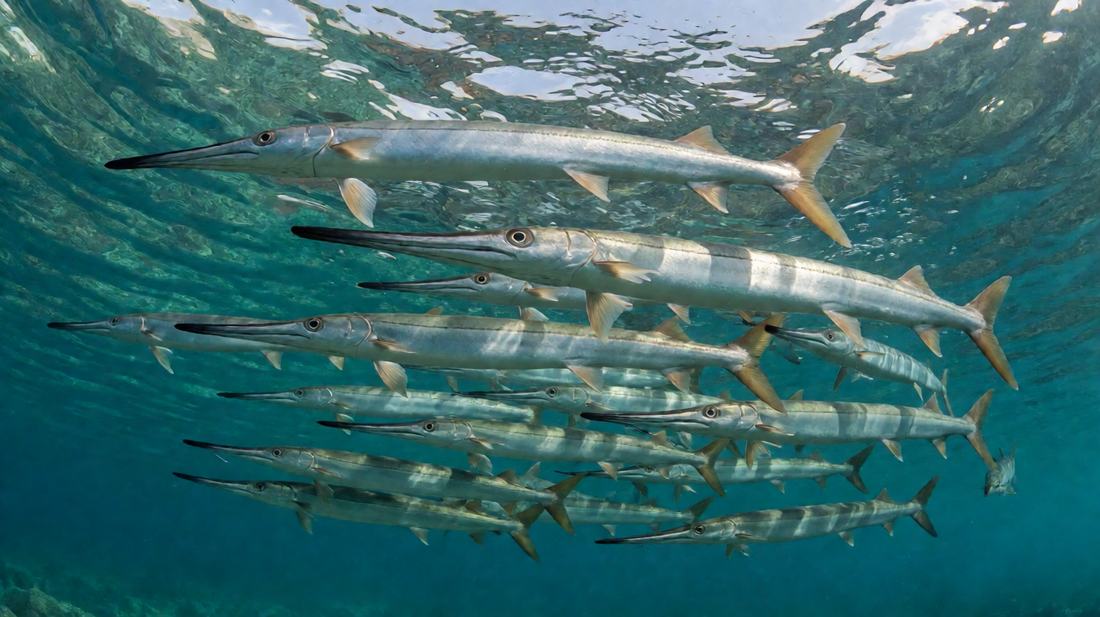
Belone belone | Garfish
Species Profile · Belonidae
Garfish
A slender green-backed fish with a long needle beak, whose bones are green and whose habit of leaping has startled many a boater.
IUCN: Least Concern
Range
Length
Beak
Weight
Maturity
The needle-beaked fish
A slender fish with green bones
The garfish is one of the strangest fish in European coastal water. It has a body like a thin green-and-silver sword and a pair of jaws drawn out into a long needle. Both the upper and lower jaws are extended. And both carry rows of small, sharp teeth. Adults usually measure 40 to 75 cm and can reach about 90 cm. They swim near the surface in loose schools. And they are fast. When alarmed they can leap clear of the water.
And a garfish has been known to hurt a person in a boat. The species is common and not valued highly as food. Mainly because its bones are green. That colour comes from a harmless pigment. But it has kept the garfish off most European tables. It is sold fresh in some markets. Used as bait and eaten locally. And taken more and more by anglers.
It is a predator of small fish. And is itself eaten by mackerel, cod, seabirds and dolphins. It is a fish of the shelf sea. Moving inshore to spawn in spring and back to deep water in autumn. It is a close relative of the flying fishes in some schemes. And shares their habit of skimming just under the surface.
Family tree
Belonidae, the needlefishes
The garfish belongs to the family Belonidae, the needlefishes. It sits in the genus Belone. Linnaeus named it in 1761 as Esox belone. With the pike because of its long jaws and habits. It was later moved into its own genus as the group’s anatomy was worked out. About 10 species are named in the genus. The family holds about 35 species in all. And most live in warm seas. The European garfish is the only member of the family in most of the northeastern Atlantic and the only one in the Mediterranean and Black Sea. The family is part of a group that also includes the flying fishes and the halfbeaks. Those fishes share a very long.
Slender body, a swim bladder set far back. And a skeleton often green or blue. The odd jaw is the defining feature of the family. In the halfbeaks only the lower jaw is extended. In the needlefishes both jaws are extended. And the mouth runs the whole length of the beak. A young garfish’s jaws are much shorter than an adult’s. And grow longer with the fish. Garfish from different parts of the range differ slightly in vertebrae and fin arrangement. Three subspecies are named. One lives in the Mediterranean and Black Sea.
One in the northeastern Atlantic. And a third in the Baltic and around Sweden and Finland. The garfish is not a herring. But lives in the same water and is often caught with one. It is usually named alongside the greater pipefish. Another long. Thin European fish with a tubular snout and a greenish skeleton. The pipefish is even more extreme. With a body armoured in rings and no proper tail fin. The garfish is a fast open-water swimmer with a forked tail. And the two behave nothing alike.
Long beak, silver flank
How to identify one
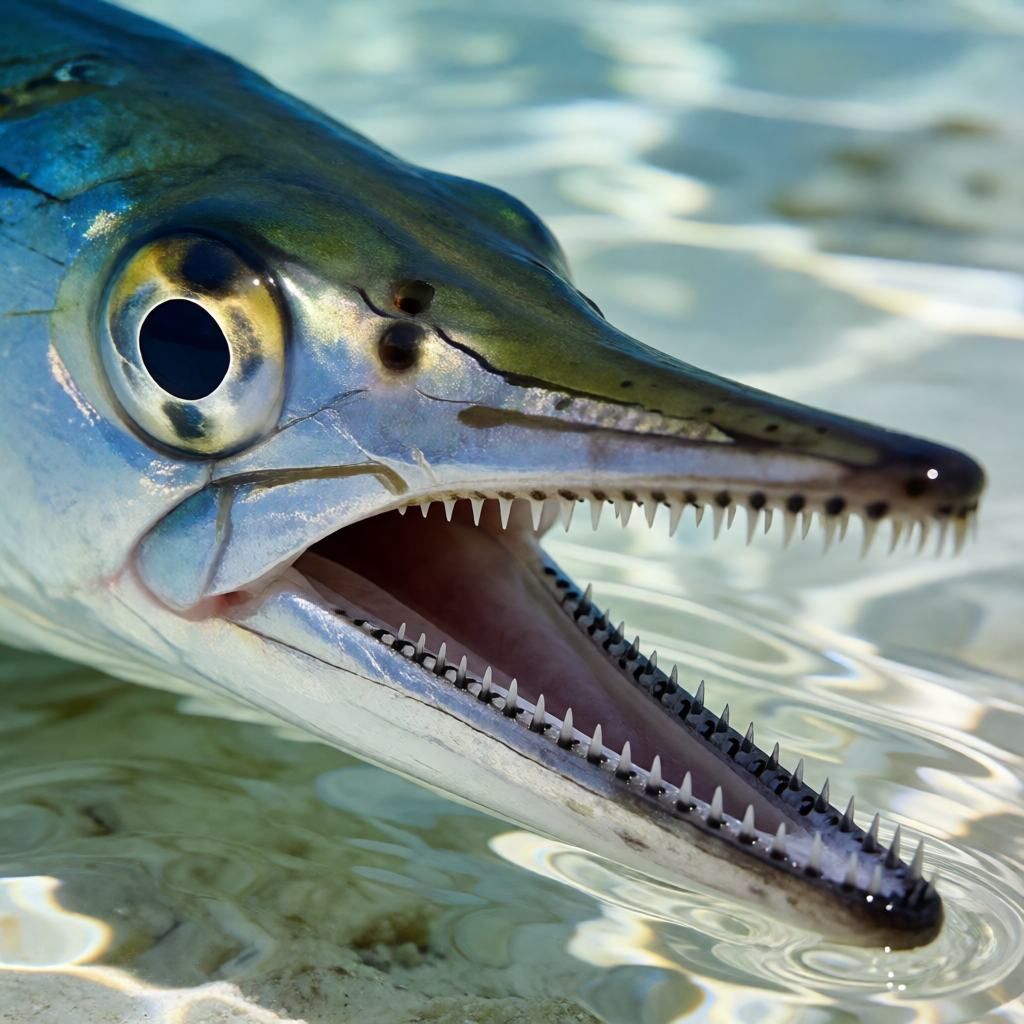
The garfish is long and extremely slender. Its body is round in cross section and tapers evenly from head to tail. Adults run 40 to 75 cm. And the largest reach about 90 cm and a weight of around 1 kg. Females grow larger than males. The most striking feature is the jaw. Both jaws are drawn out into a long, straight beak. Up to a quarter of the fish’s length. The beak carries many small sharp teeth in rows. And the mouth opens very wide. The body is covered in small.
Thin scales that fall off easily. The back is blue-green or dark green. The flanks bright silver, the belly white. A faint darker line often runs along the flank. The fins sit far back. The dorsal and anal fins sit opposite each other near the tail. Both soft with no spines. The tail fin is forked. The swim bladder is long and lies close to the backbone. The lateral line runs low on the flank. Where a row of slightly larger scales protects it.
The skeleton is the oddest feature. The bones are green or blue-green. And the colour shows through the flesh. The pigment is a bile compound and is harmless. Some cooks deal with it by cooking the fish in a vinegar or lemon marinade. This turns the bone a neutral tone. The fish has no spines and no venom. And is harmless to handle. The only risk is its sharp beak and its habit of leaping. Anglers who land one should keep hands away from the jaws and grip the body.
1
2
3
Shelf sea and open coast
Where it lives
The garfish is a fish of the shelf sea and the open coast. It lives in the northeastern Atlantic from Iceland and Norway south to Morocco and the Canary Islands. And through the Mediterranean and Black Sea. It also reaches into the Baltic. Where it is a common summer fish. It is found from the surface down to about 20 m. And spends almost all its time in the upper few metres. That is why it is so often seen from a pier or boat. The species is strongly seasonal in the north.
It moves inshore in spring, when the water warms. And stays near the coast through summer. In autumn it moves back to deeper water offshore. In the Baltic this is dramatic. And the garfish appears in numbers in summer and vanishes in winter. Some southern populations stay inshore all year. The fish tolerates a range of conditions. It is fully marine in the Atlantic. But also lives in brackish Baltic water.
It prefers clear water and open ground with depth nearby. It can enter bays, harbours and estuaries. Its numbers vary a great deal from year to year. A poor year on one coast may match a good year a few hundred kilometres away. That suggests its moves depend on water temperature and on small fish. The garfish is a schooling species. And most seen are in groups of a few dozen rather than the huge shoals of herring or mackerel.
A predator of small fish
What it eats
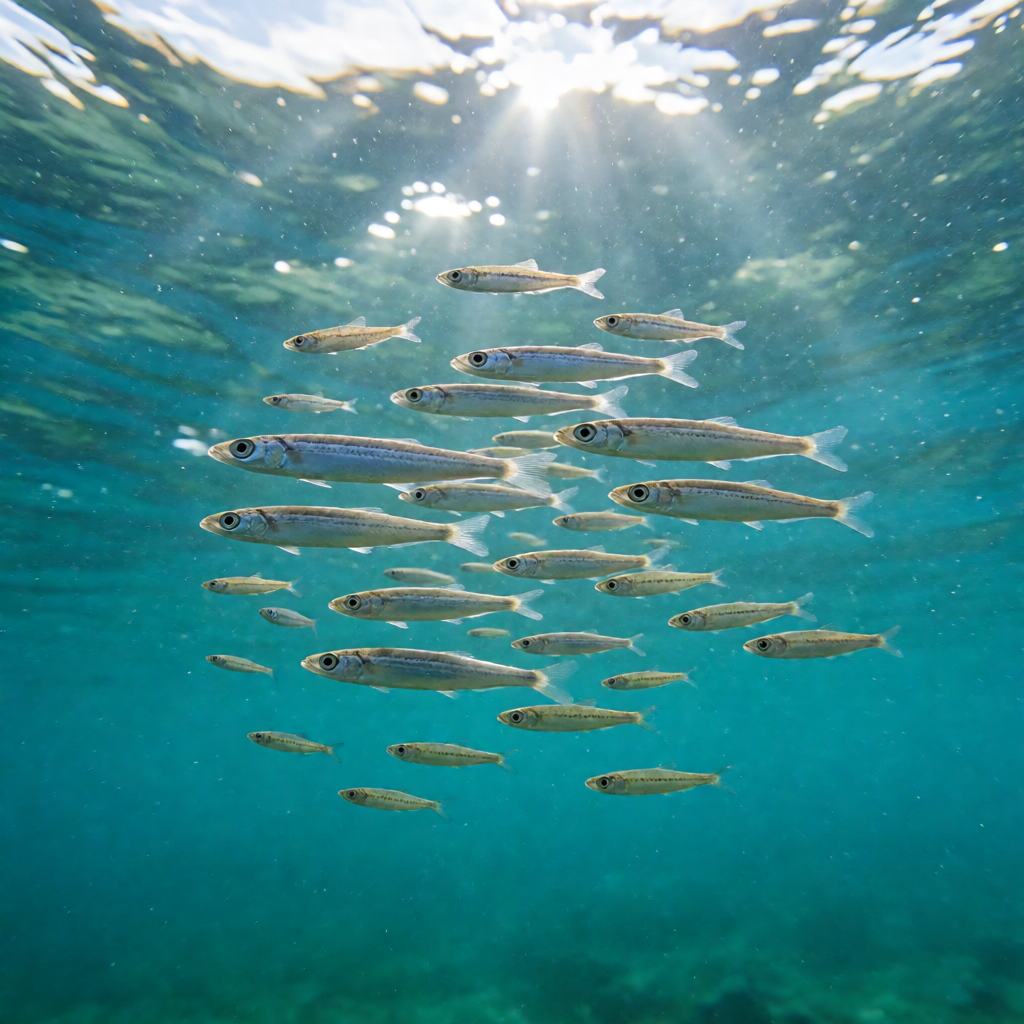
The garfish is a predator of small fish. Its main prey in European waters are sandeels, young herring. Sprats, small mackerel, gobies and the young of many species. It also takes shrimps, small squid and. In the Baltic, large numbers of small crustaceans. It hunts in the top metre of water. And uses the beak in a special way. Instead of seizing prey with its jaws. It sweeps its head side to side and impales or sweeps the smaller fish against the surface.
The long jaws work like a pair of tongs. And the fish then turns the prey to swallow it head first. Feeding happens through the day and often peaks in the evening. Garfish are drawn to light. And gather under lamps at night. This is how many shore anglers catch them. They feed in loose groups rather than a coordinated attack. The species grows quickly and reaches maturity in its second or third year. It is a mid-level predator and a significant one.
It takes small fish that feed on plankton. And is itself taken by mackerel, cod. Pollack, hake, seabirds and dolphins. The garfish also has a small commercial value. It is landed in modest amounts across southern and western Europe and sold fresh. Its flesh is firm and pleasant. And in some markets it is a cheap alternative to mackerel. The green bones are the only real drawback.
Sticky eggs on weed
The breeding cycle
The garfish spawns in spring and early summer. When the water has warmed. In the north it spawns in shallow coastal water. Often in bays, inlets and estuaries. In the Mediterranean the season starts earlier and lasts longer. A female carries a large number of eggs. And releases them in batches over the season rather than all at once. That spreads the risk and gives more chances if conditions fail. The eggs are among the most distinctive of any European fish. Each one carries a set of long.
Sticky filaments that fix the egg to seaweed. Stones, driftwood, harbour walls and any other object. That keeps the eggs off the seabed in moving water with plenty of oxygen. They are laid in clusters. And the whole mass can be seen on a piece of weed at the right time. The larvae hatch within about 2 to 4 weeks. They look nothing like the adults. A newly hatched garfish has a short snout and a normal head. And a pair of long trailing filaments from the belly. Both jaws start short and lengthen over the first year.
The young live in the surface layer. Where their thin shape hides them against the light. They feed on small crustaceans and. As they grow, on the larvae of other fish. Growth is rapid in the first two years. The fish matures at about 2 years and can live a few years more. With a recorded maximum of about 8. Juvenile garfish are preyed on heavily by larger fish and seabirds. First-year mortality is very high. This is why the adult population swings so much from year to year.
Least Concern, surface-bound
Conservation
The garfish is classed as Least Concern in European assessments. It is a widespread and often abundant species across a very large range that covers the whole northeastern Atlantic shelf. The Mediterranean, the Black Sea and the Baltic. No range-wide decline has been shown. It has no fishery of weight. And most landed fish are by-catch or from small boats. There is no target stock assessment and no specific plan. That does not mean the animal is safe from every problem. Its distribution makes it open to anything that hits the surface layer of coastal water.
Pollution from shipping. Plastic and oil spills all concentrate at the surface. Climate change is likely to matter more. The garfish is a warm-water animal at the northern limit of its range in the Baltic and Scandinavia. And its appearance there ties to summer water temperature. Warmer seas may make it more common in the north and extend its season. They may also shift its spawning time and the survival of its larvae. The changes in plankton and small fish that follow warming will affect it from both sides. The garfish is a small player in the human economy.
But not in the ecosystem. It is a fast-growing mid-level predator that turns small plankton-feeding fish into food for mackerel. Cod, pollack and seabirds. And a link that carries energy from the surface up to the larger fish people catch. Its numbers are also useful information. Because it appears only in warm months in the north and vanishes in winter. It is one of the species anglers and fishers notice first when the sea changes.
Quick hits
Five things to remember
- Its bones are green because of a harmless bile pigment, and that single fact keeps most of Europe from eating it.
- Both jaws are drawn out into a beak that can be a quarter of the fish’s body length.
- Its eggs carry long sticky threads that glue them to seaweed and even to harbour walls.
- A young garfish has a short snout, and the long beak only develops as the fish grows.
- Night anglers hang lamps over the water, because garfish rise to the light and leap within easy reach of a hook.