 By st20113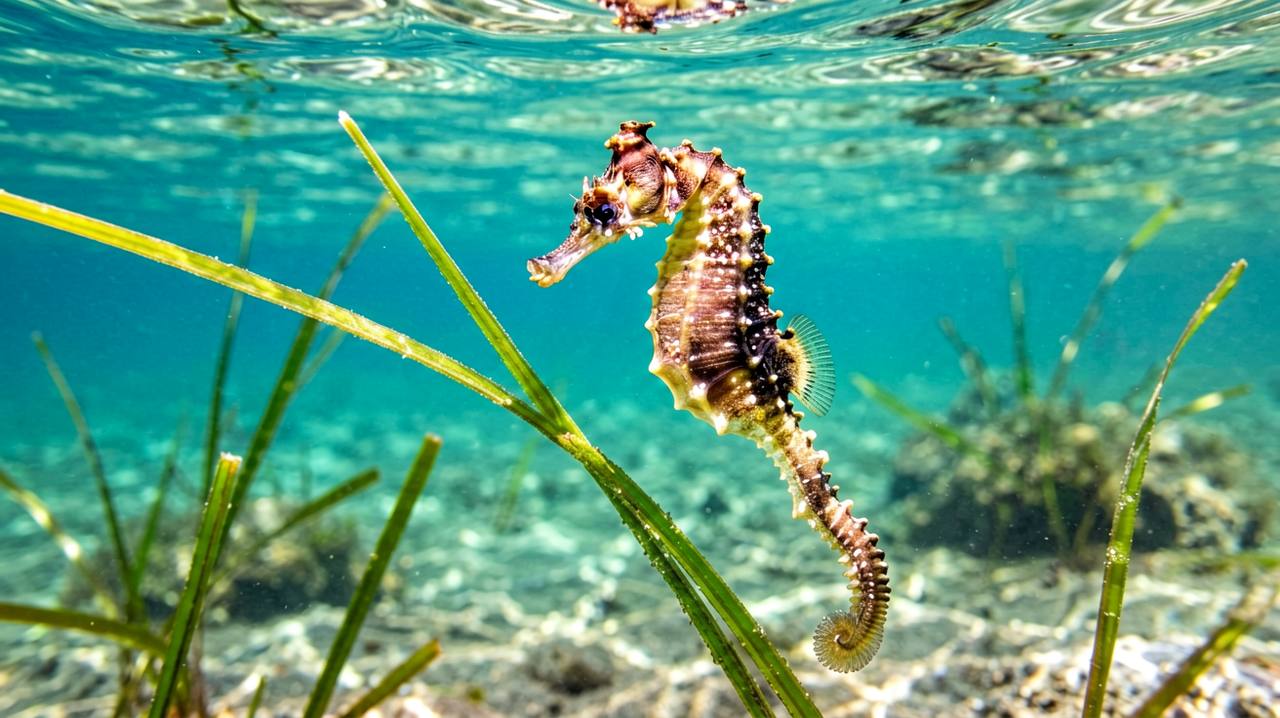
Hippocampus guttulatus | Long-snouted Seahorse
Species Profile · Syngnathidae
Long-snouted Seahorse
A seahorse with a nose almost a third as long as its head, hiding among European seagrass.
IUCN: Data Deficient
Range
Size
Snout
Life
Status
A fish like no other
The seahorse with the long nose
The long-snouted seahorse is a small fish with a very long nose. It lives in the cool coastal waters of Europe and North Africa. Adults reach about 15 centimetres from head to tail. That is roughly the length of a finger. Its snout makes up about a third of its head. That long tube is the easiest way to tell it apart from its close cousin.
The cousin is the short-snouted seahorse, which lives in the same places. Both species are found in the same seagrass beds. Both are poor swimmers. Both use a curled tail to grip plants and hold still. Like all seahorses, it has a body of bony rings instead of scales. Its colour changes with its surroundings and its mood.
Many individuals carry small white dots on the body. Those dots give the species its scientific name, guttulatus, which means little-spotted. It is a patient ambush hunter. It waits for tiny shrimp to drift within reach, then sucks them in.
Family tree
Cousins in the pipefish family
The long-snouted seahorse sits in the genus Hippocampus. It belongs to the family Syngnathidae. That family also holds the pipefishes and the seadragons. Seahorses and pipefishes share the same odd body plan. Males of both groups carry the young.
The genus Hippocampus holds about 45 species worldwide. One relative is the Spotted Seahorse, an Indo-Pacific species. That fish has the same upright body and the same bony plates. It also raises young in a male pouch. The two live on opposite sides of the world.
In Europe, the long-snouted seahorse is often confused with the short-snouted seahorse. The two overlap across much of the Mediterranean and the eastern Atlantic. Scientists separate them mainly by snout length and by small spines on the head and cheeks. Recent genetic work suggests the group may hold more species than was once thought.
Ringed and armoured
A body of bony rings
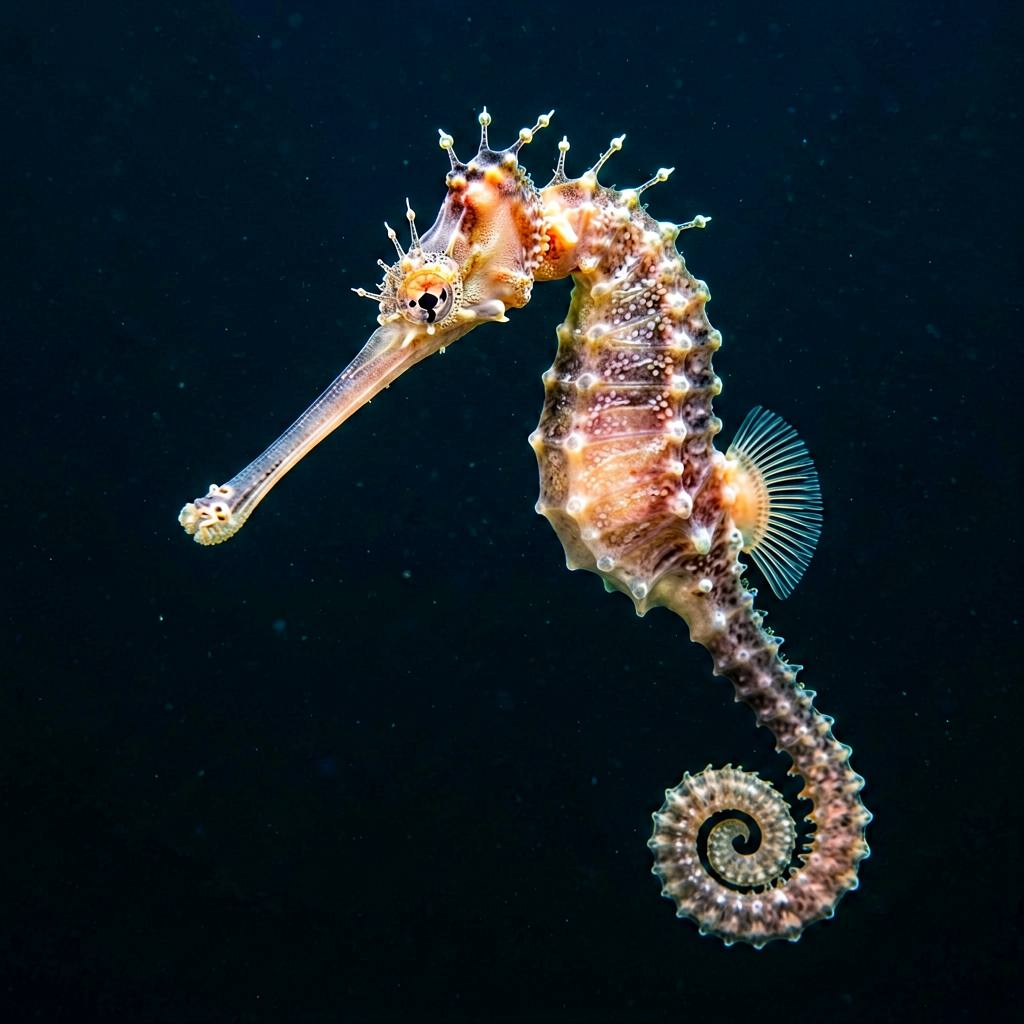
The long-snouted seahorse has a horse-like head on an upright body. Its snout is long and tubular. It ends in a tiny mouth with no teeth. The body is covered in bony rings, not scales. That armour makes the fish feel stiff and hard. A small crown, called the coronet, sits on top of the head. Each species has a slightly different coronet shape. The cheeks carry small spines. These are useful clues when identifying the fish.
The tail is long, thin, and prehensile. It can grip a blade of seagrass and hold tight in a current. The dorsal fin is small and beats very fast. It is the main engine for slow forward movement. Colour varies a great deal. Brown, green, yellow, and reddish forms all occur. Many fish show pale dots along the body. Males have a brood pouch on the lower belly. It swells when he is carrying eggs.
The long snout is the key to telling this species apart from its cousin. The short-snouted seahorse has a much stubbier nose. The two share the same eelgrass beds across Europe. A close look at the head is needed to separate them. Small spines on the cheeks and above the eye also differ. Biologists record these details on every survey. That way they can track which species lives where, and whether either is in decline.
1
2
3
Seagrass and eelgrass
Holding on in the current
This seahorse lives in shallow coastal water. It prefers sheltered places with plenty of plant growth. Seagrass meadows are its main home. Eelgrass beds are especially important. It also lives among seaweed, sponge, and rocky rubble. It can be found in lagoons and estuaries too.
Its range runs from the British Isles and the Netherlands south to Morocco. It also occurs throughout the Mediterranean Sea. It has been recorded in the Black Sea as well. Most records come from water less than 20 metres deep. The fish rarely travels far. It grips a plant and waits for food to pass.
That habit ties it closely to one patch of habitat. If the seagrass goes, the seahorses go too. Water temperature shapes its breeding season. In northern Europe it breeds mainly in spring and summer.
What it eats
Tiny shrimp, sucked in whole
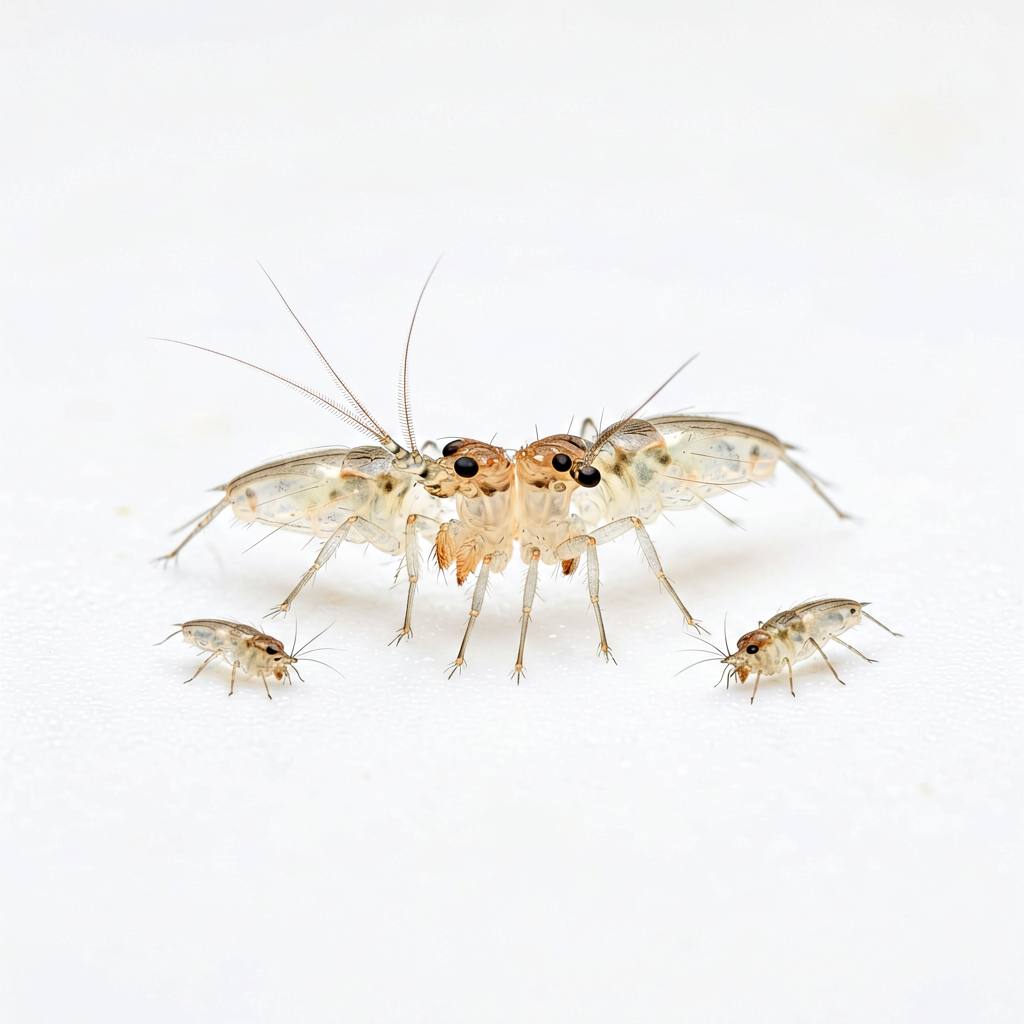
The long-snouted seahorse is a small ambush predator. It eats tiny crustaceans that drift past. Mysid shrimps are a favourite food. Amphipods, small shrimps, and tiny prawns are also taken. It will eat the young of other small animals too. It has no true stomach.
Food passes through its gut very quickly. So it must eat almost constantly to stay alive. Its long snout works like a pipette. The fish creeps close, then snaps its head forward. The sudden movement creates a strong suction. Prey is pulled into the mouth in a fraction of a second.
This strike is called a snick, and it makes a faint click. The fish hunts by sight. Its eyes move independently, which helps it scan for prey. A single adult may make hundreds of strikes in a day. In aquariums, seahorses are fed several times daily for this reason.
The pregnant father
Males carry the young
The long-snouted seahorse reverses the usual roles. The male, not the female, carries the young. A pair performs a short greeting dance each morning. This strengthens their bond. When the female is ready, she passes her eggs to the male. She places them into his brood pouch.
He fertilises the eggs inside the pouch. The tissue of the pouch then surrounds each egg. It supplies oxygen and nutrients, much like a womb. The eggs develop for about three to five weeks. Warmer water makes development faster. When the young are ready, the male pumps his body.
He releases a cloud of tiny seahorses into the water. A single brood may contain 100 to 300 young. The young drift with the currents for a time. Many are eaten before they settle. The parents give no further care. A male may carry several broods in one season.
Shrinking seagrass
Missing data, vanishing habitat
The long-snouted seahorse is listed as Data Deficient by the IUCN. That means scientists lack enough data to judge its health. The gaps matter, because its habitat is shrinking. Seagrass meadows are declining across Europe. Pollution, dredging, and coastal building all damage them. Boat anchors and moorings tear up eelgrass beds.
Bottom trawling catches seahorses by accident. Many die before they can be returned to the water. The species is also collected for the aquarium trade. All seahorses are listed on CITES Appendix II. That listing controls international trade in the group. In the United Kingdom, seahorses gained legal protection in 2008.
It is now an offence to disturb or harm them. Marine protected areas help where seagrass is fenced off. But most of its range lies outside such zones. Slow breeding makes recovery difficult.
Quick hits
Five things to remember
- Its snout makes up about a third of its head, the surest way to tell it from its cousin.
- The male becomes pregnant and gives birth, one of the few cases in the animal world.
- It has no stomach, so it must eat almost constantly to survive.
- Its tail can lock around a seagrass blade and hold on against a strong current.
- Its two eyes move independently, letting it watch for food and danger at once.
[…] look forward while the body stays upright. The short-snouted seahorse is the close relative of the Long-snouted Seahorse (Hippocampus guttulatus). The 2 species are the only seahorses of the coast of Europe. They live in the same beds of the […]