 By st20113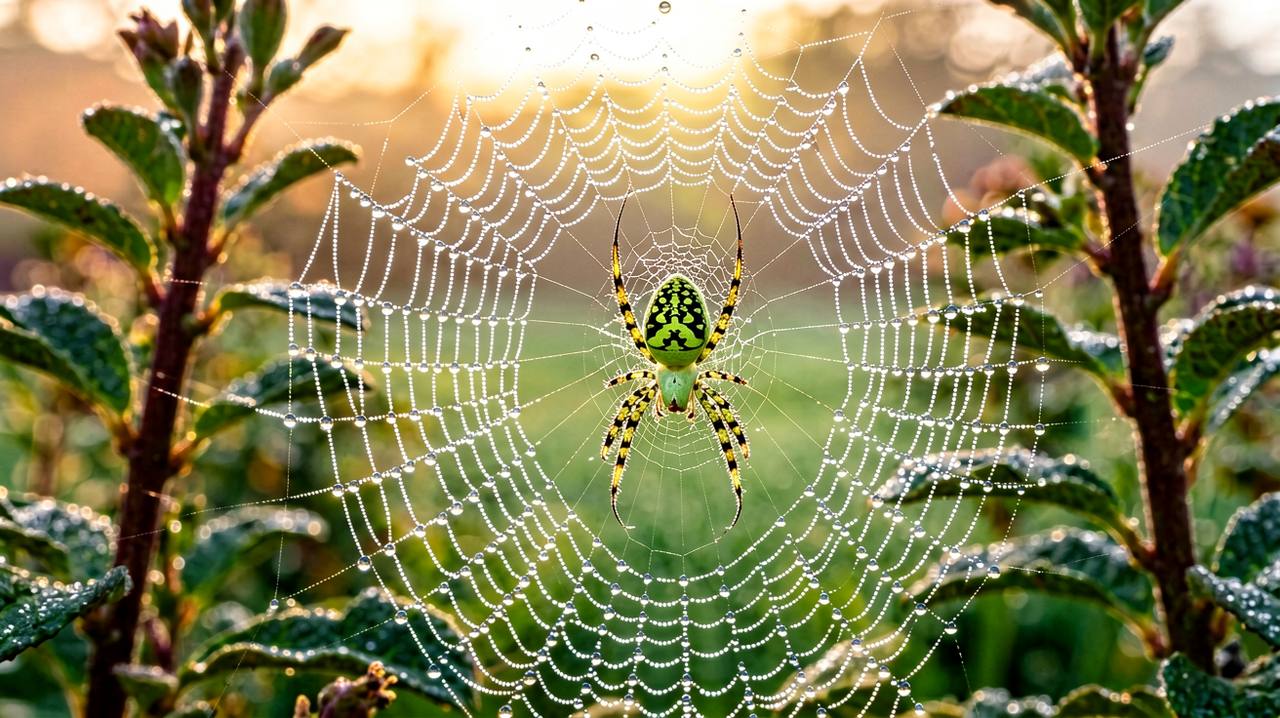
Araneus diadematus | Garden Cross Spider
Species Profile · Araneidae
Garden Cross Spider
The spider that hangs a fresh web in the garden every night, and wears a white cross on its back.
IUCN: Not Evaluated
Range
Size
Web
Eggs
Status
An everyday spider
The cross on its back
The garden cross spider is one of the most familiar spiders in Europe. It is also called the diadem spider or the European garden spider. Almost everyone has met one in a hedge or window frame. The female is the one people notice. She grows to about 12 to 17 millimetres long. The male is much smaller, often under nine millimetres.
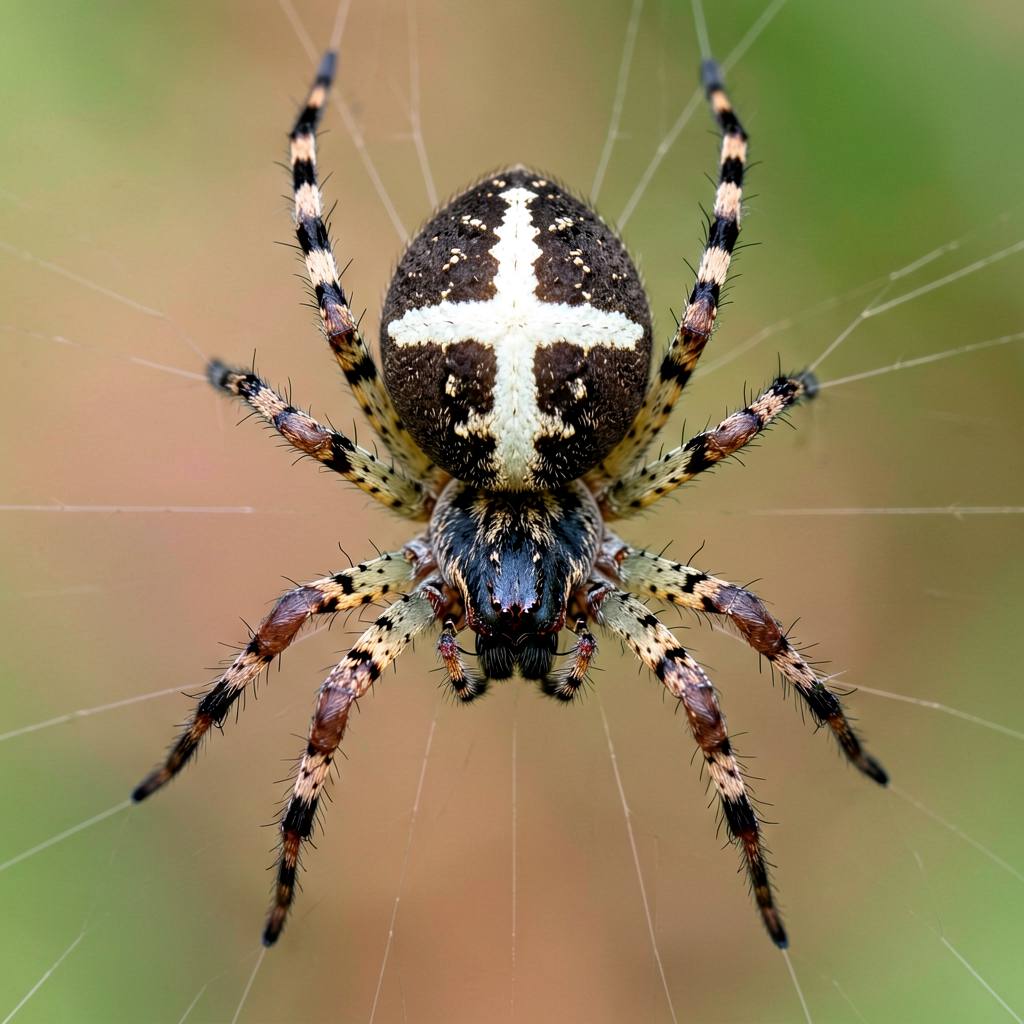
The spider takes its name from its markings. Five pale spots form a cross on the top of its abdomen. No two are exactly alike in colour. Some are grey, some brown, and some deep red. A few are almost yellow. The spider builds a round orb web, often in a garden or beside a path.
It can rebuild that web every day. In autumn, females become large and heavy with eggs. Then they are easiest to see. They are harmless to people. Their bite rarely breaks the skin.
Family tree
One of the orb-weavers
The garden cross spider sits in the genus Araneus. It belongs to the family Araneidae, the orb-weaver spiders. Orb-weavers are a huge family with thousands of species. They share a talent for building spiral webs. The species is native to Europe and parts of Asia. People later carried it to North America, where it is now common.
A close relative is the Yellow Garden Spider. Both build the same kind of round web. Both are harmless to humans. The yellow garden spider is much larger and bolder in colour. Its body is black and yellow, and it often sits in the middle of its web in daylight. The cross spider is smaller and more retiring.
It hides by day and works at night. Spiders in this family are not insects. They have eight legs and two body parts. Their silk has been studied by engineers for decades.
Legs, silk, and senses
A body built for silk
The female cross spider has a round, bulbous abdomen. Her legs are banded in pale and dark rings. They end in tiny claws that grip the web. Her head is small and holds eight simple eyes. Her eyesight is weak. She relies instead on feeling vibrations in the silk.
The male is a slim, spindly version of the female. He has a darker, more erratic pattern. Females come in many colours. Brown, grey, and reddish forms are all normal. The white cross marking stays the same. It is made of pale pigment under the skin.
The spider has two main silk glands and several types. Some silk is sticky, some is dry, and some is extra strong. The dragline silk is tougher than steel of the same weight. Like all spiders, she must moult to grow. Young spiders moult several times before adulthood. Adults stop growing.
1
2
3
Hedges and window frames
Where it hangs its web
This spider lives in gardens, hedges, woodland edges, and parks. It needs something to fasten its web to. Fences, shrubs, window frames, and tall plants all work. It is common in towns and cities as well as the countryside. It ranges across most of Europe and into Asia. It was introduced to North America and is now widespread there.
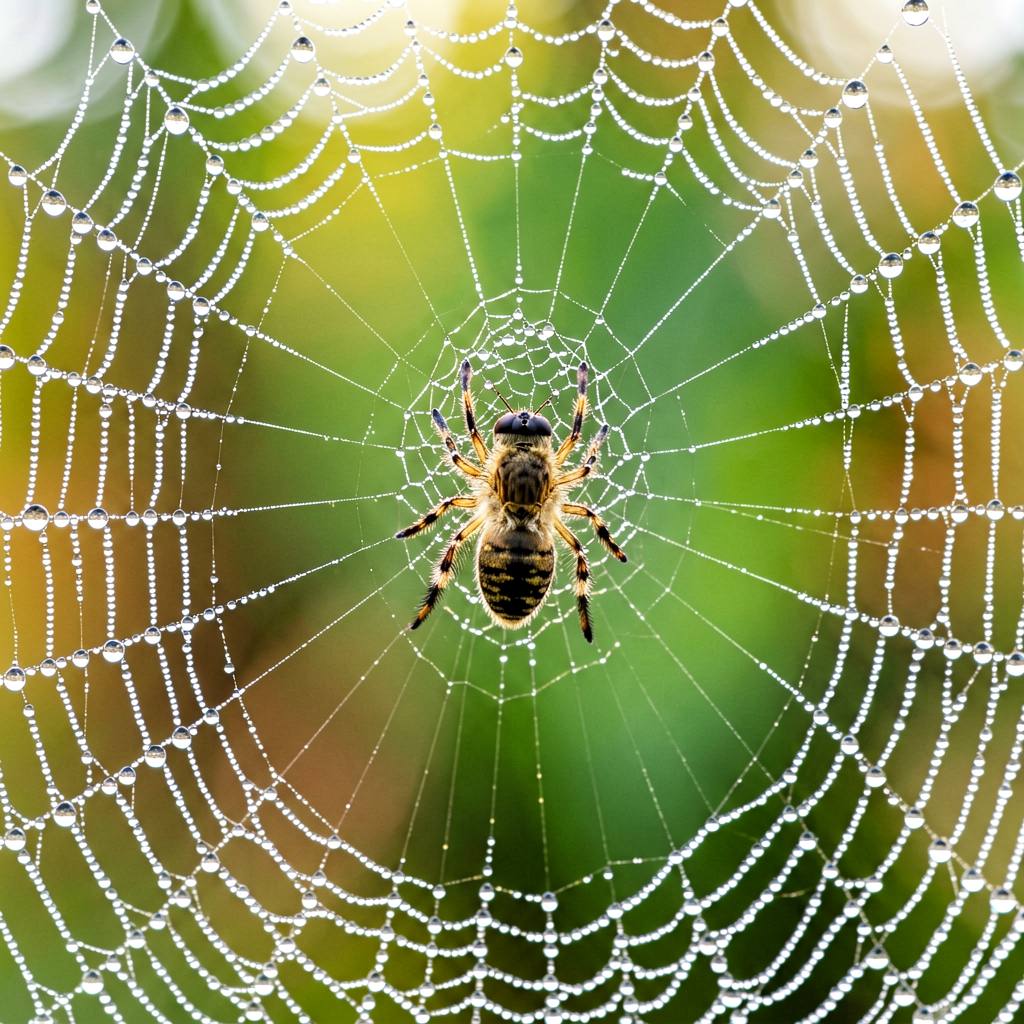
It builds its web at many heights. Webs appear between low plants and high branches. Each female has her own web and defends it. She usually builds it in the evening. The whole web may take under an hour to make. By morning it may be damaged by rain or by prey.
Then she often eats the old silk and recycles it. That saves energy. In late summer and autumn her web is at its largest. That is when she is heaviest with eggs.
What it eats
Flies caught in silk
The cross spider eats flying insects. Flies, mosquitoes, and small moths are common prey. It also catches wasps, beetles, and butterflies. The web does the work. Its sticky spiral holds an insect fast. When prey lands, the spider feels the vibration through the silk.
She runs to it and wraps it in more silk. Then she bites it. Her venom is weak by spider standards. It is strong enough to quiet a small insect, and harmless to a person. She cannot chew, so she injects digestive fluid instead. That turns the insect’s insides to liquid.
Then she drinks it. The spider leaves the empty husk behind. If the web is not disturbed, she often waits at the hub. Sometimes she hides under a leaf nearby. A signal thread runs from the hub to her hiding place. She can feel the smallest tug on that line.
Eggs in a silken sac
Autumn, then a long wait
Autumn is the season for cross spiders. By then the female is full-grown and heavy. The male is looking for a mate. He must approach very carefully. If he moves too fast, she may treat him as prey. He plucks at the edge of her web to signal that he is a mate, not a meal. He then transfers sperm to her.
Afterwards he usually dies. The female lays her eggs in a silken sac. A single sac may hold 300 to 800 eggs. She fixes the sac to a fence, a wall, or a plant stem. Then she dies as the cold arrives. The eggs do not hatch straight away. They overwinter inside the sac.
In spring the spiderlings emerge. Their first act is to climb upward. From a high point they release a thread of silk into the air. The wind catches it, and they drift to a new place. This is called ballooning. Few survive to build their own webs.
Not dangerous at all
A helpful garden neighbour
The garden cross spider has no formal protection. The IUCN has not assessed it, which is normal for most spiders. It does not appear to be in decline. In fact, it thrives in gardens and towns. Its main threats are small and local. Garden pesticides kill the insects it eats. Tidying away hedges and shrubs removes web sites. Cold, wet autumns can ruin egg sacs. Introduced spiders sometimes compete with it.
Birds, wasps, lizards, and shrews all eat cross spiders. Spider-hunting wasps are a special danger. They sting the spider and carry it away for their young. Even so, the species remains abundant across its range. It is a useful garden neighbour. Its web catches many pests. Leaving a corner of the garden untidy helps it through the winter. Spiders are also sensitive to garden chemicals. A spray meant for aphids can kill the spider too.
The cross spider rarely bites a person. When it does, the bite is no worse than a nettle sting. Many people mistake it for a dangerous species. In fact, no spider in northern Europe is truly dangerous. The garden cross spider is a helpful neighbour. It removes flies and mosquitoes all summer long. A single web can catch dozens of insects in a week.
Quick hits
Five things to remember
- Its name comes from the five pale spots that form a cross on its back.
- The female is far larger than the male, often more than twice his length.
- It usually eats its own damaged web and recycles the silk for a new one.
- Young spiderlings fly by releasing silk into the wind, a trick called ballooning.
- Its dragline silk is stronger, weight for weight, than steel.