 By st20113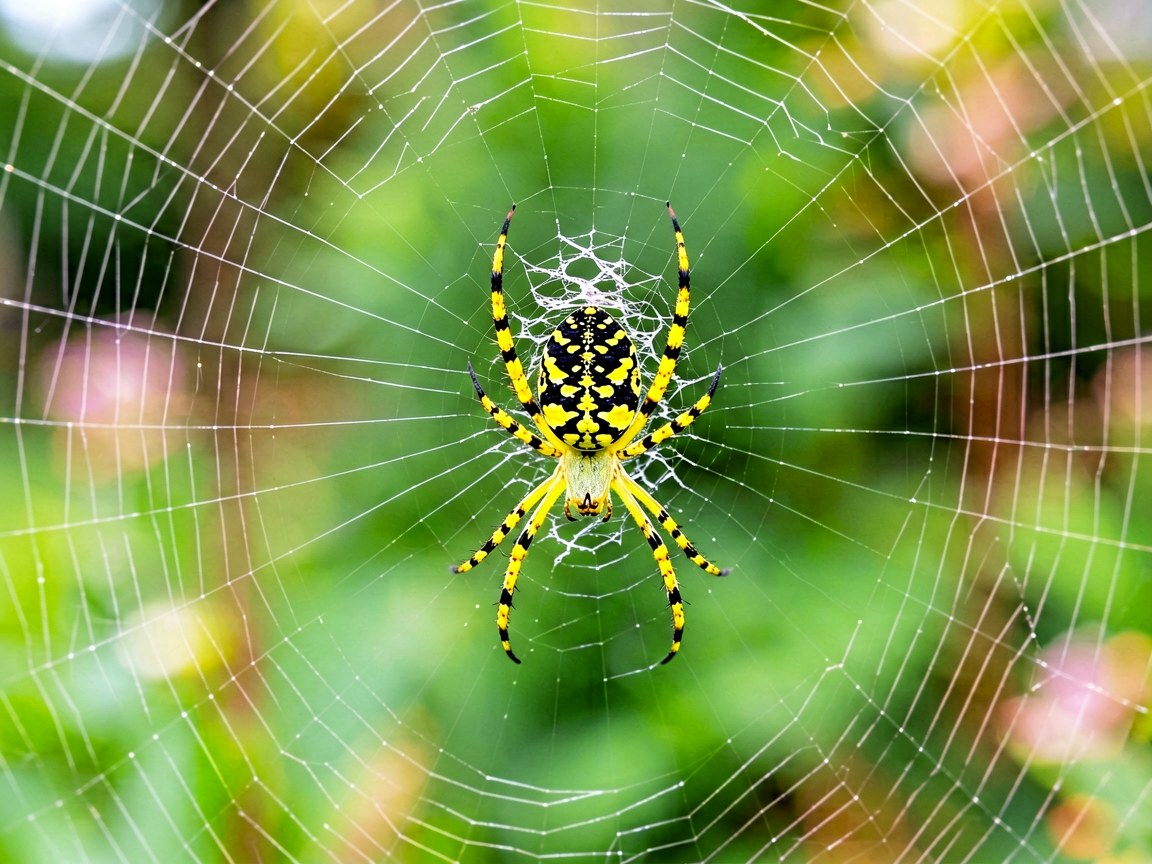
Argiope aurantia | Yellow Garden Spider
Introduction
Argiope aurantia, the yellow garden spider or black-and-yellow garden spider, is a large orb-weaver common across the eastern and central United States and parts of Canada and Mexico. Females are conspicuous in late summer, hanging head-down in the center of symmetrical wheel-shaped webs stretched across gardens, fields, and fence lines. The bold yellow-and-black patterning on the abdomen makes the species easy to identify and a favorite among backyard naturalists. Despite their intimidating size, these spiders are shy and beneficial, catching pest insects and posing little danger to people. Their webs often include a curious zigzag band of silk called a stabilimentum that has fascinated arachnologists for generations.
Taxonomy
Argiope aurantia belongs to the family Araneidae, the orb-weaver spiders, within the genus Argiope, which includes many similarly striking tropical and temperate species. The genus name Argiope comes from a Greek word for “silver-faced,” a nod to the bright markings some species show. As an arachnid it is more closely related to harvestmen and scorpions than to insects, though it shares the terrestrial invertebrate world with groups such as the [Harlequin Ladybird](https://www.gloencyc.com/harmonia-axyridis-harlequin-ladybird/), an insect that also turns up in gardens hunting smaller prey. Within Araneidae, A. aurantia is distinguished by its size, coloration, and the prominent stabilimentum it weaves into the web center.
Physical Characteristics
Females are the giants of the pair, with a body length of roughly two to three centimeters and a legspan that can reach about seven centimeters, while males are barely a quarter of that size. The cephalothorax is covered in silvery-white hairs, and the rounded abdomen is marked with a bold pattern of yellow and black bands bordered by a marginal stripe. The eight legs are black with occasional yellow bands and are held in a characteristic posture. Like all spiders, it has eight eyes arranged in two rows, chelicerae bearing fangs, and spinnerets that produce several types of silk. The web is large, often half a meter across or more, with a dense central hub and a thick zigzag stabilimentum that may reflect ultraviolet light to warn birds away. The spider’s grip on silk is sure, and it can vibrate the web when threatened to blur its outline.
The silk itself comes in several types: dragline silk for the framework, sticky capture spiral for trapping, and the bright, non-sticky silk of the stabilimentum. Females molt through a series of instars as they grow, and the bold yellow-and-black pattern intensifies with each molt, reaching full expression only in the final adult stage. The spider can adjust the protein composition of its silk to match humidity, keeping the web resilient through changing weather. Sensitive trichobothria, fine hairs on the legs, detect air movement and the frequency of struggling prey, letting the spider locate a catch without seeing it. This sensory suite is what allows a largely blind hunter to operate with precision in a complex garden web.
Habitat
Yellow garden spiders occupy open or lightly wooded habitats with enough structure to anchor a web: gardens, meadows, roadside verges, orchards, and the edges of ponds or fields. They prefer sites that receive sun for part of the day and are sheltered from strong wind, often building between plant stems, branches, and fence posts about knee to head height. The web is rebuilt or repaired daily, usually in the evening, and is taken down each morning so the spider can hide in a retreat of rolled leaves nearby. They are found across a broad latitudinal range but are most active in warm months, with the largest females appearing in late summer and autumn. Urban and suburban gardens suit them well, which is why they are such familiar backyard animals.
Through the season the spider follows a daily rhythm: it spins or repairs the orb at dusk, waits in the hub through the night when insects are active, then retreats to a silk shelter at dawn and often consumes the capture spiral, recycling the silk proteins for the next build. As autumn cools, the female reaches peak size and produces her egg sacs before the first hard frost ends her life. The synchrony of this cycle with the late-summer abundance of grasshoppers and moths is what makes roadside webs so conspicuous in August and September. In warmer southern regions the season simply lasts longer, and a new generation establishes from the overwintered eggs each spring.
Diet
Argiope aurantia is a carnivore that feeds almost entirely on insects caught in its web, including flies, grasshoppers, moths, bees, wasps, and aphids. When prey strikes the sticky spirals, the spider rushes out, bites with venom that subdues the victim, and wraps it in silk before feeding. The venom is potent to insects but mild to humans, comparable to a bee sting at most. The spider often rotates the captured prey in its silk to form a tidy bundle and may leave it suspended for later. Because it consumes large numbers of pest insects, it is considered beneficial in gardens and crops. It does not chase prey; instead it waits in the hub, sensing vibrations through the threads, and may cut free and drop on a safety line if the web is seriously disturbed.
Reproduction
Mating occurs in late summer, and the much smaller male approaches the female’s web cautiously, often plucking the silk to signal his presence and avoid being eaten. After mating, the female builds one or more papery, tan, spherical egg sacs, each the size of a small marble and containing hundreds of eggs. She guards the sacs and may suspend them near the web retreat until she dies with the first frosts. The spiderlings hatch inside and overwinter, emerging in spring to disperse by ballooning on silk threads carried by the wind. Most females live only a single season, while males mature and die even earlier. The dramatic size difference between the sexes is typical of orb-weavers, where females invest heavily in egg production.
Conservation
The yellow garden spider is abundant and secure across its range, with no conservation status of concern. Its adaptability to gardens, agricultural edges, and disturbed ground means it tolerates human presence better than many invertebrates. The chief threats are broad-spectrum pesticide use and the loss of flowering habitats that support its insect prey, but populations remain widespread. Because it is harmless and useful, gardeners are often encouraged to leave it undisturbed rather than remove the web. Long-term monitoring is unnecessary, though it serves as a useful indicator of healthy garden insect communities wherever it is found.
Fun Facts
- The female’s web can span half a meter and includes a bold zigzag silk band called a stabilimentum.
- Males are tiny next to females, sometimes less than a quarter of her size, and court carefully to avoid becoming lunch.
- The spider often hangs upside down in the web’s center, waiting to feel the vibration of trapped prey.
- It can shake the web rapidly when threatened, blurring its shape to confuse predators.
- Each egg sac holds hundreds of spiderlings that survive the winter and balloon away on silk the next spring.
[…] Cage Fungus Eptatretus stoutii | Pacific Hagfish Scutigera coleoptrata | House Centipede Argiope aurantia | Yellow Garden Spider 16 Sep 2026, […]
[…] is the only member of that genus in Britain and northern Europe. Its closest well-known kin is the Yellow Garden Spider. That spider is a big, bright orb weaver. It hangs head down in a large spiral web. It uses only […]
[…] wasp spider shares the genus with the yellow garden spider. That is a North American species of much the same size and looks. The two are close kin. People […]