 By st20113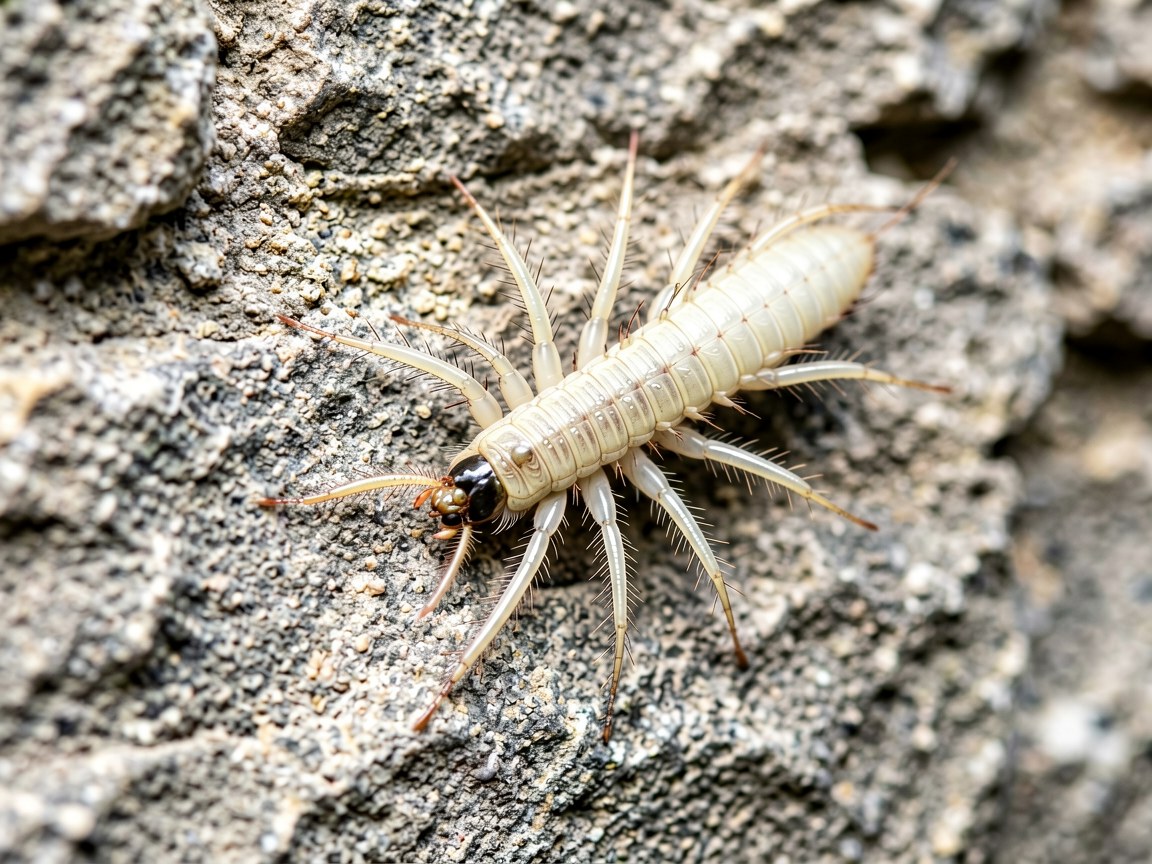
Scutigera coleoptrata | House Centipede
Introduction
Scutigera coleoptrata, the house centipede, is a pale, fast-moving centipede found in homes and gardens across warm regions of the world. Unlike the slow, flattened centipedes of leaf litter, it has long, delicate legs that let it sprint across floors and walls with surprising speed. Reaching about four to five centimeters including its legs, it is unmistakable with its many legs, long antennae, and paired tail-like appendages. Although its appearance alarms many people, it is a beneficial predator of household pests such as cockroaches, silverfish, and spiders. It is harmless to humans, with venom too weak to matter through our skin, and it prefers to flee rather than bite.
Taxonomy
Scutigera coleoptrata is placed in the class Chilopoda, the centipedes, within the order Scutigeromorpha, a group known as the “house centipedes” with their long legs and rounded bodies. The genus Scutigera contains several similar species, but coleoptrata is the one most associated with human dwellings. Centipedes are myriapods, relatives of millipedes, and distinct from insects despite the shared terrestrial ancestry; they belong to the broader invertebrates that also include familiar soil animals such as the [Common Earthworm](https://www.gloencyc.com/earthworm-lumbricus-terrestris/), though centipedes are active predators rather than soil recyclers. This species is distinguished from other centipedes by its fifteen pairs of legs and its habit of living indoors in warm climates.
Physical Characteristics
The adult house centipede has fifteen pairs of legs, one pair per body segment, with the front pair modified into venom claws called forcipules that lie under the head. Its body is flattened and grayish-yellow with three dark stripes running down the back, and the last pair of legs is elongated, sometimes mistaken for antennae at the rear. The legs are banded and remarkably long, giving it both speed and the ability to navigate complex surfaces. It has a pair of long, many-segmented antennae on the head and a cluster of simple eyes. The legs are delicate and can break off if grabbed, allowing the centipede to escape, and they are replaced at the next molt in younger animals. Its speed comes from a wave-like coordination of the legs that propels it in sudden darts across a room.
Habitat
House centipedes originate in the Mediterranean region but have spread through trade to homes on every continent with a warm climate. Outdoors they live under stones, bark, and leaf litter in moist shady places; indoors they favor basements, bathrooms, and sinks where humidity is high and prey is abundant. They avoid dry, bright areas and are mostly nocturnal, hiding by day in cracks and drains. Because they need moisture, their presence often signals a damp corner or a healthy population of other arthropods to eat. They thrive in human buildings precisely because these offer stable warmth and a steady supply of insect prey, making them one of the few centipedes comfortable as synanthropes.
Diet
Scutigera coleoptrata is an active predator that hunts a wide range of small arthropods, including cockroaches, silverfish, termites, ants, bed bugs, moths, and spiders. It uses its antennae to locate prey, then rushes in and pins the victim with its legs while injecting venom through the forcipules to subdue it. The prey is then chewed and digested externally with enzymes before being sucked dry. Because it targets so many household pests, it is often welcomed by people who recognize its role as a natural form of pest control. It does not eat plants or stored food and causes no structural damage. In homes with few insects it will simply move on or starve, so its numbers track the availability of prey rather than the house itself.
The venom of Scutigera is a cocktail of small peptides and enzymes delivered through the forcipules, evolved to paralyze arthropod prey rather than to defend against large animals. In humans the dose is trivial and the fangs rarely penetrate skin, so at most it causes a brief, mildly irritating pinch. The centipede relies on speed and grip more than on venom strength, wrapping legs around the prey while the forcipules find a soft spot. Because it feeds on such a broad set of indoor pests, a single household centipede can suppress cockroach and silverfish numbers noticeably over a season. It does not web or ambush; it actively patrols cracks and corners, using antennae to map the surface and locate prey by touch and vibration in the dark.
Reproduction
Males deposit a spermatophore, a small packet of sperm, on a thread and court the female to pick it up, a ritual that can involve the male tapping the female with his legs and antennae. After fertilization the female lays her eggs in moist soil or hidden crevices, sometimes twenty to thirty at a time and often in multiple batches through the season. The young hatch with only four pairs of legs and add more with each molt, reaching the full fifteen pairs only after several molts. Development is slow and can take more than a year, with many molts before maturity. Adults may live several years under good conditions. The secretive lifestyle means most reproduction happens out of sight in wall voids, under floors, and in garden soil.
The number of leg-bearing segments is fixed at fifteen pairs in the adult, but the young add segments only up to a point and then add leg pairs with later molts until the full count is reached, a pattern unusual even among centipedes. Each molt carries risk, as the soft new cuticle is vulnerable until it hardens, so the centipede hides during ecdysis. Adults may continue to molt slowly and can regenerate lost legs if the damage occurs early enough. Females are longer-lived and grow larger than males, and the extended juvenile period means a population builds up gradually rather than in sudden bursts. This slow development is typical of long-lived, low-fecundity household invertebrates.
Conservation
The house centipede is common and cosmopolitan in human environments, with no conservation concern anywhere. Its success is tied to human habitation, which provides warmth, moisture, and prey, so it is effectively benefiting from urbanization rather than threatened by it. The only management issue is the discomfort it causes some residents, leading to attempts at removal, but these are local and do not affect populations. In natural habitats it remains a normal part of leaf-litter and stone microfauna. No special study or protection is needed, though it is a useful, if underappreciated, ally in controlling indoor pest insects.
Fun Facts
- The house centipede has fifteen pairs of legs, and the back pair is so long it is often mistaken for antennae.
- It can sprint across a wall or ceiling fast enough to catch cockroaches and silverfish in your home.
- The front legs are venom fangs used to subdue prey, but they are harmless to people.
- If grabbed, it can shed a leg to escape, then regrow a replacement at the next molt.
- It is a natural pest controller, happily eating the very bugs most people would rather not have indoors.