 By st20113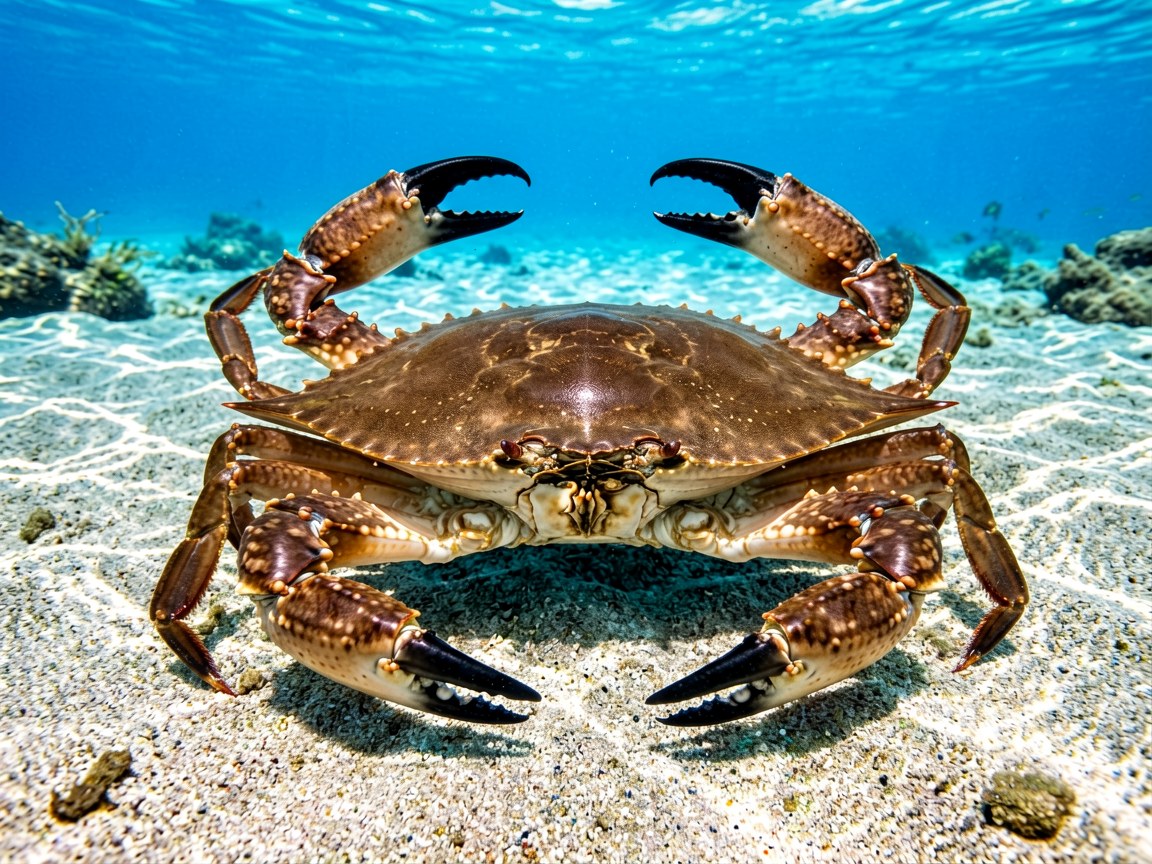
Cancer pagurus | Edible Crab
Introduction
The Edible Crab (Cancer pagurus), often called the brown crab, is the largest and most commercially valuable crab of the north-east Atlantic—a heavy, broad-clawed crustacean that has sat at the heart of European seafood tradition for centuries. Males can exceed 25 cm across the shell and weigh several kilograms, making it a formidable inhabitant of the seabed and a prize for fishermen from Norway to Portugal.
With its ridged, reddish-brown shell and distinctive black-tipped claws, the edible crab is a familiar sight in fish markets and on restaurant plates, yet it is also a capable predator and scavenger that helps run the ecology of the coastal floor. Few shellfish better symbolise the rich, cold waters of the European Atlantic.
Taxonomy
Cancer pagurus was described by Linnaeus in 1758; the genus name Cancer is the Latin for crab, and pagurus derives from the Greek for a crab or a kind of sea crayfish. It belongs to the family Cancridae, within the order Decapoda (“ten-footed”) and the class Malacostraca, placing it among the true crabs, shrimps, and lobsters of the phylum Arthropoda.
Like the common mussel, described in our article on Mytilus edulis (Common Mussel), the edible crab is a cornerstone of European shellfish harvesting, but the resemblance ends there: the crab is a hard-shelled, active crustacean that walks and grabs, while the mussel is a sedentary bivalve mollusc that filters the water—two very different answers to life on the seabed.
Physical Characteristics
The Edible Crab has a broad, oval, slightly rounded shell (carapace) typically 15–25 cm across in adults, occasionally near 30 cm, coloured reddish-brown above and paler beneath. Its most telling feature is the front edge of the shell, which bears nine blunt teeth on each side; the two claws are large and powerful, tipped with characteristic black, and the four pairs of walking legs are stout and spined.
Unlike a lobster, it carries its abdomen folded tightly under the body, hidden from above. The shell is moulting armour: as the crab grows it must shed the old carapace and emerge soft and vulnerable, hardening a new one over days. The mouth bears small chewing appendages, and the eyes and antennae sit on short stalks at the front, giving it a low, armoured, watchful profile.
Habitat
The Edible Crab lives on the seabed from the shallow sub-tidal down to about 100 m, favouring a mix of rocky reefs, boulders, and coarser sandy or gravelly grounds where it can hide by day and forage by night. It ranges along the Atlantic coasts of Europe from Norway and the British Isles south to Morocco, and into the western Mediterranean.
It is a largely nocturnal, bottom-dwelling animal that shelters in crevices and among rocks, emerging after dark to hunt and scavenge. Although it can tolerate a range of temperatures, it does best in the cooler, oxygen-rich waters of the north-east Atlantic, and larger individuals tend to occupy deeper water, while younger crabs crowd the inshore shallows where they are most exposed to fishing.
Diet
The Edible Crab is an opportunistic omnivore and scavenger, eating whatever the seabed offers: it cracks open mussels, clams, and other shellfish with its strong claws, seizes worms and small crustaceans, and readily feeds on carrion and discarded fish. Its diet shifts with what is available, making it an effective cleaner of the seafloor as well as a predator.
In turn it is prey for larger fish such as cod and rays, for seals, and above all for humans, who take it in crab pots throughout its range. By controlling populations of mussels and other bivalves and by recycling dead organic matter, it helps structure the invertebrate community of the coastal bottom, a quiet but important ecological role.
Reproduction
Edible Crabs breed after the female has moulted, when her shell is still soft and mating can occur; the male guards her and transfers sperm, and the female then carries the fertilised eggs attached under her abdomen for several months until they hatch into tiny planktonic larvae. The young pass through several larval stages (zoea, then megalopa) drifting in the plankton before settling to the bottom as miniature crabs.
This planktonic phase scatters the offspring widely but exposes them to heavy losses from predators and currents, so only a tiny fraction reach the seabed. Females produce very large egg batches, and the species’ continued abundance depends on enough adults surviving to breed—which is why fisheries impose minimum sizes and protect “berried” (egg-carrying) females.
Conservation
The Edible Crab supports major fisheries and is not globally threatened, but it is vulnerable to overfishing in places, especially because the largest, most productive females are the most sought after. Management therefore relies on minimum landing sizes, bans on taking egg-bearing females, and seasonal or area closures to let stocks replenish.
Climate change adds uncertainty: warming and ocean acidification can affect larval survival and shift the crab’s range northward, while the loss of structural habitat on the seabed reduces shelter for juveniles. Sustainably minded consumers are encouraged to choose crabs from fisheries certified for responsible practice, since well-managed pots do far less damage to the seabed than some other fishing gear.
Fun Facts
- The edible crab can live for more than 30 years, growing steadily each time it moults its shell.
- A crab that has just shed its old shell is the soft “peeler crab” prized as a delicacy before the new armour hardens.
- Its claws are strong enough to crush mussels and clams, but the black tips are a handy field mark for the species.
- Like other crabs it can regenerate a lost claw or leg over successive moults.
- It is the heaviest crab of the European Atlantic and the backbone of a crab-fishing industry stretching from Scandinavia to the Mediterranean.
[…] is Decapoda. Its family is Portunidae. Its genus is Necora. Its best-known British relative is the Edible Crab. That crab is much heavier and rounder. It has a smooth reddish-brown shell and huge crushing […]