 By Iris
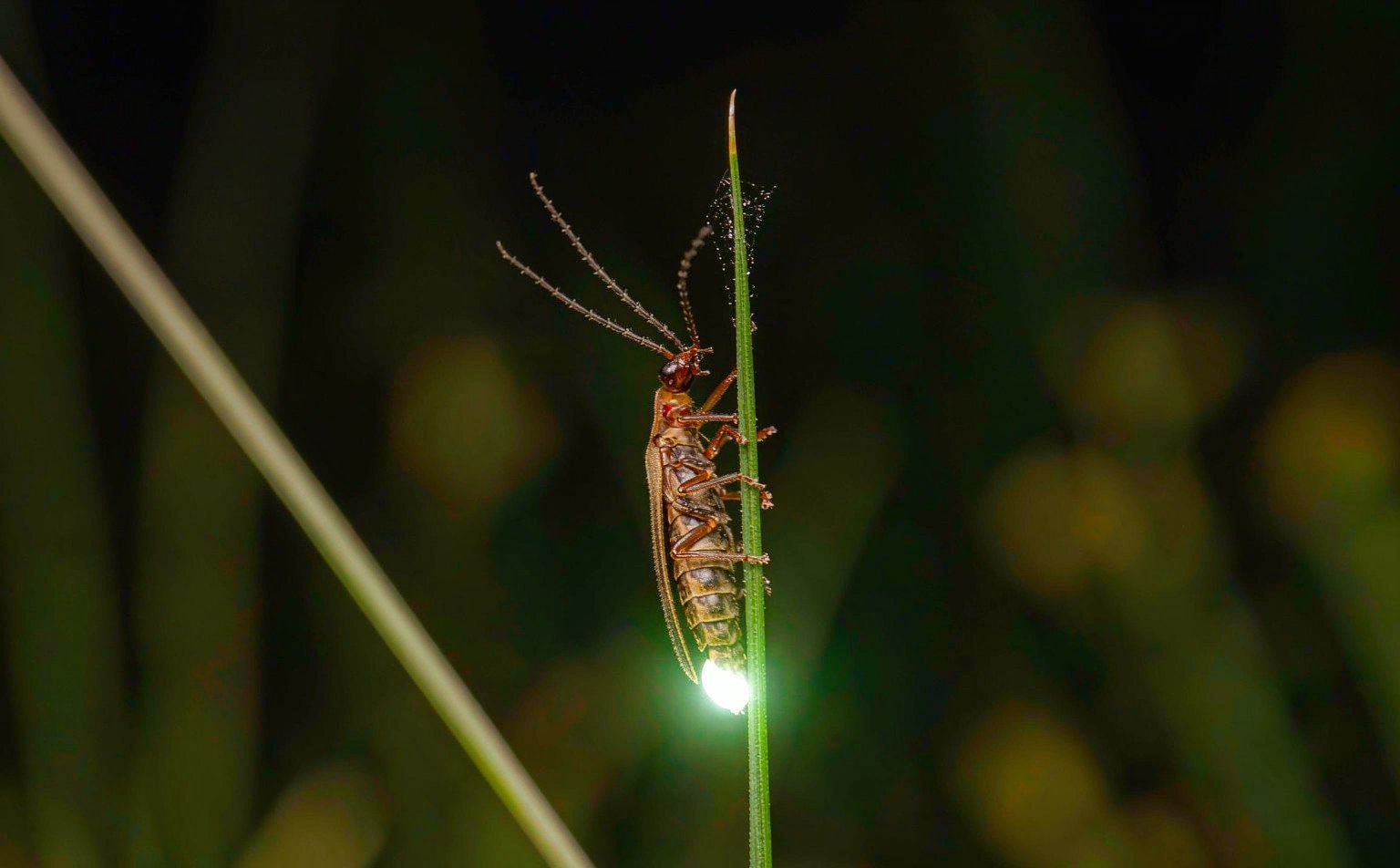
Lampyris noctiluca | Glow-worm
Introduction
The Glow-worm (Lampyris noctiluca) is not a worm at all but a beetle, famous for the soft green light emitted by the flightless female as she sits in the grass on a summer night, signalling to the winged male. This cold, bioluminescent glow is one of the best-loved sights of the European countryside after dark, and the chemistry behind it has fascinated scientists for centuries. In Britain and across the continent the glow-worm is a symbol of warm, undisturbed summer nights.
The adult female’s lantern is a remarkable example of communication by light, and the beetle’s whole life is bound to rough grassland and hedgerows where its snail prey abounds. Though declining in some intensively managed landscapes, the Glow-worm remains a cherished indicator of healthy, light-unspoiled habitat.
Taxonomy
The Glow-worm was described by Carl Linnaeus in 1758 and placed in the genus Lampyris within the family Lampyridae, the fireflies and glow-worms. Despite the English name, it is a beetle, not a worm or a fly, and the European glow-worm is flightless as an adult female. The genus name refers to the glowing light, and the group is found across the Northern Hemisphere.
It lives in the same rough grasslands and hedgerows as the Common Blackbird, which forages for the snails the glow-worm eats, and its habitat is also used by the Red Fox and the European Badger as they move through the night.
Physical Characteristics
The adult Glow-worm shows extreme differences between the sexes. The female is 10 to 20 millimetres long, soft-bodied, wingless and larviform, with a pale, segmented body and a glowing greenish-yellow tip to the abdomen formed by light-producing organs. The male is smaller, about 10 to 12 millimetres, fully winged with brown elytra and a less conspicuous, often broken glow.
The larva resembles a flattened, dark beetle grub with a faint sheen and is itself faintly luminous. The light is produced without heat by a reaction of luciferin and oxygen in specialised cells, a cold glow that is highly efficient. The contrast between the glowing, earthbound female and the dark, flying male is the species’ defining trait.
Habitat
Glow-worms need rough, flower-rich grassland, hedgerows, scrub edges, railway embankments and open woodland rides where snails are plentiful and the grass is left long enough to shelter them. They avoid heavily grazed, mown or fertilised turf and places flooded with artificial light at night, which disrupts the mating signal. Calcareous grassland and downland are classic strongholds.
They are nocturnal and spend the day hidden at the base of vegetation, becoming active after dark. The species is sedentary as an adult, so a stable, connected patch of suitable habitat is needed for a population to persist year by year.
Diet
Both the larva and the adult female are predators of small snails, which they subdue with a paralysing bite and liquefy with digestive fluids before eating. The snail diet is unusual among beetles and explains the glow-worm’s need for long, unmanaged grass where snails thrive. A single larva may consume many snails as it grows.
The adult male feeds little, if at all, living only to find a female, while the female may take some food but devotes most energy to glowing and egg-laying. The dependence on snails ties the glow-worm closely to the structure and chemistry of its grassland, since snails need the same damp, undisturbed cover.
Reproduction
On warm, still summer nights the wingless female climbs a grass stem and switches on her glow, emitting a pulse of green light that the flying male detects from a distance. They mate, and the female then lays her eggs in the vegetation, often over several nights, before she dies. The tiny larvae hatch and begin hunting snails.
The larvae develop through one to two years, overwintering in the soil or litter, before pupating in the ground and emerging as adults the following summer. The brief, luminous adulthood is the climax of a long, hidden life spent among the grass and its snails.
Conservation
The Glow-worm is classified as Least Concern in many areas but has declined locally with the loss of unimproved grassland, over-grazing, intensive mowing and light pollution. Because its signal depends on darkness, skyglow from towns and lit roads can break the mating system and isolate populations, a threat unique to luminous species.
Conservation measures include leaving rough grassland uncut through summer, reducing pesticide use that removes snails, restoring hedgerows and downland, and limiting night lighting near breeding sites. Dark, flower-rich, snail-friendly grassland is the single most important factor for keeping glow-worms glowing in the landscape.
Fun Facts
- The glowing “worm” is actually a wingless female beetle, not a worm at all.
- Her light is cold, produced without heat by a chemical reaction in her abdomen.
- The light is a love signal: a sitting female beams to attract a flying male in the dark.
- Glow-worms eat snails, paralysing them with a bite before sucking them out.
- Artificial light at night can break their mating system, so darkness helps them survive.
[…] belongs to the fly family Keroplatidae, within the order Diptera, and is a relative of the European Lampyris noctiluca (Glow-worm), although that beetle and the fungal gnat evolved their light independently. The genus name […]