 By st20113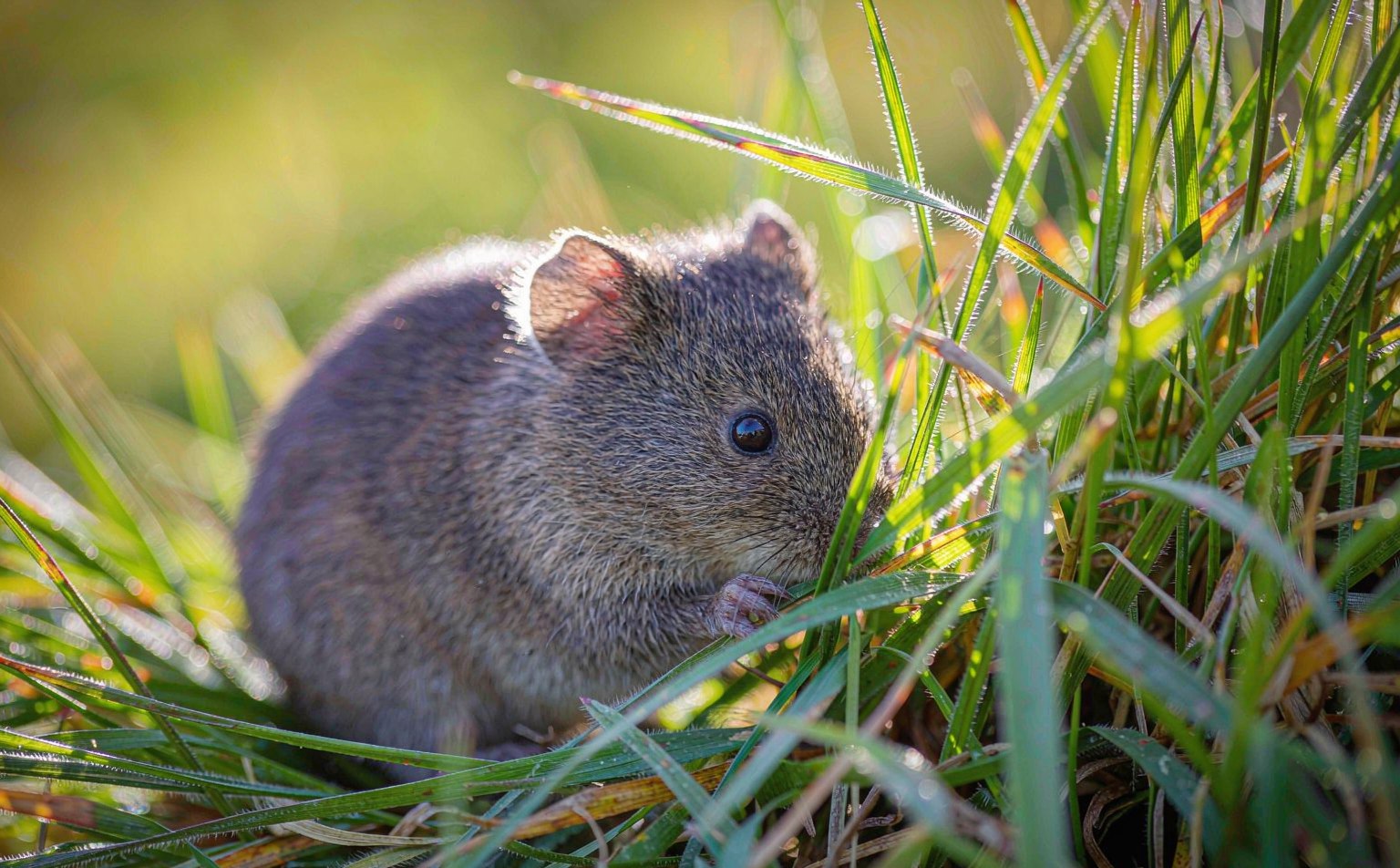
Microtus agrestis | Field Vole
Introduction
The Field Vole (Microtus agrestis), also known as the short-tailed vole, is one of the most abundant small mammals of the grasslands, moorlands and field margins of northern and western Europe. A stubby, shaggy rodent with a blunt face and a short tail, it lives much of its life hidden in dense grass and moss, where it forms the dietary foundation for a wide range of predators. Its cycles of boom and bust shape the fortunes of many birds and mammals that depend on it.
Though seldom seen, the Field Vole is a keystone of the lowland ecosystem. In favourable habitats it reaches extraordinary densities, and its constant nibbling helps shape the structure of grasslands. For ecologists it is a classic example of a small mammal whose population cycles ripple through entire food webs.
Taxonomy
The Field Vole was described by Carl Linnaeus in 1761 and placed in the genus Microtus, the voles, within the family Cricetidae. Voles differ from true mice in their stockier build, blunter snout, smaller ears and much shorter tail. The Field Vole is among the most widespread of the European voles.
It shares its grassy world with the Red Fox and the European Badger, both of which take voles when available, and it is also preyed upon by snakes such as the Grass Snake where their ranges overlap in damp meadows.
Physical Characteristics
The Field Vole is a compact rodent of 9 to 12 centimetres in head-and-body length, with a tail of only 3 to 4.5 centimetres, and it weighs 20 to 50 grams. Its fur is coarse and varies from grey-brown to reddish-brown above, paler buff below. The ears are small and largely hidden in the fur, the eyes are tiny, and the snout is rounded rather than pointed.
The limbs are short and the feet broad, suited to a life spent running through dense vegetation rather than climbing. The incisors are prominent and continuously growing, as in all rodents. Sexes are similar in appearance, and the animal’s nondescript coloration is an adaptation to a hidden, ground-dwelling existence among tussocks and litter.
Habitat
Field Voles occupy grassland, rough pasture, moorland, roadside verges, young plantations and field margins, wherever there is thick ground cover. They prefer tussocky grass and moss that offers both food and protection, and they avoid heavily grazed or regularly mown turf. In Britain they are common even in upland heaths.
They are active by day and night in bouts, and they construct a network of runways through the grass that reveal their presence as worn paths. They do not hibernate, remaining active through winter beneath snow or in surface vegetation, and their populations can swell rapidly when cover and food are abundant.
Diet
The Field Vole is a herbivore that feeds mainly on grasses, sedges and the leaves, stems and seeds of low plants. It also eats roots, bark, mosses and fungi, and in winter it may gnaw the bark of young trees and shrubs, occasionally causing damage in plantations. Food is taken close to the protective runways, and the animal rarely ventures into the open.
Like other voles it has a high metabolic rate and must eat almost continuously, so it creates caches of cut grass in nest chambers during abundant periods. Its feeding keeps grasslands closely cropped in patches and influences the plant composition of the sward where it is numerous.
Reproduction
Field Voles are prolific breeders. Under good conditions they can raise a litter every three weeks through the spring and summer, with a gestation of about 21 days and typically four to six naked, blind young per litter. The female builds a grass nest in a runway or shallow burrow, and the young develop quickly, becoming independent at about two to three weeks.
A female may produce several litters in a single season, and because individuals mature at a few weeks old, populations can multiply explosively. This fecundity balances the very high mortality from predation and weather; in crash years numbers can fall by more than ninety percent before rebuilding.
Conservation
The Field Vole is rated Least Concern and remains abundant across its range, though local populations fluctuate dramatically and some intensive farmland now supports few voles because of loss of tussocky cover. Its overall status is secure, but the species is highly sensitive to habitat simplification.
Maintaining rough grassland, field margins, hedgerow bases and ungrazed tussocks benefits the Field Vole and, through it, the many predators that rely on it. Agri-environment schemes that delay mowing and retain grassy corners are among the most effective measures for sustaining vole numbers and the biodiversity they support.
Fun Facts
- Field Vole numbers can rise and fall in dramatic cycles, sometimes changing tenfold between peak and crash years.
- A single female may help produce dozens of voles in one summer through repeated litters.
- They carve visible runways through grass, like tiny motorways across a meadow.
- Their population cycles strongly influence how many barn owls and kestrels a district can support.
- Despite their name, voles are not mice but belong to a separate rodent group with much shorter tails.