 By st20113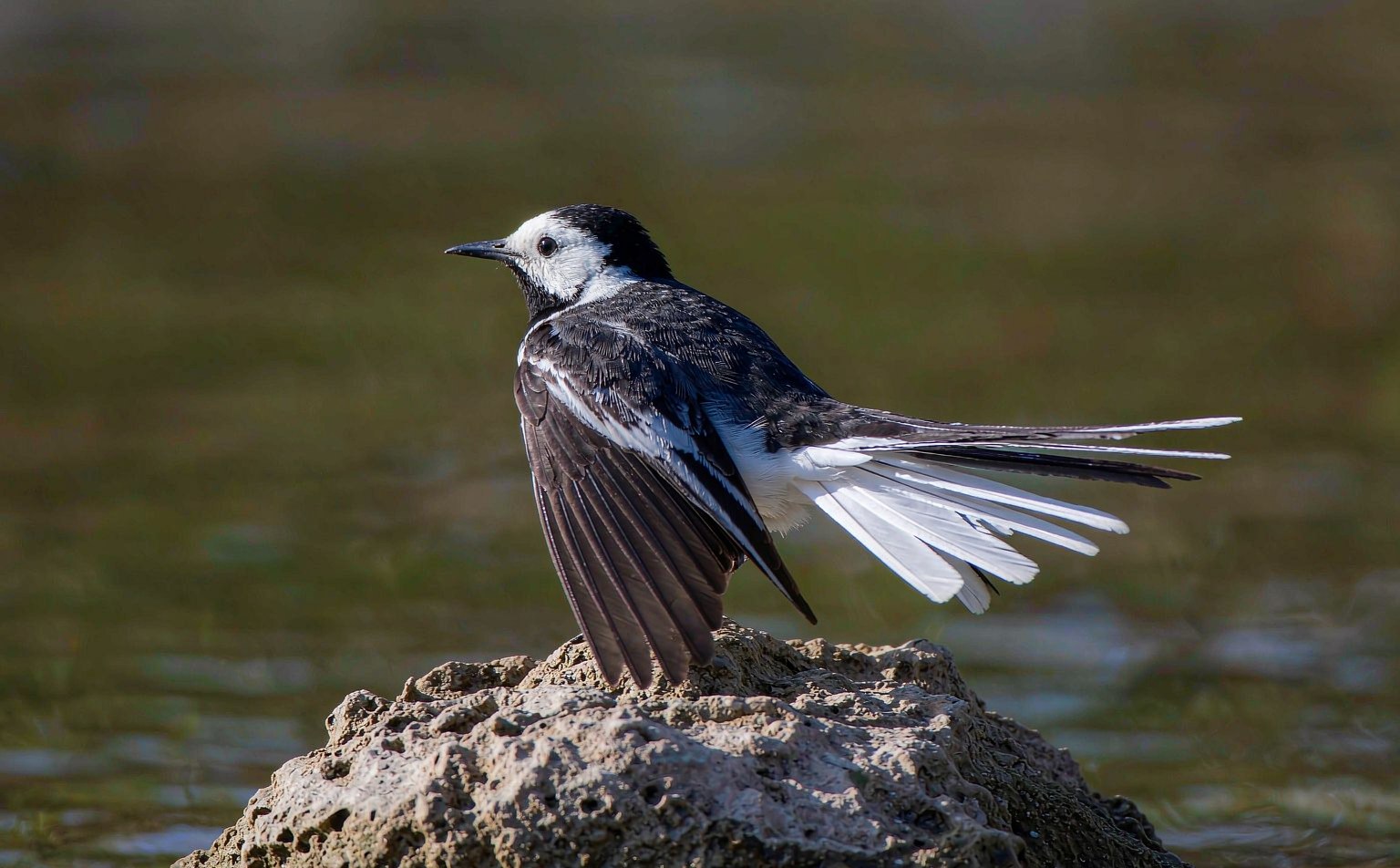
Motacilla alba yarrellii | Pied Wagtail
Introduction
The Pied Wagtail (Motacilla alba yarrellii) is the British and Irish subspecies of the White Wagtail, a smart black-and-white bird of rivers, lakes, farmyards and town centres across the region. Named for its habit of constantly pumping its long tail up and down, it is a familiar sight along stream edges and on rooftops, where it dashes after flies with cheerful agility. Its confident manner and tidy plumage make it one of the most approachable of garden and waterside birds.
A bird of open ground near water or people, the Pied Wagtail forages on foot, striding and dipping to seize insects. In winter it often gathers in communal roots in city centres and reed beds, and its ringing “chissick” call is a characteristic sound of British riverbanks and car parks alike.
Taxonomy
The Pied Wagtail was described by John Gould in 1861 as a subspecies of the White Wagtail (Motacilla alba), within the family Motacillidae, which also includes the pipits. The genus name refers to the constant tail movement, and the subspecies yarrellii honours the naturalist William Yarrell. Across Europe the species shows a mosaic of black-backed and grey-backed forms.
In the British countryside it forages alongside the Eurasian Robin in gardens and with the Song Thrush and the Common Blackbird on lawns, though the wagtail’s ground-running style sets it apart from the thrushes.
Physical Characteristics
The Pied Wagtail is a slender bird of 16.5 to 19 centimetres in length, including its long, constantly wagging tail, with a wingspan of 25 to 30 centimetres and a mass of 17 to 25 grams. The nominate British form is boldly patterned: a black crown, nape, throat and upperparts contrast with white cheeks, white belly and white edges to the wings and tail. The long tail is mostly black with white outer feathers.
The bill is fine and dark, suited to picking insects from the ground and air, and the legs are slender and dark. Females and juveniles are duller, with grey replacing some of the black on the back and crown. The perpetually flicking tail is the most reliable field mark, a behaviour that may flush prey or signal to mates and rivals.
Habitat
Pied Wagtails occupy open habitats with bare or short ground near water: riverbanks, lake shores, canals, wet meadows, farmyards, playing fields and town centres. They are frequent visitors to paved areas, rooftops and car parks where standing water or food scraps attract insects. In winter they roost communally in reed beds, parks and city buildings.
They are largely resident in Britain and Ireland, though some birds move to continental Europe or shorten their range in hard weather. The species has adapted well to human infrastructure, using warm urban roofs for roosting and feeding on the invertebrates drawn to artificial light and standing water.
Diet
The Pied Wagtail feeds mainly on small invertebrates, especially flying insects such as midges, gnats and flies, which it catches on the wing or snaps from the ground and water surface. It also takes beetles, caterpillars, spiders and, in winter, the seeds and scraps found around farmyards and towns. Its foraging is active and visual, the bird running a few steps then pausing to wag.
It is often seen near livestock, where disturbed flies provide easy meals, and it will follow the wash of water from leaking pipes or fountains. The constant tail movement may startle insects into motion, making them easier to catch, a neat example of behaviour shaped by feeding ecology.
Reproduction
Pied Wagtails breed from April to August. The pair builds a cup of moss, grass and hair in a cavity: behind creepers on a wall, in a wall slit, under a bridge, in a nest box or among waterside stones. The female lays four to six speckled grey-white eggs and incubates them for about twelve to fourteen days.
Both parents feed the altricial chicks, which fledge after roughly thirteen to sixteen days and remain dependent for a short period afterward. Two or three broods may be raised in a season. After breeding, family groups join the loose flocks that wander the countryside before forming winter roosts.
Conservation
The Pied Wagtail is classified as Least Concern, with a stable and widespread population in Britain and Ireland. It has benefited from the abundance of artificial waterside and urban habitats, though declines in wetland invertebrates and the culverting of streams could affect local numbers. Elsewhere in Europe the wider White Wagtail complex remains common.
Providing access to open water, tolerating waterside vegetation and reducing the use of insecticides near rivers and ponds all help the species. Because it forages in the open, the availability of insect-rich, lightly managed margins along waterways is the main factor supporting healthy wagtail populations.
Fun Facts
- The Pied Wagtail wags its tail almost continuously, a motion that may flush hidden insects into view.
- In winter, hundreds can gather in a single city-centre roost, warming themselves on lit buildings.
- It often feeds alongside cattle and sheep, snapping the flies they disturb.
- The subspecies name yarrellii honours William Yarrell, a 19th-century British naturalist.
- Despite its dainty look, it readily catches insects on the wing with quick, darting flights.
[…] contextual comparison, the Grey Wagtail shares riverine habitats with the Pied Wagtail (Motacilla alba yarrellii), though the two species can be distinguished by their plumage, with the Grey Wagtail displaying […]
[…] contextual comparison, the Citrine Wagtail shares wetland habitats with the Pied Wagtail (Motacilla alba yarrellii), though the two species can be distinguished by their plumage, with the Citrine Wagtail displaying […]