 By st20113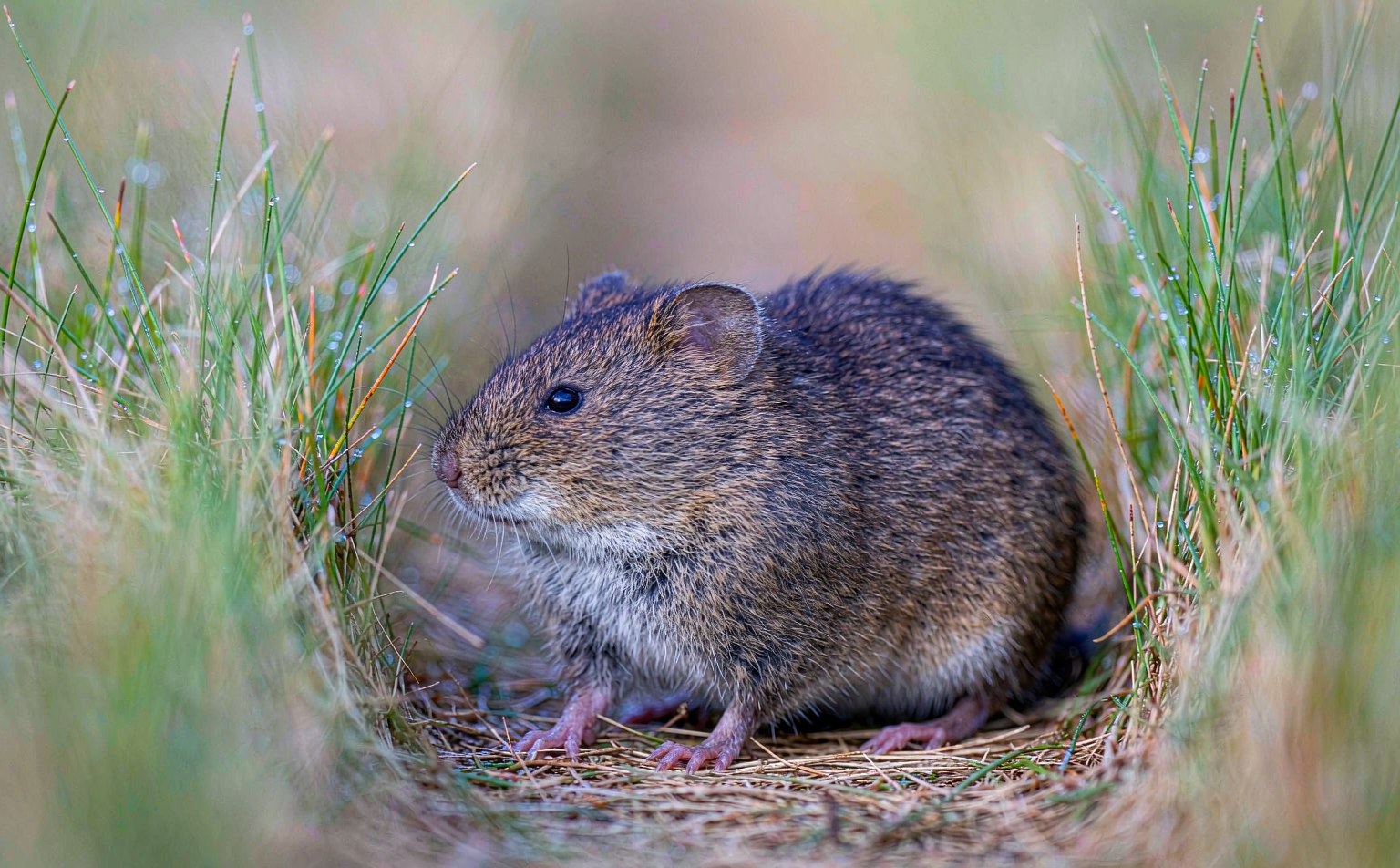
Microtus arvalis | Common Vole
Introduction
The Common Vole (Microtus arvalis) is one of the most abundant small mammals of Europe’s open countryside, a short-tailed, burrowing rodent of meadows, fields and grassland. Plain in appearance but extraordinary in number, it forms the staple prey of a long list of owls, hawks, foxes and weasels. Its populations rise and crash in dramatic cycles, sometimes erupting into “vole years” when thousands occupy a single field. Though often called a field mouse, it is a true vole, built for a life of digging and grazing rather than climbing.
Taxonomy
Microtus arvalis belongs to the family Cricetidae, the hamsters and voles, and is the type species of the large genus Microtus, which includes many Eurasian voles. It is closely related to several similar short-eared voles and was long confused with them across its range. It differs from the climbing mice of woodlands such as the Wood Mouse in its blunt snout, small ears and short tail. No major subspecies are universally accepted, though many local forms have been named. Genetic work has split some former “common voles” into separate species, so the name now refers to the core central and eastern European form.
Physical Characteristics
Adults weigh 20 to 50 grams and measure 10 to 13 centimetres in length, with a tail of only 3 to 5 centimetres—much shorter than the body. The fur is a uniform grey-brown above and grey below, the ears are small and partly hidden in the coat, and the eyes are tiny. The limbs are short and the claws broad, suited to digging runways through turf and soil. Females have more mammary teats than many mice, an adaptation to large litters. The teeth are rootless, ever-growing incisors typical of rodents, and the cheek teeth are patterned for grinding grass and seeds.
Habitat
Common voles thrive in short, dense grassland: meadows, pasture, young arable fields, orchards and roadside verges. They build a network of surface runways clipped through the grass and deeper burrows for nesting and escaping cold. They avoid dense forest and very wet ground, but they exploit almost any open, vegetated land and readily colonise farmland. They coexist at field edges with the European Water Vole of ditches and with the Common Shrew that shares the same tussocks, while the European Mole works the soil beneath their runs.
Diet
Common voles are herbivorous, feeding mainly on the green parts of grasses and other low plants, supplemented by seeds, roots, bulbs and bark in winter. They cut narrow trails through vegetation as they forage and may cache small amounts of food underground. Because they eat constantly to fuel their high metabolism, a single vole can clip a surprising area of grass. Their grazing links them to the plants they eat and to the many predators that eat them, making them a keystone of the open-country food web.
Reproduction
Breeding is rapid and almost continuous through the warmer months. Females can produce a litter every three weeks or so, with 3 to 8 naked, blind young that develop fast and are weaned within days. In good years a female may raise a dozen or more litters, driving the famous population booms. The young disperse through grass runways and begin to breed themselves within weeks. In cold climates breeding slows or stops in winter, and many animals do not survive hard weather, which checks the population until the next spring surge.
Conservation
The common vole is abundant and rated Least Concern, but its fortunes swing wildly with land use. Intensive farming that removes hedgerows, ploughs meadows and uses heavy pesticide pressure lowers local numbers, while set-aside, wild margins and traditional pasture support them. They are not protected as a species of concern, yet their boom-and-bust cycles matter enormously for predators such as barn owls and kestrels, which may fail to breed in crash years. Balanced farmland with grassy refuges therefore helps whole food chains, not just the voles.
Fun Facts
- A single female can produce more than ten litters in one summer.
- Population “eruptions” can leave hundreds of voles in a single field.
- They clip neat little highways through the grass as they travel.
- Their short tail and tiny ears mark them as true voles, not mice.
- More than twenty kinds of predator rely on them for food.