 By st20113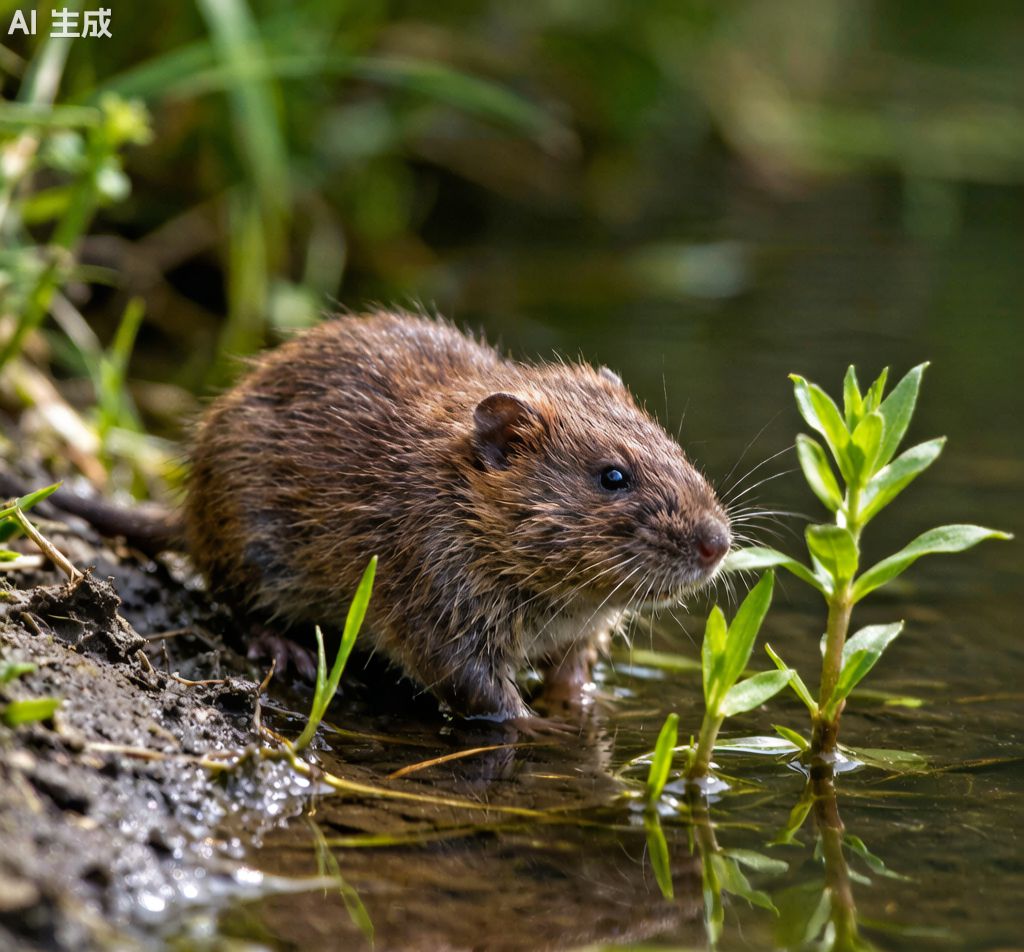
Introduction
The European Water Vole (Arvicola terrestris) is a small, semi-aquatic rodent native to Europe and parts of Asia. Often mistaken for a brown rat due to its similar size and coloration, the water vole is distinguished by its rounder snout, smaller ears, and shorter, furry tail. This herbivorous mammal plays an important ecological role in wetland ecosystems, where it feeds on aquatic plants and grasses along riverbanks and pond margins. The species has experienced population declines in parts of its range due to habitat loss and predation by introduced predators.
Taxonomy
Arvicola terrestris belongs to the family Cricetidae within the order Rodentia. The genus Arvicola contains several water vole species found across Europe and Asia. Two subspecies are generally recognized, with some debate among taxonomists about whether northern and southern populations represent distinct species. The water vole’s taxonomic history reflects its wide distribution and morphological variation across its range.
Physical Characteristics
European water voles are robust rodents measuring 14 to 22 centimeters in body length, with a tail of 6 to 10 centimeters. Weight varies seasonally from 60 to 150 grams, with individuals fattening before winter. The fur is thick and brown, darker on the back and lighter underneath. The species has partially webbed feet adapted for swimming, and the ears are small and set low on the head. Unlike the brown rat, water voles have a blunt, rounded snout and very small ears relative to head size.
Habitat
Water voles inhabit freshwater environments including rivers, streams, canals, ponds, and marshes. They require permanent water with well-vegetated banks for burrowing and foraging. The species prefers slow-moving or still water bodies with abundant emergent vegetation. Burrows are excavated in banks, with underwater entrances providing escape routes from predators. The Eurasian otter is a natural predator of water voles in healthy aquatic ecosystems.
Diet
The European water vole is almost exclusively herbivorous, feeding on a variety of aquatic and waterside plants. Diet includes grasses, reeds, sedge, water crowfoot, and roots. During summer, fresh green vegetation forms the bulk of the diet, while in winter the species consumes underground roots and bulbs. A single water vole can consume its body weight in vegetation daily. The species does not hibernate but remains active throughout the year under the snow.
Reproduction
Breeding occurs from March to October, with peaks in spring and late summer. Gestation lasts about three weeks, and females produce three to six litters per year with four to six young per litter. Newborn voles are blind and hairless, becoming independent at about four weeks of age. Young voles reach sexual maturity the following spring. Population density fluctuates considerably depending on winter severity and predation pressure.
Conservation
European water vole populations have declined significantly in parts of western and central Europe due to habitat loss, pollution, and predation by American mink. The species is listed as threatened in several countries. Conservation measures include habitat protection, riverbank management, and control of invasive American mink populations. Restoration of wetland habitats benefits water voles and many other species. The water vole remains widespread in eastern Europe and Scandinavia.
Fun Facts
Water voles create characteristic “lawn” patterns in grass by repeatedly using the same paths along water banks. The species can remain submerged for up to three minutes while swimming underwater to escape predators. Despite their aquatic habits, water voles do not have webbed feet but use a dog-paddle swimming motion. Their population declines inspired the creation of conservation programs across Britain and northern Europe. The grass snake also hunts in wetland habitats where water voles live. Water voles play a significant role in freshwater ecosystems, influencing vegetation patterns through their grazing activities and creating complex burrow systems that provide habitat for other species. Their presence is often used as an indicator of healthy wetland ecosystems. The species has declined dramatically in Britain, where it is now the most threatened mammal, with conservation programs focusing on habitat restoration and American mink control. Water voles communicate through scent marking and produce distinctive alarm calls when disturbed. Population monitoring through field signs such as burrow entrances and feeding stations provides valuable data for conservation planning.