 By st20113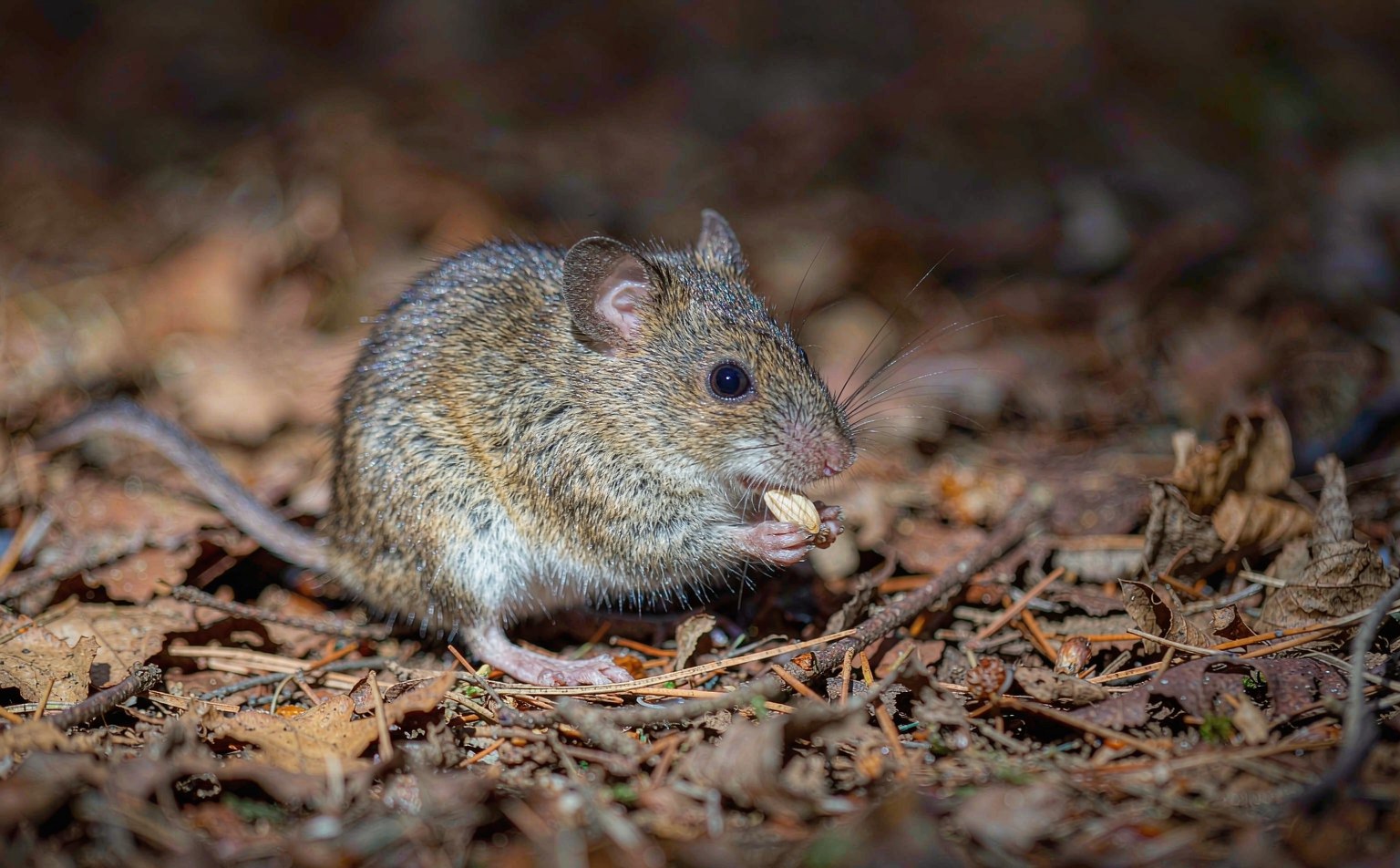
Apodemus sylvaticus | Wood Mouse
Introduction
The Wood Mouse (Apodemus sylvaticus), often called the long-tailed field mouse, is one of the most abundant and widespread small mammals of Europe, a nimble rodent that lives wherever there is cover and seed to gather. From woodlands and hedgerows to gardens, farmland, and dunes, it is a quiet but constant presence in the landscape, more often betrayed by its tracks, nibbled seeds, and the occasional scamper than by a direct sighting. Despite its modest size, it plays an outsized ecological role as both consumer and prey.
Highly adaptable and prolific, the Wood Mouse thrives across a remarkable range of habitats and has even colonized remote islands, where it sometimes grows to unusual size. Its success rests on a generalist diet, a talent for climbing and burrowing, and a rapid breeding cycle that allows populations to boom in good years.
As a small mammal it sits low in the food web, linking seeds and invertebrates to a wide array of predators, and it shares the ground and the leaf litter with other rodents such as the edible dormouse and the water vole, each occupying a slightly different niche within the same mosaic of habitats.
Taxonomy
The Wood Mouse was first described by Carl Linnaeus in 1758 and is a member of the genus Apodemus, the Old World field mice, which includes several similar species across Europe and Asia. Its scientific name combines the Greek apo, “away from,” and demas, “body,” alongside sylvaticus, “of the woods,” a name that captures both its form and its preferred haunts.
The genus Apodemus belongs to the family Muridae, the true mice and rats, and is distinct from the voles of the family Cricetidae despite superficial similarity. Several Apodemus species occur in Europe, and telling them apart often requires attention to features such as tail length, ear size, and the color of the coat.
Molecular studies place the wood mice within a diverse radiation of Old World rodents, and confirm the close relationship between Apodemus sylvaticus and its relatives across the continent. The group’s success reflects a long evolutionary history of life among grass, leaf litter, and the seeds of trees, a niche the Wood Mouse occupies with particular versatility.
Physical Characteristics
The Wood Mouse is a small, slender rodent, with a head-and-body length of about 8 to 11 centimeters and a tail that is typically as long as or longer than the body, often 8 to 11 centimeters as well. Adults weigh roughly 15 to 30 grams, with males slightly heavier than females. The fur is soft and sandy-brown to reddish-brown above, fading to white or pale grey on the belly, a coloration that helps it disappear against soil and leaf litter.
The most distinctive features are the very large, dark eyes, the prominent rounded ears, and the extraordinarily long tail, which is slender, faintly bicolored, and almost naked, ending in a tiny scale-covered tip. The hind feet are large and well suited to leaping and climbing, and the animal moves with quick, agile bounds when disturbed.
Juveniles resemble adults but are smaller and greyer, and the coat of all ages is fine and soft rather than bristly. In hand, the Wood Mouse can be separated from the house mouse by its longer tail, larger ears, and reddish back, and from voles by its pointed snout and prominent eyes, marks of a mouse rather than a vole.
Habitat
Wood Mice are extraordinarily adaptable, occupying woodland, hedgerows, scrub, grassland, farmland, gardens, sand dunes, and even buildings, wherever there is sufficient cover and a supply of seeds. They are most abundant in habitats with a shrub or tree layer that provides food and refuge, and they readily use field margins, coppice, and the tangle of a hedgerow as highways through the farmland landscape.
The animals are largely nocturnal and spend the day in nests of grass and leaves placed in burrows, under logs and stones, or in the cavities of trees and buildings. They are competent climbers and often ascend shrubs and trees to feed on buds, fruits, and invertebrates, and they may store seeds in shallow caches for leaner periods.
Although they tolerate a wide range of conditions, Wood Mice reach their highest densities where seed supply is reliable and predation is moderate. They avoid the wettest, most open ground and the heart of dense, continuous forest, preferring the edges and clearings where food and cover meet, a preference that makes them characteristic of the varied, semi-natural countryside of temperate Europe.
Diet
The Wood Mouse is an opportunistic omnivore whose diet centers on seeds, particularly those of trees such as oak, beech, ash, and hazel, along with the seeds of grasses and many weeds. It is a skilled climber that harvests tree seeds directly and a hoarder that buries stores for later, a behavior that also scatters and plants seeds and links the mouse to the regeneration of woodland.
Insects and other invertebrates form a valuable part of the diet, especially in spring and summer, when protein is needed for breeding, and the mice also eat green plant material, fungi, fruits, and roots. This flexibility lets them exploit whatever is seasonally abundant, from autumn mast crops to the soft growth of spring.
Because they eat and cache seeds, Wood Mice influence the plant communities around them, and in mast years their hoarding can move large numbers of seeds away from the parent tree. They also fall prey to a vast array of predators, which makes them a central thread in the food web of the habitats they inhabit, connecting the productivity of plants to the upper levels of the ecosystem.
Reproduction
Wood Mice are prolific breeders, capable of producing several litters across the warmer months from spring into autumn, with a pause during the coldest part of winter in northern populations. After a gestation of about three weeks, the female gives birth to a litter of typically four to seven blind, hairless young in a grass-lined nest within the burrow.
The female alone cares for the litter, which develops rapidly, opening its eyes at about two weeks and being weaned soon after. The young disperse within a few weeks and may themselves breed in the same season if conditions are favorable, a short generation time that allows populations to expand quickly when food is abundant.
Survival is heavily influenced by weather, food supply, and predation, and populations can fluctuate dramatically from year to year, booming after a good seed crop and crashing when conditions turn hard. Such boom-and-bust dynamics are typical of small rodents and form part of the rhythm of the ecosystems in which the Wood Mouse lives.
Conservation
The Wood Mouse is abundant and widespread across its range and is classified by the IUCN as a species of Least Concern, with no major conservation threat at the global level. Its adaptability and high reproductive rate have allowed it to persist, and even flourish, across landscapes heavily modified by people, from intensive farmland to suburban gardens.
Local pressures do exist, however, including the loss of hedgerows and seed-rich margins, the use of rodenticides, and the conversion of mixed habitats to uniform cropping, all of which can reduce local densities. On some islands, introduced predators and competition have affected populations, and on a few remote islets the Wood Mouse itself is the introduced species, altering native ecosystems.
Because the species is so numerous and so important as prey, it is monitored as part of broader programmes for farmland and woodland wildlife rather than conserved for its own sake. Maintaining hedgerows, seed-bearing crops, and a diversity of habitats through the farmed landscape is the most effective way to support healthy populations of this and the many predators that depend on it.
Fun Facts
- The Wood Mouse has a tail as long as its body, which it uses for balance when climbing and leaping among branches.
- It is a natural forester: by forgetting or abandoning caches of tree seeds, it helps oak, beech, and hazel spread across the woodland floor.
- Populations can multiply several-fold in a single good seed year, then fall sharply when winter is harsh.
- The mouse can leap surprisingly far relative to its size, an escape tactic that helps it evade owls and foxes in the open.
- Despite its name, it is as much a creature of hedgerows, fields, and gardens as of woods, and is one of the commonest wild mammals of European farmland.
[…] confused with them across its range. It differs from the climbing mice of woodlands such as the Wood Mouse in its blunt snout, small ears and short tail. No major subspecies are universally accepted, though […]
[…] the golden hamster of Syria, which is a different genus. It is, however, a distant relative of the wood mouse, another European rodent of the same superfamily. The two live in the same fields and are easy to […]
[…] now treat them as one species with two forms. The water vole is a distant relative of the wood mouse, another European rodent of the same superfamily. The two often share a riverbank but are easy to […]