 By st20113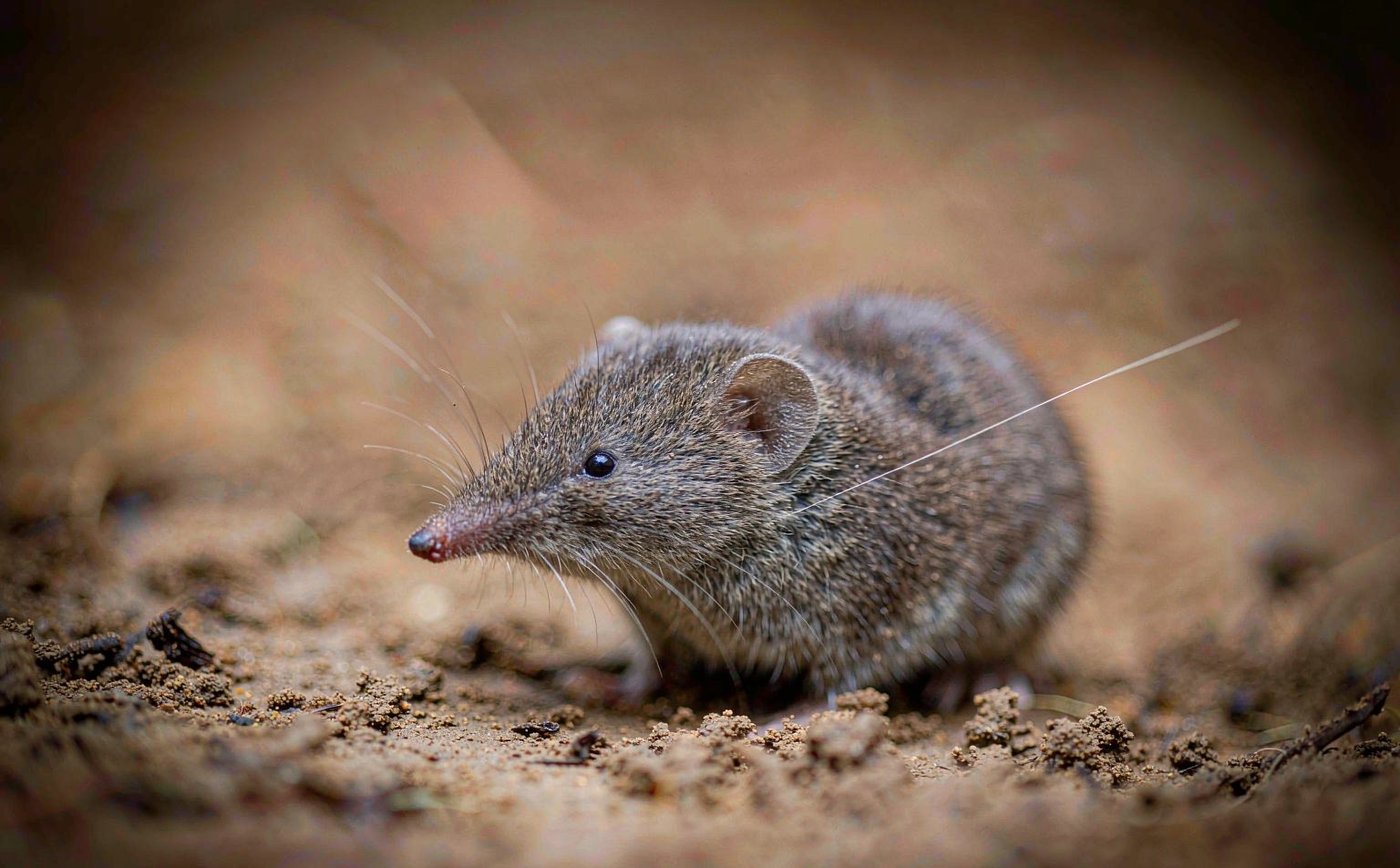
Crocidura russula | Greater White-toothed Shrew
Introduction
The Greater White-toothed Shrew (Crocidura russula) is a small, restless insectivore of southern and western Europe and North Africa, a member of the vast and ancient group of shrews that hunt invertebrates at or below the soil surface. With its pointed snout, tiny eyes, and perpetual motion, it is one of the most active small mammals of gardens, fields, and Mediterranean scrub, rarely seen but constantly at work turning over the leaf litter in search of prey. Though often confused with mice, it is no rodent but a close relative of moles and hedgehogs.
Unlike many shrews, which are tied to cool, damp places, the Greater White-toothed Shrew tolerates drier and more open habitats and has expanded its range northward in recent decades, aided by a tolerance of human-modified landscapes. It is one of the commonest shrews of the European south and a familiar component of the small-mammal community wherever soft ground and cover coincide.
As a voracious predator of invertebrates, it sits low in the food web and shares its world with other small hunters such as the common shrew and the European water shrew, each occupying a slightly different slice of the same ground-dwelling guild.
Taxonomy
The Greater White-toothed Shrew was first described by Johann Hermann in 1780 and is a member of the genus Crocidura, the white-toothed shrews, the largest genus of mammals in the world by number of species. Its scientific name reflects its appearance: Crocidura combines the Greek for “wool” and “tail,” while russula means “reddish,” a reference to the warm tone of its fur.
The genus Crocidura belongs to the family Soricidae, the shrews, which together with the moles and hedgehogs makes up the order Eulipotyphla. The white-toothed shrews are distinguished from the red-toothed shrews of the genus Sorex by the color of the tips of their teeth, a small but reliable feature used by mammalogists to tell the groups apart.
Molecular studies confirm the distinctness of the white-toothed and red-toothed shrews and place Crocidura russula among a cluster of western European species. Its lineage is part of an extraordinarily successful radiation of small insectivores that has persisted since the age of the dinosaurs, filling the niche of the tiny terrestrial predator across the Northern Hemisphere.
Physical Characteristics
The Greater White-toothed Shrew is a small mammal, with a head-and-body length of about 6 to 10 centimeters and a tail of 3 to 5 centimeters, and a weight of roughly 8 to 16 grams. The fur is short, dense, and soft, grey-brown to reddish-brown above and paler grey below, lacking the sharp contrast of some related species, and the feet and the base of the tail are pale, giving the animal its common name.
The snout is long and pointed, tipped with a mobile, whisker-fringed nose, and the eyes are tiny and easily overlooked. The ears are small and partly hidden in the fur, and the teeth lack the red pigment of the Sorex shrews, appearing whitish, the key feature behind the group name. The tail is relatively short for a shrew and sparsely haired.
Juveniles resemble adults but are smaller and greyer, and the animal’s overall impression is of a compact, velvety, ever-moving forager. Because it loses heat rapidly through its small body, the shrew must eat almost continuously, and its high metabolism drives the ceaseless hunting that characterizes its daily life from dusk to dusk.
Habitat
Greater White-toothed Shrews occupy a broad range of open and semi-open habitats, including gardens, hedgerows, grassland, olive groves, Mediterranean scrub, and the margins of farmland, wherever the ground is soft enough to dig and rich enough in invertebrates. They favor drier and more disturbed places than many of their relatives, which helps explain their success in southern Europe and their spread into cultivated landscapes.
The animals are active both day and night and rest in short burrows, beneath stones, logs, and vegetation, or in the runways of other small mammals, which they often reuse. They are largely terrestrial but can climb low vegetation when pursuing prey, and they thrive in the patchwork of crops, margins, and scrub that makes up much of the human-shaped countryside of the region.
Although they avoid the wettest ground and dense forest interior, they are remarkably tolerant of dry summers and moderate human presence, and they frequently enter orchards, parks, and even buildings in search of food. Their ability to exploit a wide variety of ground habitats has made them one of the most widespread shrews of the European south and a common element of its small-mammal fauna.
Diet
The Greater White-toothed Shrew is a dedicated carnivore of invertebrates, feeding on insects, spiders, centipedes, worms, and other small prey taken from the soil surface and the leaf litter. It hunts by scent and touch, probing crevices and turning over debris with its snout, and it consumes a weight of food roughly equal to its own body mass each day, a necessity given its tiny size and high metabolic rate.
The shrew uses its sharp, white-tipped teeth to seize and dispatch prey, and it often eats quickly and repeatedly through the day and night, pausing only briefly to rest. Earthworms, beetle larvae, and surface-dwelling insects form the backbone of the diet, with the mix shifting with the seasons and the availability of different prey in the soil and litter.
Because it eats so many invertebrates, the species exerts a meaningful check on the numbers of soil and litter arthropods, linking it to the health of the ground ecosystem. It is in turn a vital food source for owls, foxes, and a range of other predators, and its constant foraging helps cycle nutrients through the upper layers of the soil.
Reproduction
Breeding extends through much of the year in warmer parts of the range, with a pause in the coldest months, and females can produce several litters across a single season. After a gestation of around three to four weeks, the female gives birth to a litter of typically three to seven naked, blind young in a grass-lined nest within a burrow or sheltered cavity.
The young develop quickly, opening their eyes within a couple of weeks and being weaned soon after, and the mother may carry or lead them in a line, the youngsters trailing one another by the base of the tail, a characteristic behavior of many shrews. They disperse at a few weeks of age and may breed themselves within the same year if conditions allow.
As with other small mammals, survival is high only when food is abundant and predators are not overwhelming, and populations can fluctuate with the seasons. The shrew’s short life and rapid turnover are typical of its group, and they allow the species to maintain numbers even under heavy predation pressure from the many animals that rely on it for food.
Conservation
The Greater White-toothed Shrew is widespread and common across its range and is classified by the IUCN as a species of Least Concern, with no major threat at the global level. Its tolerance of dry, open, and human-influenced habitats has allowed it to remain abundant even where landscapes have been intensively farmed, and it continues to thrive across southern and western Europe.
Local pressures can include the use of pesticides that reduce invertebrate prey, the loss of hedgerows and soft ground to development, and the spread of domestic cats in suburban areas, all of which can depress local densities. On some islands, introduced predators and competition have reshaped its populations, and in a few places the species itself has been displaced by the related lesser white-toothed shrew where the two overlap.
Because the shrew is so numerous and so important as prey, it is usually monitored as part of broader surveys of small-mammal communities rather than conserved for its own sake. Maintaining hedgerows, unsealed ground, and a diversity of low vegetation through the farmed and suburban landscape is the most effective way to support healthy populations and the predators that depend on them.
Fun Facts
- A Greater White-toothed Shrew must eat almost its own body weight in food every day to fuel its tiny, fast-burning metabolism.
- Unlike mice, shrews are not rodents at all but close relatives of moles and hedgehogs, and their teeth are tipped with white rather than red.
- Mothers sometimes lead their trailing young in a tidy line, each holding the tail of the one ahead, a behavior shared by many shrew species.
- The species has spread northward in recent decades, taking advantage of drier, more open habitats created by people.
- Despite its fierce appetite, it is itself a key prey item for owls, which may consume huge numbers of shrews in a single season.