 By st20113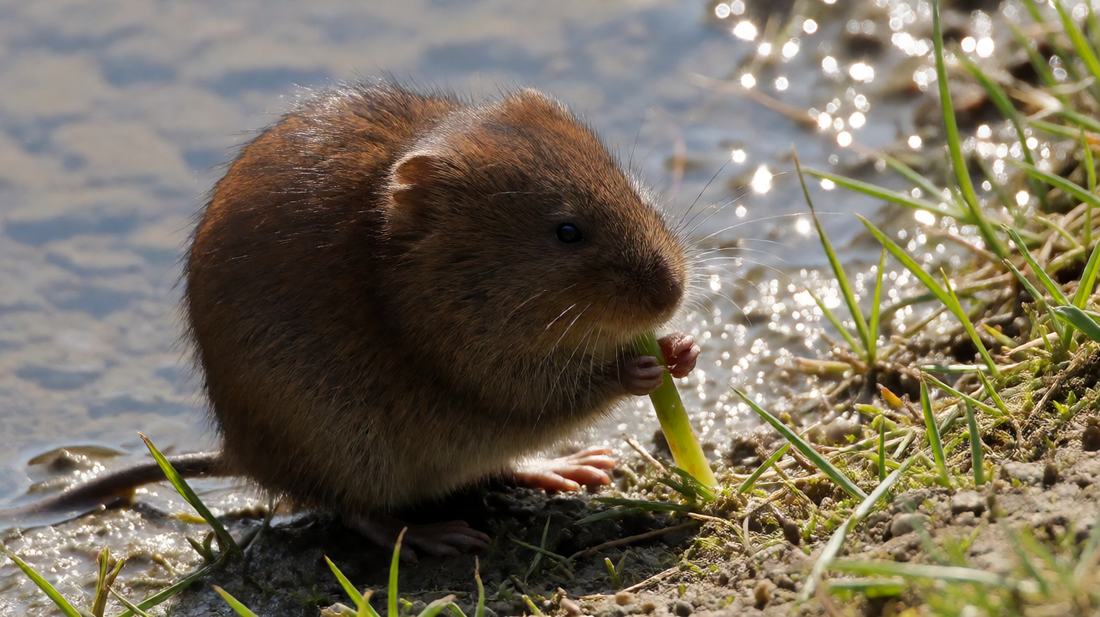
Arvicola amphibius | European Water Vole
Species Profile · Cricetidae
European Water Vole
The largest vole in Europe, and the animal behind Ratty in The Wind in the Willows — a burrower of riverbanks that lives almost wholly on plants.
IUCN: Least Concern
Range
Body
Weight
Diet
Litters
The riverbank vole
The largest vole in Europe
The European water vole is the largest vole in Europe. It is the animal most people call a water rat. It is not a rat. It has a blunt muzzle, small ears and a short hairy tail. A brown rat has a pointed snout, large ears and a long bare tail.
The two share the same places, so people confuse them. The water vole eats plants. It digs burrows in the soft banks of slow rivers, streams, ditches and ponds. It swims and dives without a splash when it is alarmed. It cuts grass and reeds with a clean diagonal bite.
The American mink is its main enemy. In Britain the mink caused a fall of more than 90 per cent in the 20th century. Numbers there dropped by over 90 per cent between the 1970s and the early 2000s. In the rest of Europe the animal is still common.
Family tree
Cricetidae, the voles and hamsters
The European water vole belongs to the family Cricetidae. This family holds the voles, lemmings and hamsters. The animal sits in the genus Arvicola, a small group of water voles in Europe and Asia. Linnaeus named it in 1758 as Mus amphibius. The name Arvicola means field dweller. Voles differ from mice in the shape of their teeth.
The crowns are flat and the enamel forms a pattern of triangles. That pattern suits a diet of tough plant fibre. The water vole is one of the most specialised grazers in the group. Northern populations live in dry meadows and dig like moles. Southern ones stay by rivers and canals. Some experts once split these into separate species.
Most now treat them as one species with two forms. The water vole is a distant relative of the wood mouse, another European rodent of the same superfamily. The two often share a riverbank but are easy to tell apart. The wood mouse is smaller and warmer brown, with large ears and a long thin tail. It climbs rather than swims.
Brown, blunt and burly
How to identify one
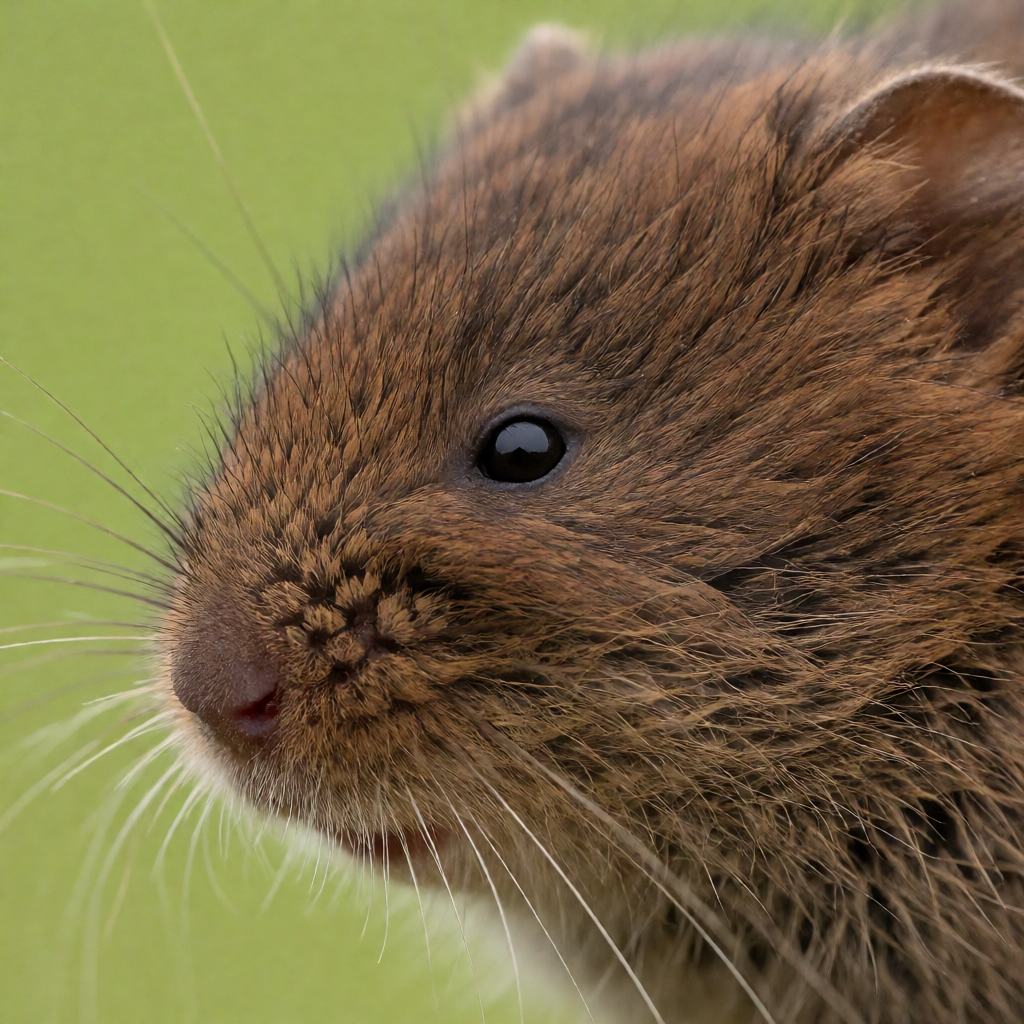
The water vole is a heavy, thickset rodent. Head and body measure 12 to 22 cm. The tail adds 6 to 13 cm. Adults weigh 60 to 320 g. Males are larger than females.
The fur is dense and dark brown on the back, paler on the belly. The head is broad and the muzzle is blunt. The ears are small and sit close to the head. The eyes are small and dark. The tail is the best way to tell it from a rat.
It is half to two thirds of the head and body length and is covered in short hair. A rat tail is longer than its body and is almost bare. The feet are not webbed. The animal swims with its hind feet and its tail. The incisors are large and orange and grow all its life.
1
2
3
Burrows by the water
Where it lives
The water vole lives at the water’s edge and, in the north, in meadows. It needs slow or still fresh water with banks it can dig. Soft earth is essential. A bank of stone or concrete is useless. It needs tall cover near the burrow, because it is prey and avoids open ground.
It lives along rivers, streams, ditches, canals, ponds and lakes. It also uses marshes and wet meadows. Its range covers most of Europe and stretches through Russia and Siberia to northern Asia. It runs from Britain and France east to Siberia and from Scandinavia south to the Balkans and the Caspian. It is absent from Ireland and most Mediterranean islands.
In the Alps and Carpathians it lives in dry meadows and digs like a mole. It is a strong coloniser. It moves into a new ditch or pond within a few years if the banks are soft and the cover is tall. A hard winter flood can wipe out a stretch of bank.
Almost wholly a plant eater
What it eats
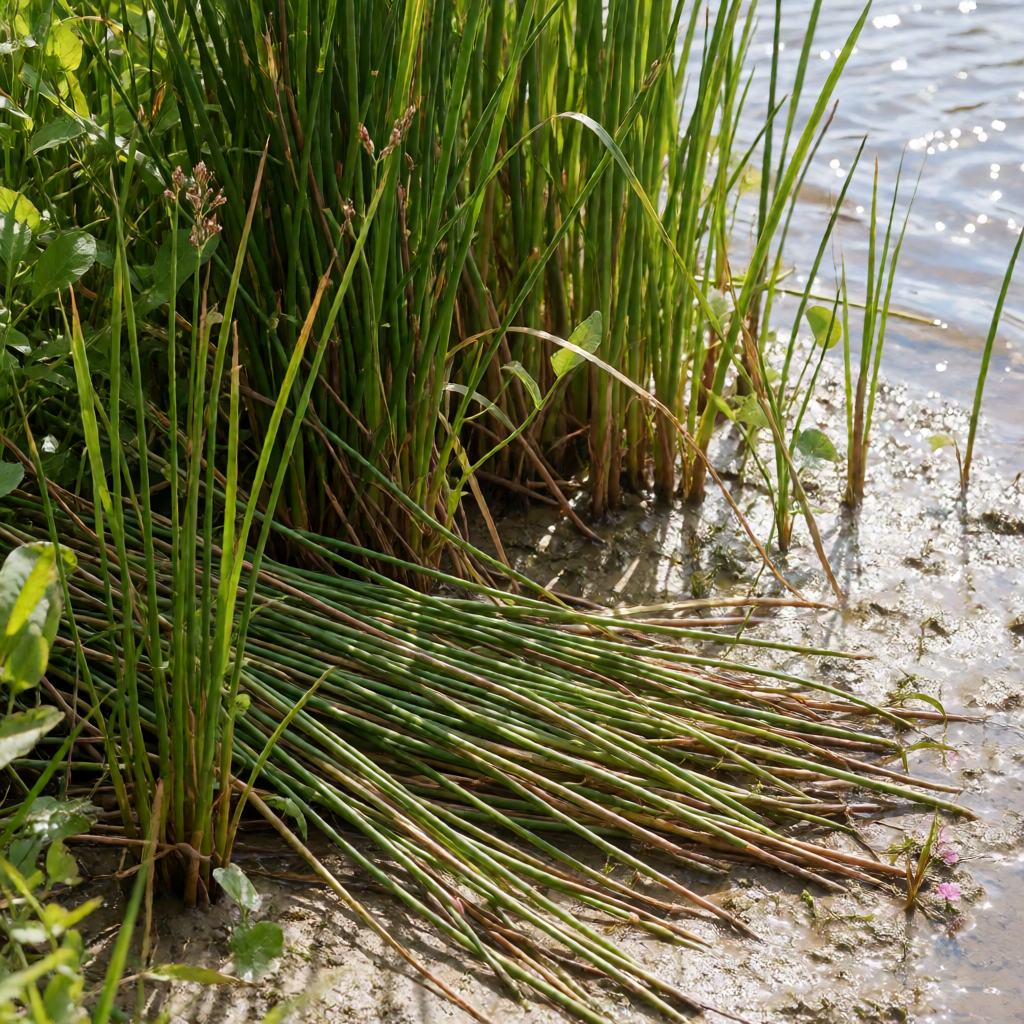
The water vole is almost wholly a plant eater. Its diet is one of the best studied of any small European mammal. In Britain more than 200 plant species have been found in its food. It eats the soft parts of grasses, sedges, reeds and water plants. It takes leaves, stems, shoots and, in winter, roots.
It also eats the bark and twigs of willow and other soft trees, and it will take fallen fruit. It must eat a large part of its own weight each day. Feeding peaks in the early morning and in the evening. It cuts a stem and sits back to eat it. Its clean diagonal cuts are the classic sign used by surveyors.
It makes latrines, small piles of droppings on a stone or ledge. Surveyors use these as the surest sign of a colony. The droppings are blunt and green when fresh. It does not store much food and it does not hibernate.
Up to five litters a year
The breeding cycle
The breeding season runs from March or April to September. A female can have 3 to 5 litters in a good year, and up to 5 in all. Gestation lasts 21 to 23 days. Each litter holds 4 to 6 young, though litters of 2 to 8 are known. The young are born blind and naked in a nest at the end of a burrow.
The female raises them alone. The young open their eyes at about 9 days and are weaned at 14 to 21 days. They can breed in the year of their birth if born early. That gives the species a high rate of increase. Females hold long narrow territories along the bank.
Males hold larger ranges that overlap several females. Both mark the edges with scent and droppings. Winter survival is the main brake on numbers.
Least Concern, locally lost
Conservation
The European water vole is listed as Least Concern on the global Red List. Its range is huge, from western Europe to Siberia, and it stays common through most of it. The picture in Britain and parts of western Europe is different. British numbers fell by an estimated 90 per cent or more between the 1970s and the early 2000s. The cause is clear.
The American mink was brought to Europe for fur farms in the 20th century. Escapes put a semi-aquatic predator into the vole’s home. Mink follow the animals into their burrows and kill far more than they eat. On a river with resident mink, a vole colony can vanish in one season. Loss of habitat came second.
Dredging, straightening and lining banks removed the soft earth the species needs. Conservation works on several fronts. Removing mink is the most effective step. Restoring banks by fencing stock and letting tall plants grow back is the second. The animal is fully protected in Britain.
Quick hits
Five things to remember
- The character called Ratty in The Wind in the Willows was a water vole, not a rat.
- It swims with its hind feet and its tail and has no webbing, and it can stay under water for about 30 seconds.
- Its droppings are blunt and green, while a rat’s are pointed and dark, so surveyors can name a colony from latrines alone.
- The species has two ways of life: lowland animals swim in rivers, while northern ones dig in dry meadows like small moles.
- A female can have up to 5 litters of young in one year, and those young can breed in the same year.