 By st20113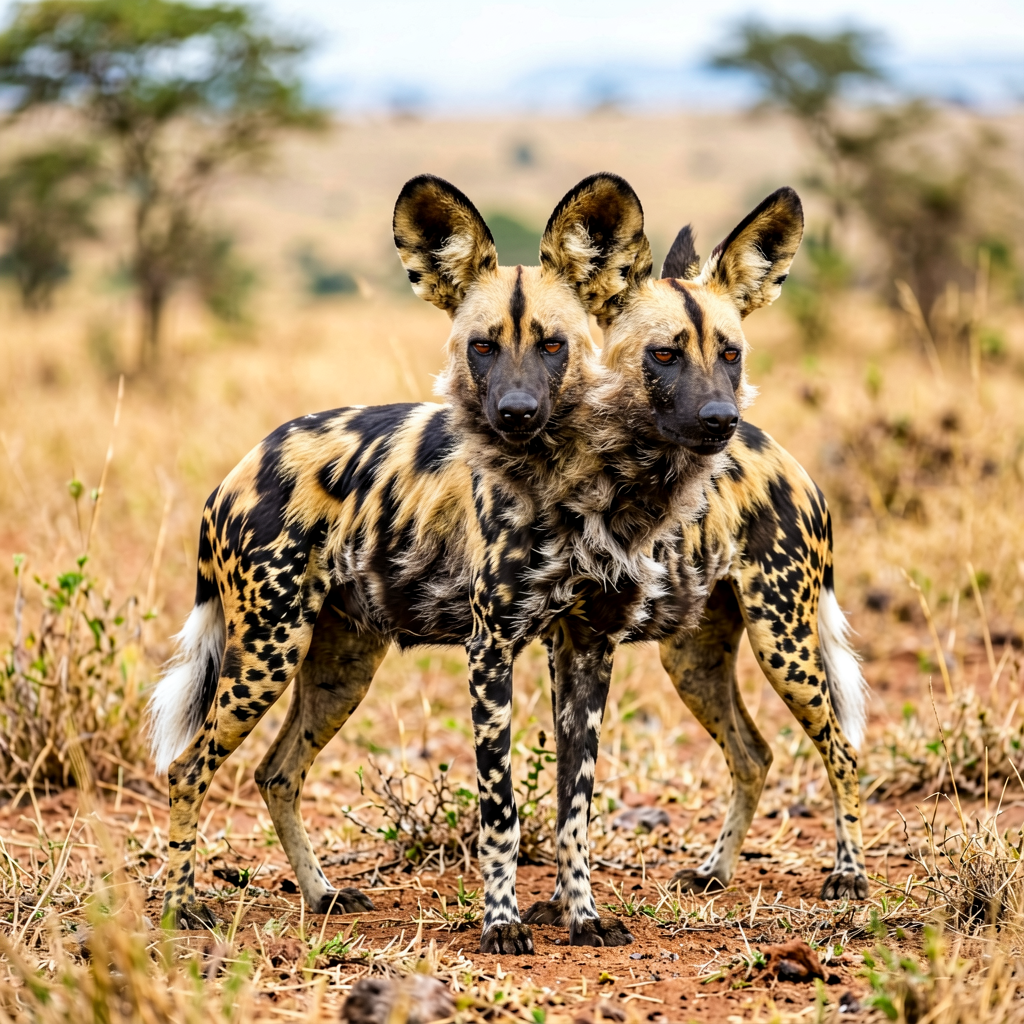
Lycaon pictus | African Wild Dog
Introduction
The African wild dog, scientifically known as Lycaon pictus, is one of the most distinctive and fascinating canids found on the African continent. Often referred to as the painted dog, painted wolf, or Cape hunting dog, this remarkable animal is renowned for its extraordinary hunting success rate, which far exceeds that of lions and other large predators. Unlike the Grey Wolf, which is known for its pack cooperation, the African wild dog takes social hunting to an even more refined level, making it one of Africa’s most efficient carnivores.
Taxonomy
The African wild dog belongs to the family Canidae and is the sole living species within the genus Lycaon. The name Lycaon derives from the Greek word lykos, meaning wolf, while pictus is Latin for painted, referencing the animal’s uniquely mottled coat. Genetic studies have revealed that the African wild dog is more closely related to domestic dogs and foxes than to other African canids such as the Arctic Fox. Fossil records suggest that the species originated in Africa approximately two million years ago and later spread into parts of Asia and Europe before becoming restricted to sub-Saharan Africa.
Physical Description
African wild dogs are medium-sized canids weighing between eighteen and thirty kilograms, with a body length of approximately seventy to one hundred centimeters. Their most striking feature is their irregularly patterned coat, which displays a mosaic of black, brown, white, yellow, and orange patches. No two individuals share the same pattern, making each animal uniquely identifiable. They possess large, rounded ears that resemble those of a bat, providing exceptional hearing capabilities. Their slender legs and four-toed feet, lacking a dewclaw, are specially adapted for long-distance endurance running.
Habitat
These animals inhabit a variety of ecosystems across sub-Saharan Africa, including savannas, woodlands, semi-deserts, and open forests. They are found in countries such as Botswana, Zimbabwe, Tanzania, South Africa, Kenya, and Zambia. African wild dogs require large territories, typically ranging from two hundred to five thousand square kilometers, depending on prey availability and habitat quality. They generally avoid dense rainforests and extremely arid regions, preferring areas where they can chase prey across open ground.
Diet
The African wild dog is a carnivorous predator that primarily hunts medium-sized antelopes, including impala, gazelle, and kudu. They are diurnal hunters, meaning they actively pursue prey during daylight hours, which distinguishes them from many other large African carnivores. A pack may also take down larger animals such as wildebeest or young buffalo when hunting cooperatively. Their hunting strategy involves coordinated pursuit over long distances, often exhausting prey that cannot sustain prolonged speed. They are remarkably efficient, with a success rate of approximately sixty-five percent, compared to the Brown Bear, which relies more on ambush and opportunistic feeding.
Reproduction
African wild dogs live in highly structured social packs typically consisting of twelve to twenty individuals. Only the dominant breeding pair reproduces, while other pack members assist in raising the young. The gestation period lasts approximately seventy days, and litters usually contain four to twelve pups. The entire pack participates in caring for the pups, with non-breeding members bringing regurgitated food back to the den. Pups are born blind and remain in the den for several weeks before venturing out to join the pack’s activities.
Conservation
The African wild dog is classified as endangered by the International Union for Conservation of Nature. Their populations have declined dramatically due to habitat loss, fragmentation, human-wildlife conflict, and disease transmission from domestic dogs. Estimates suggest that fewer than six thousand mature individuals remain in the wild, distributed across fragmented populations. Conservation efforts focus on establishing protected corridors, vaccinating domestic dogs to prevent disease spread, and implementing community-based conservation programs to reduce conflicts with local pastoralists.
Fun Facts
African wild dogs communicate using a remarkable repertoire of vocalizations, including barks, whines, and chirps that resemble bird calls. They are one of the few mammal species in which males contribute equally to raising offspring by guarding the den while females hunt. These animals can cover up to fifty kilometers in a single day while hunting. Their large ears not only aid hearing but also help regulate body temperature during intense physical exertion in the African heat.