 By Iris
Ceratophrys ornata | Argentine Horned Frog
Species Profile · Ceratophryidae
Argentine Horned Frog
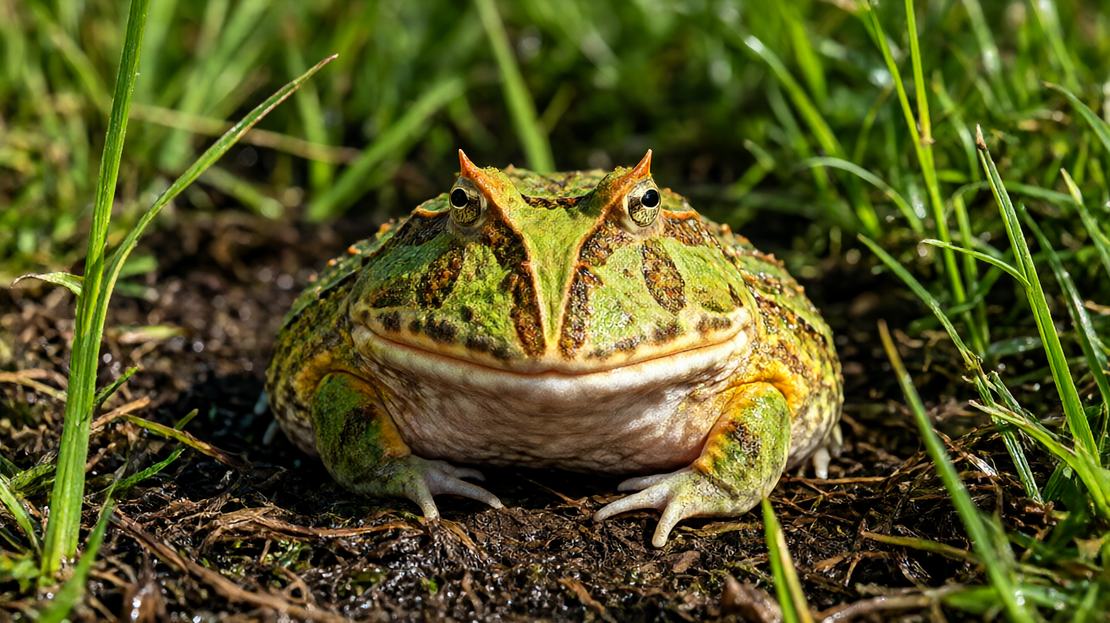
A round frog sits in leaf litter and does not move.
Near Threatened
Length
Weight
Clutch
Horns
Range
Rating
The Argentine Horned Frog
A mouth that fits almost anything
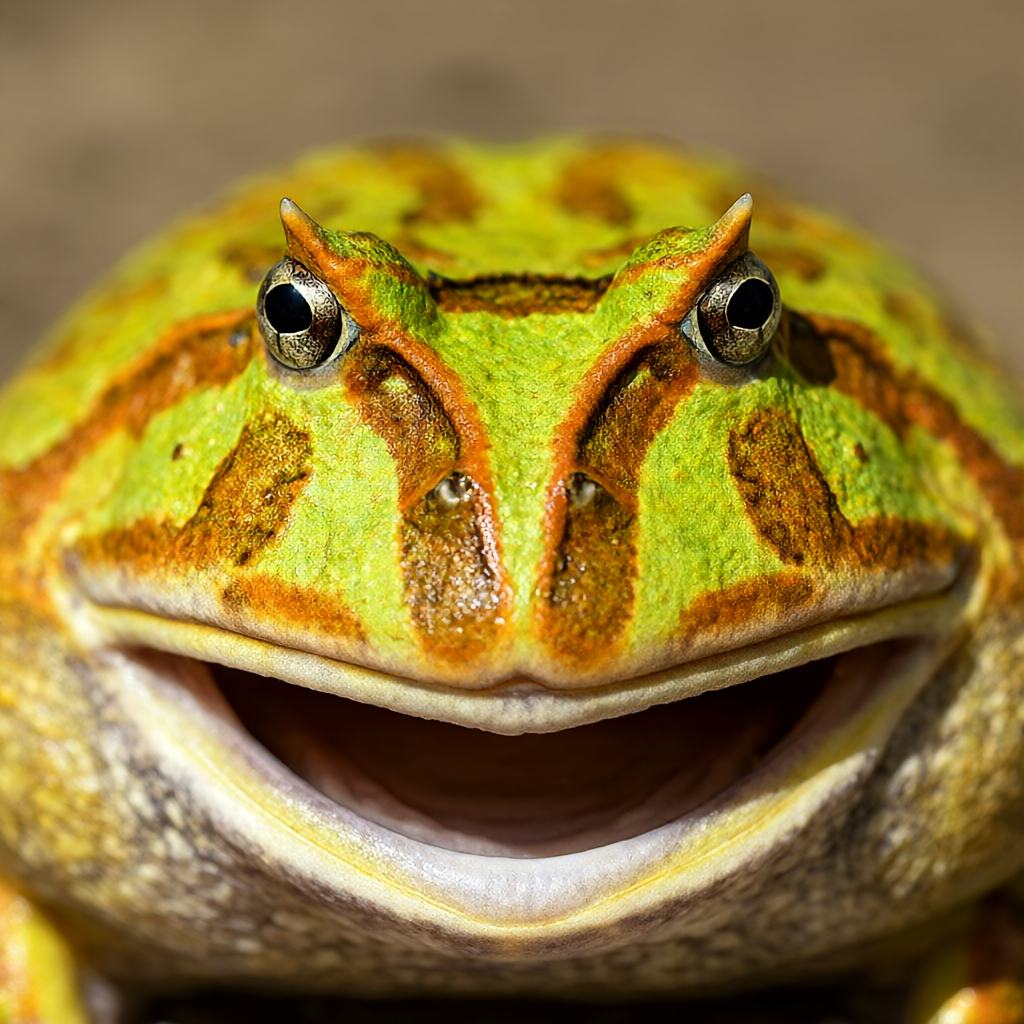
A round frog sits in leaf litter and does not move. Its mouth runs half the width of the body, and the corners turn up. Nothing about the animal suggests a hunter, yet it eats almost anything.
Most frogs run, and this one waits. Fleshy horns sit above the eyes, and the lids carry points. The Argentine horned frog lives in the grasslands of Argentina, Uruguay and Brazil, and it ambushes prey from a shallow scrape.
Family tree
Ceratophryidae, the horned frogs
Ceratophrys ornata sits in the family Ceratophryidae. Horned frogs fill the family, and most of them live in South America. Its name joins two Greek words, where keras means horn and ophrys means brow, and both parts describe the head. Ornata means decorated, since the skin carries bright patterns.
Workers place the family near the tree frogs, though the body shape differs completely. Eight species share the genus, and each one carries its own pattern. One lookalike, the Golden Poison Frog, carries a toxin a hundred times stronger.
Horns, wide jaw, short legs
How to tell one
Adults measure 8 to 12 cm, and the females grow larger. Weight reaches 200 g. The head takes a third of the body, and the jaw closes with force. Its skin runs green above, and dark blotches break the outline.
Teeth sit in the upper jaw, and those teeth grip rather than cut. Hind legs stay short, since the frog hops rather than leaps. Skin glands carry mild toxins, and a predator that bites learns fast.
1
2
3
Wet grassland
Where it lives
Wet meadow holds the species. The frog sits in leaf litter, and the pattern hides it. Its range covers the pampas, and the wetter edges carry the most animals, though nobody has counted them.
Because the frog needs damp cover, drained ground loses it fast. Temporary pools matter for breeding, and they dry within weeks. Cropland holds fewer animals, though flooded fields still carry some.
Insects, mice, frogs
What it eats
Insects form the base of the diet. Mice, frogs and small snakes follow, and the frog takes anything that fits inside a mouth wider than its body. It waits without moving, and the strike covers only a few centimetres. Because the jaw opens wide, the frog can swallow prey nearly its own size.
Nothing gets chewed. Teeth hold, and the throat does the rest. Cannibalism happens often, and large frogs eat smaller ones at pools.
Explosive in rain
The breeding cycle
Rain starts the breeding run. Males call from shallow water, and the sound carries across the grass. A female lays up to 2000 eggs, and the clutch spreads in the shallows where the water stays warm.
Because the pool dries fast, the tadpoles must grow quickly. Tadpoles turn on each other, and the survivors grow faster for it. The young leave within weeks, though the timing depends on rain.
Drainage, pet trade
Conservation
The Red List calls the species Near Threatened. Its range keeps shrinking, and drainage removes the wet grassland. The pet trade takes animals, because the pattern sells well.
Pesticides add pressure, though the losses go unrecorded. Because the frog needs temporary pools, drought hits breeding hard. Captive breeding supplies most pets now, yet wild collecting continues.
Side by side
How It Compares
| Trait | Argentine Horned Frog | Golden Poison Frog |
|---|---|---|
| Family | Ceratophryidae | Dendrobatidae |
| Length | 8-12 cm | 4-5 cm |
| Toxin | mild | among the strongest known |
| Clutch | up to 2000 eggs | 10-20 eggs |
| Diet | anything that fits | ants and mites |
| Rating | Near Threatened | Endangered |
Common misreadings
What People Get Wrong
- Not a toad. The horns are folds of skin. No bone sits inside them, and because the folds sit over the eyes they shade the head rather than arm it.
- Not a picky eater. The mouth takes a third of the body. Mice, frogs and snakes all go down, and a large female will eat a frog half her own size without hesitation.
- Not a frog that breeds slowly. Rain starts a single rush. Up to 2000 eggs go into a temporary pool, and because the water dries within weeks the tadpoles must turn on each other to grow fast.
Going further
Sources and Further Reading
Quick hits
Five things to remember
- A mouse goes down in one movement, and the meal lasts a week.
- Its horns are folds of skin, and no bone sits inside them.
- A large female may eat a frog half her own size.
- Tadpoles of the species eat each other when the pool runs short.
- Keepers call it the Pac-Man frog, and the shape explains the name.
[…] polar bear is a mammal of the same region but a very different order. Both depend on sea ice for hunting. One […]