 By Iris
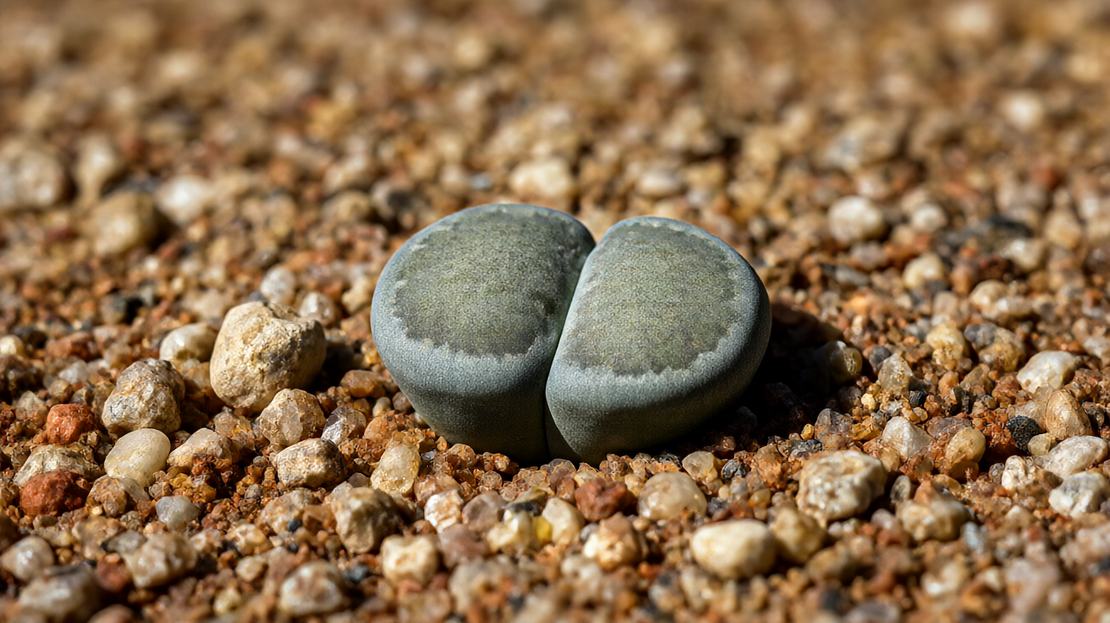
Lithops pseudotruncatella | Living Stone
Species Profile · Aizoaceae
Living Stone
Two leaves fuse into a body that looks like a pebble.
Least Concern
Body
Leaves
Rainfall
Flower
Range
Rating
The Living Stone
A plant that copies a stone
Two leaves fuse into a body that looks like a pebble. No stem shows, and no margin breaks the outline. A slit runs across the top, and the flower pushes out of it each autumn.
Most of the plant sits buried, and only the flat face reaches the light. Nothing about the shape invites attention, and that is still the point. Its colour copies the quartz gravel around it, so grazing animals walk past without a second look and the plant keeps its water.
Family tree
Aizoaceae, the mesembs
Lithops pseudotruncatella belongs to the ice plant family Aizoaceae. The genus holds about 40 species, and all of them live in southern Africa. Its name joins two Greek words, where lithos means stone and opsis means appearance. Workers split the species into subspecies.
Boundaries between them stay disputed. It sits among the mesembs, since the family shares the same water storing trick. Pseudotruncatella means false truncatella, and it points to an older name for the group.
Windows, slit, taproot
How to tell one
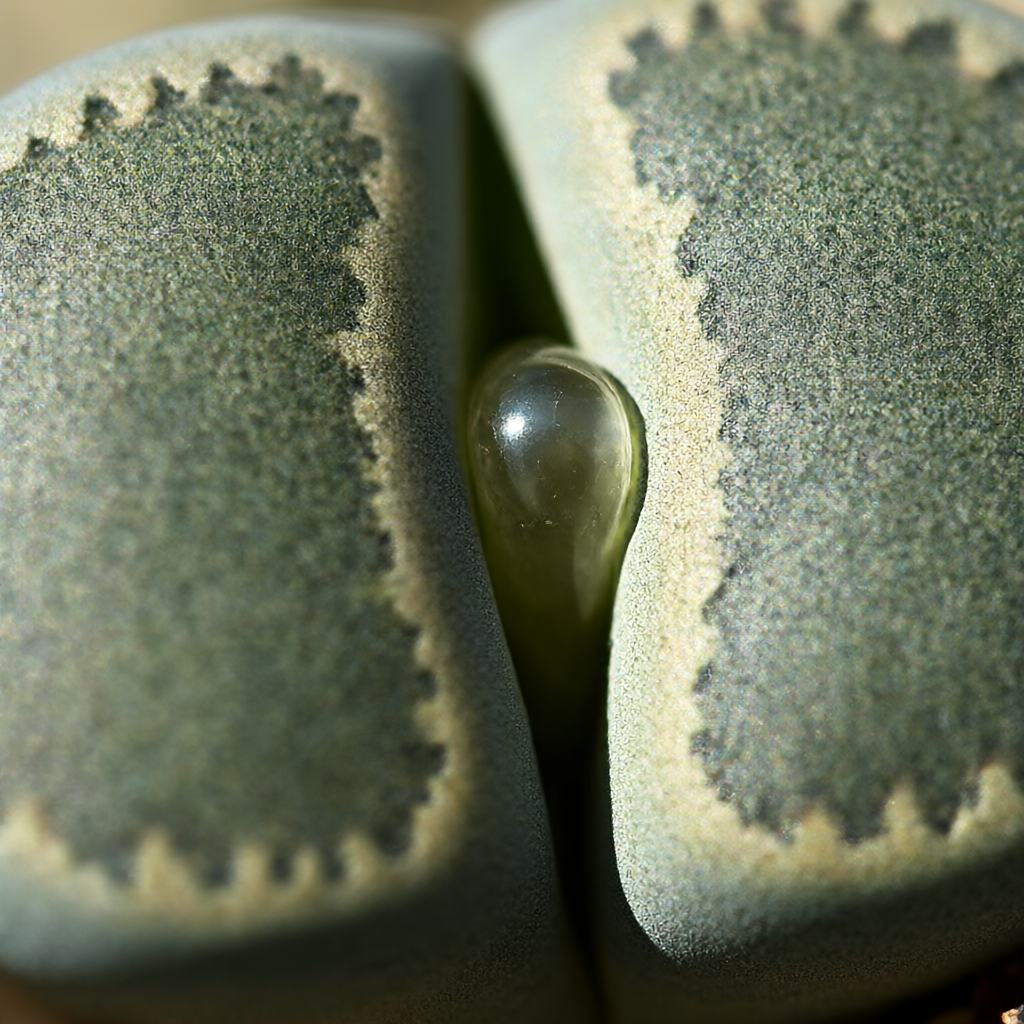
Each body measures 20 to 40 mm across. The top stays flat, and it carries a pattern of dots and lines. Translucent cells form windows, and light passes through them into the interior. A deep taproot runs below, and it reaches water far under the gravel.
The leaf pair shrinks each dry season, and a new pair absorbs the old one. Its surface stays smooth and waxy, which cuts water loss to almost nothing. One body can live for decades, because growth stays slow and damage stays rare.
1
2
3
Open gravel, full sun
Where it lives
Quartz gravel flats hold the species in Namibia. Rainfall there stays under 200 mm a year, so the plant lives on what it stores. Colonies stay small, and each one covers a few metres.
Its range is narrow, and it holds only a handful of hills and plains. Shade kills it, since neighbours would rob the light it needs. Fog adds moisture in some years.
Rain does most of the work. One neighbour, the Saguaro Cactus, stores water in a stem instead of a leaf.
Water, not food
What it eats
Water matters more than food here. Minerals arrive dissolved, and the taproot takes them up with the moisture. It opens its slit when rain falls, and the tissue inside swells within hours.
Carbon dioxide enters at night, because the pores stay shut through the heat of the day. A body can lose a third of its volume in drought, and it refills after the next storm without any lasting harm. New leaves feed on the old pair, since the plant recycles what it already holds.
One flower, one capsule
The breeding cycle
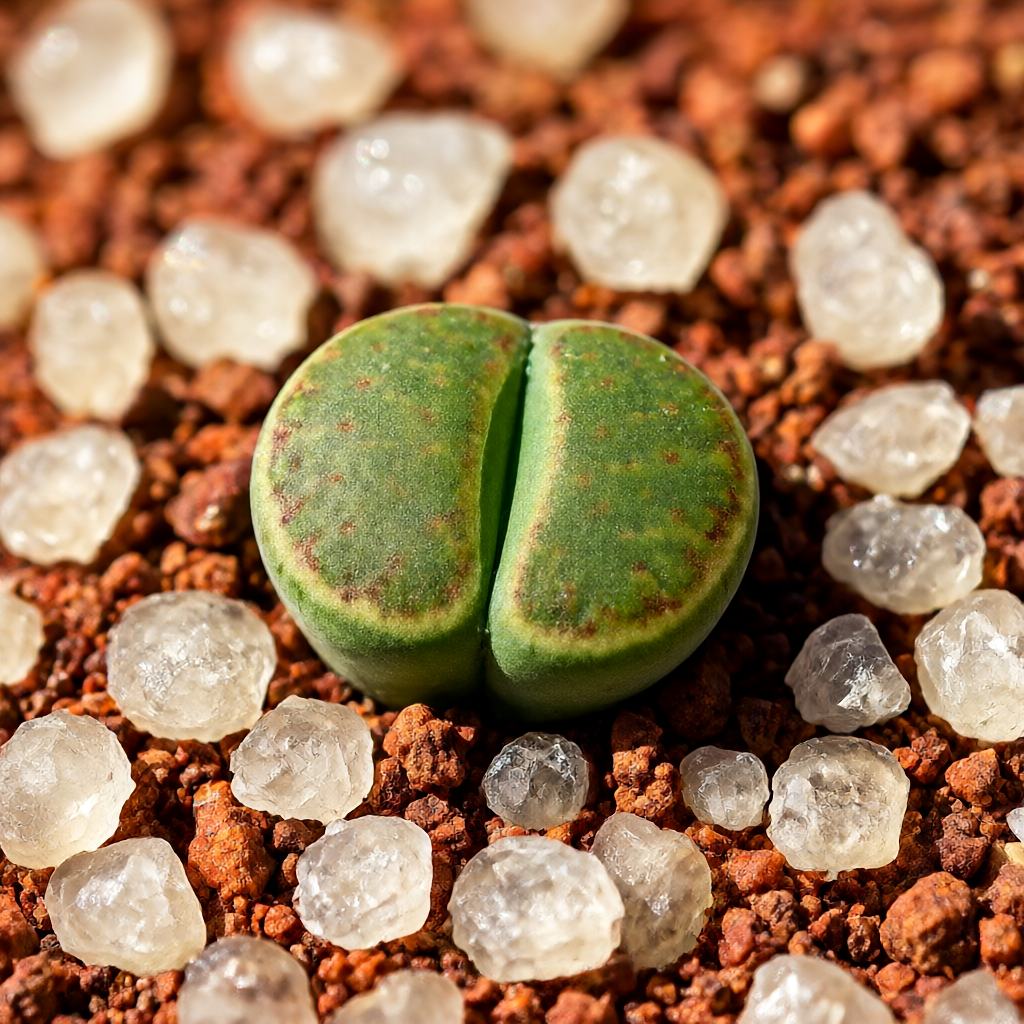
A yellow flower pushes through the slit in autumn, when the first rain arrives. Blooms open in the afternoon, and they close again by evening. Pollinators arrive fast. Each bloom lasts a few days.
Seed sits in a capsule that stays shut while dry. Rain opens the capsule, and the seed washes into gravel cracks. Seedlings take years to reach flowering size, since growth depends on two wet seasons in a row, and one dry year can set a young plant back to the start.
Collectors, not drought
Conservation
The Red List calls the species Least Concern. Its range is small, though the population stays dense where the ground suits it. Collectors pose the real threat, and plants vanish from accessible sites each year.
Illegal trade moves seed and plants across borders, because growers pay well for rare forms. Mining for quartz and marble removes habitat, since the same gravel that hides the plant gets dug for industry. Trends stay hard to measure, and long-term plots give the only reliable picture.
Side by side
How It Compares
| Trait | Living Stone | Split Rock |
|---|---|---|
| Family | Aizoaceae | Aizoaceae |
| Body | 20-40 mm | 30-80 mm |
| Leaves | two, fully fused | two to four, partly fused |
| Top | windowed and patterned | mottled and cleft |
| Flower | yellow | yellow to orange |
| Rating | Least Concern | Least Concern |
Common misreadings
What People Get Wrong
- Not a cactus. No spine sits on the body. The plant belongs to the ice plant family, while the cactus look comes from the same dry-country problem solved twice.
- Not a dead plant in drought. The body shrinks and pulls down. Because the old leaf pair feeds the new one, the plant can sit out a dry year without losing ground to a neighbour.
- Not a plant for a rainy garden. Water in summer kills it. The species takes rain in autumn and spring, and a summer soaking rots the body before the roots can take anything up.
Going further
Sources and Further Reading
Quick hits
Five things to remember
- The windows on top work like skylights, and the interior does the photosynthesis.
- A plant can pull itself deeper into the soil when the surface dries.
- Its flower can measure wider than the body that produced it.
- Old leaves turn papery, and the new pair feeds on them instead.
- Collectors have wiped out whole colonies, though the species still holds on elsewhere.
[…] nothing, so the animal avoids it. Livestock grazing can improve habitat by keeping grass short. A red-panda shares parts of that cold range, and both animals rely on thick fur rather than on […]