 By st20113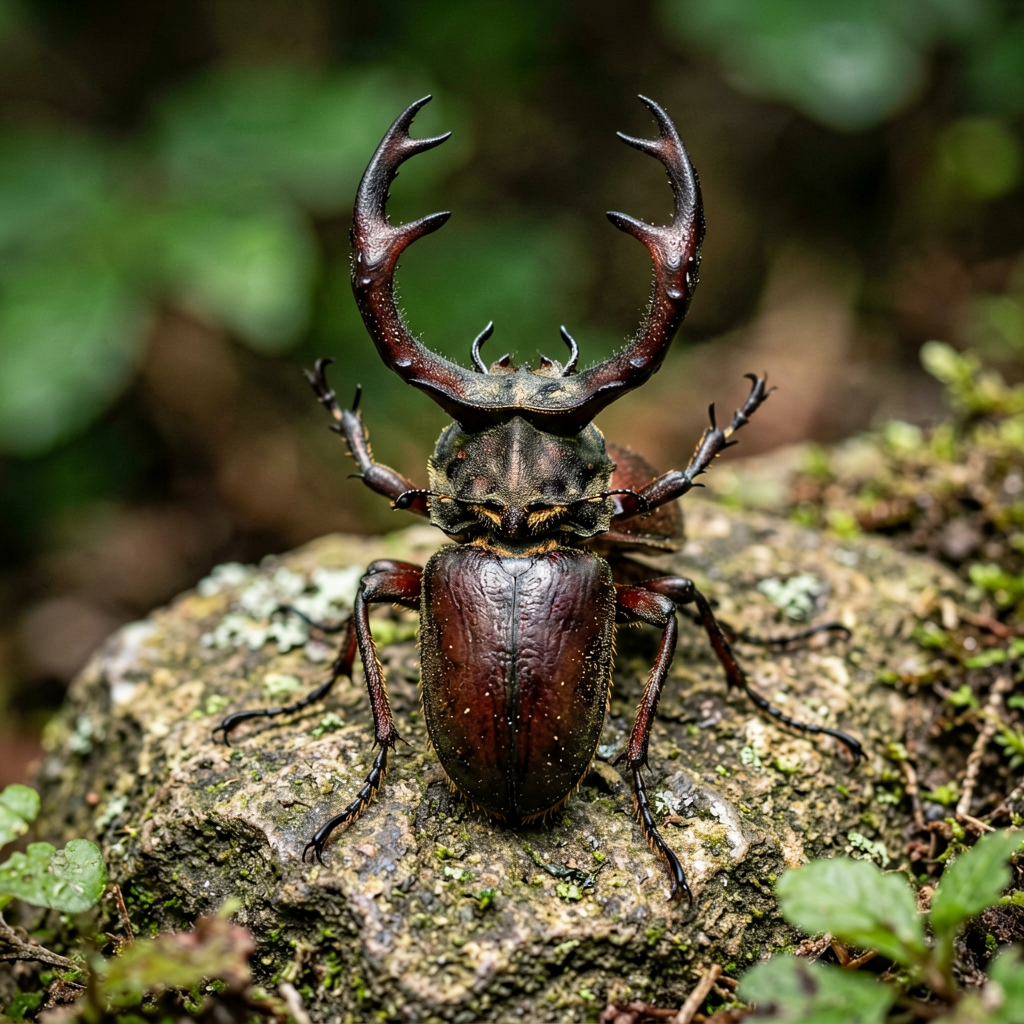
Lucanus cervus | European Stag Beetle
Introduction
The European stag beetle (Lucanus cervus) is one of the most iconic and recognisable beetles found across the continent. Belonging to the family Lucanidae, this large insect is renowned for the striking mandibles of the males, which resemble the antlers of a stag—hence its common name. Adults typically measure between 25 and 83 millimetres in length, with the impressive pincer-like jaws of males reaching up to 40 millimetres in some specimens.
Despite their fearsome appearance, stag beetles are harmless to humans. The large mandibles are used primarily for combat between males during the mating season rather than for feeding. These beetles have captivated naturalists and the general public alike for centuries and remain one of the most sought-after invertebrate species among wildlife enthusiasts throughout Europe.
The species has an extensive distribution across the Palearctic region, ranging from western Europe through much of central and eastern Europe, extending into parts of Asia Minor and the Caucasus. In recent decades, however, populations have declined significantly across much of their range, prompting conservation efforts in numerous countries.
Taxonomy
Lucanus cervus was first described by Carl Linnaeus in his seminal work Systema Naturae in 1758. It is the type species of the genus Lucanus, which belongs to the subfamily Lucaninae within the family Lucanidae. The genus name is derived from Lucanus, a region in ancient Italy, while the specific epithet cervus is Latin for “stag” or “deer,” referencing the antler-like mandibles.
The species is classified within the order Coleoptera, which encompasses all beetles, and falls under the class Insecta. Molecular studies have helped clarify the phylogenetic relationships within the genus Lucanus, confirming L. cervus as a distinct species with no recognised subspecies. Its closest relatives include other European and Asian species within the same genus, such as Lucanus capreolus, the roe deer stag beetle.
Like the brown bear, which shares many of the same ancient European forests, the stag beetle has persisted in these habitats for millions of years, making it a living relic of Europe’s prehistoric insect fauna.
Physical Description
Male European stag beetles are easily distinguished by their enormously enlarged mandibles, which curve inward and bear several teeth along their inner margins. These mandibles are used in ritualised combat with rival males to establish dominance and secure mating opportunities. Females, by contrast, possess much smaller and simpler mandibles that are adapted for chewing wood while laying eggs. Both sexes share a broadly oval, flattened body covered in a hard exoskeleton that is typically dark brown to black in colour.
The elytra, or hardened forewings, are short and do not cover the entire abdomen, leaving the terminal segments exposed. This is a characteristic feature of the family Lucanidae. The legs are robust and well-suited for climbing, with strong tarsi that allow the beetles to grip firmly onto tree bark. Adults have a lifespan of approximately six to eight weeks, during which they rely primarily on sap and nectar for sustenance rather than wood.
The larvae, known as C-shaped grubs, can grow up to 10 centimetres in length and possess a thick, cream-coloured exoskeleton with a prominent brown head capsule. They are powerful creatures equipped with strong mandibles designed for excavating and consuming decaying wood, a role that makes them vital decomposers in forest ecosystems.
Habitat
European stag beetles inhabit mature deciduous and mixed forests, particularly those containing old oak, beech, and sycamore trees. They favour environments with abundant deadwood and rotting logs, which are essential for larval development. The beetles are most commonly found in woodland edges, parks, and gardens where large veteran trees provide suitable breeding sites. They require warm, sheltered locations with high humidity levels, as their larvae are particularly sensitive to desiccation.
The presence of standing dead trees and fallen logs in various stages of decomposition is critical to the survival of this species. Larvae develop deep within the heartwood of decaying trees, where they feed on the soft, fungal-softened wood over a period of three to seven years. This prolonged developmental period makes them especially vulnerable to habitat fragmentation and the removal of deadwood from forests.
The conservation challenges faced by the stag beetle parallel those encountered by the grey wolf in Europe, as both species depend on large, connected tracts of mature woodland to sustain viable populations across the continent.
Diet
Adult European stag beetles feed primarily on tree sap, particularly from oak and other broadleaf trees, as well as on nectar from flowering plants. They are also known to consume soft fruits and aphid honeydew. Their mouthparts are not suited for chewing solid food, and they rely on liquid nutrition during their brief adult lifespan. Males are frequently observed climbing tree trunks in search of sap flows, while females may be found feeding at similar locations or on the ground near breeding sites.
The larvae are wood-decaying organisms that feed on the partially decomposed heartwood of broadleaf trees. They consume wood that has been softened by fungal activity, playing an important ecological role in the breakdown of dead organic matter. This saproxylic lifestyle means that stag beetles are intimately connected to the health and continuity of ancient woodland ecosystems.
Without access to sufficiently decayed wood, larvae cannot complete their development, making the preservation of deadwood habitats a critical component of any conservation strategy for this species.
Reproduction
The mating season for European stag beetles occurs during the warm summer months, typically between June and August. Males patrol tree trunks and branches in search of females, engaging in dramatic combat with rival males using their enlarged mandibles. These fights are largely ritualised, with competitors locking jaws and pushing against one another until the weaker individual is forced to retreat. The winner gains access to mating opportunities with nearby females.
After mating, the female excavates a chamber in decaying wood using her smaller mandibles and lays between 20 and 40 eggs. The eggs hatch after approximately three to four weeks, and the larvae begin feeding on the surrounding softened wood. Larval development is remarkably slow, lasting anywhere from three to seven years depending on environmental conditions and the quality of the food source. During this time, the larvae moult several times before reaching full size.
The final instar larva constructs a pupal chamber near the surface of the wood, where it pupates for approximately six to eight weeks. The adult beetle emerges from the pupal case in late summer, though it may remain inside the wood through the winter before emerging the following year. This long life cycle means that multiple overlapping generations can exist within a single host tree.
Conservation
The European stag beetle is classified as Near Threatened on the IUCN Red List and is protected under Annex IV of the European Union’s Habitats Directive. Throughout much of its range, populations have declined due to habitat loss, forest management practices that remove deadwood, and urbanisation. The species is particularly vulnerable because of its slow life cycle and dependence on ancient woodland ecosystems that are increasingly rare.
Conservation efforts include the preservation of veteran trees, the retention of deadwood in managed forests, and the creation of beetle-friendly habitats in parks and gardens. Several European countries have established captive breeding and release programmes to bolster wild populations. Public awareness campaigns have also played a significant role in reducing the collection of wild specimens, which was once a major threat.
Ongoing monitoring and research are essential to understanding population trends and the effectiveness of conservation measures. Citizen science initiatives have proven valuable in gathering distribution data, helping researchers identify key habitats that require protection to ensure the long-term survival of this remarkable species.
Fun Facts
- Male stag beetles can produce mandible force exceeding 3,000 times their own body weight, making them among the strongest insects relative to their size.
- The larvae of *Lucanus cervus* can live for up to seven years underground, making their development one of the longest of any beetle species in Europe.
- Despite their aggressive appearance, stag beetles pose no danger to humans and will not bite unless handled roughly.
- Adult stag beetles are strong fliers and can travel several kilometres in search of new breeding sites, though they prefer to climb tree trunks.
- The species is nocturnal as an adult, emerging from their breeding trees primarily at dusk and during the night to feed and mate.
[…] inside timber. Among European saproxylic beetles it is often compared with the more familiar Stag Beetle, another species that depends on decaying broadleaf wood, and with the Edible Dormouse, a mammal of […]
[…] both have declined as those trees were cleared. The great capricorn is a distant relative of the European stag beetle. The other giant of the European woodland floor. The stag beetle lives on the ground and the stump. […]