 By Iris
Chrysochloris asiatica | Cape Golden Mole
Species Profile · Chrysochloridae
Cape Golden Mole
A small animal swims through sand and leaves no tunnel behind.
Least Concern
Length
Weight
Foreclaws
Litter
Coat
Rating
The Cape Golden Mole
A swimmer with no tunnel
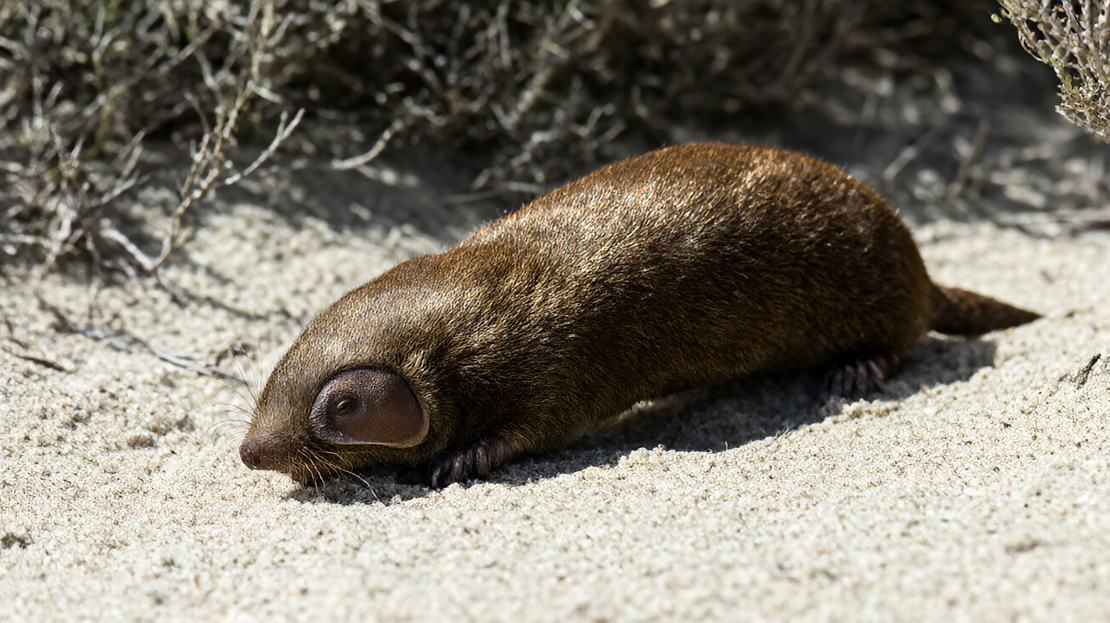
A small animal swims through sand and leaves no tunnel behind. Its fur shines bronze in the sun. No eye shows above the surface.
Most people who meet one are digging a garden, and the animal is already gone by then. It moves under the soil faster than a spade can follow, because the sand gives way at a touch. Nothing about that shape prepares a visitor for the speed.
Family tree
Chrysochloridae, an old African line
Its proper name is Chrysochloris asiatica, one of about twenty golden moles. Its name means green-gold. It describes the sheen rather than the colour, since the coat shifts with the light.
Golden moles sit in an old African line, and their closest relatives are tenrecs and sengis. A Blind Mole works the same ground in Europe, though the two families are not related. Both lost their eyes, and both dig with the front feet, because the same problem appeared twice on two continents.
Bronze coat, five claws
How to tell one
Adults run 10 to 12 cm from nose to rump. Weight falls between 20 and 40 g. The coat carries a metallic gloss, and it shifts between bronze, purple and green. Each eye sits under a leathery shield.
No lens sits beneath it. Front feet carry five heavy claws, and the third one runs longest, which gives the animal its digging power in loose sand. Because the body runs low and wedge shaped, it passes through sand without a burrow.

1
2
3
Sandy soil only
Where it lives
Western Cape of South Africa holds the whole range. Sandy soil suits it best, and it avoids hard clay. Coastal dunes hold good numbers, and gardens carry the animal too.
Because the sand stays loose, a mole can dive at any point. Lawns that look empty may hold several animals within a metre. Farmland does not remove it, since the animal lives below the plough line and the soil stays soft all year.
Grubs and termites
What it eats
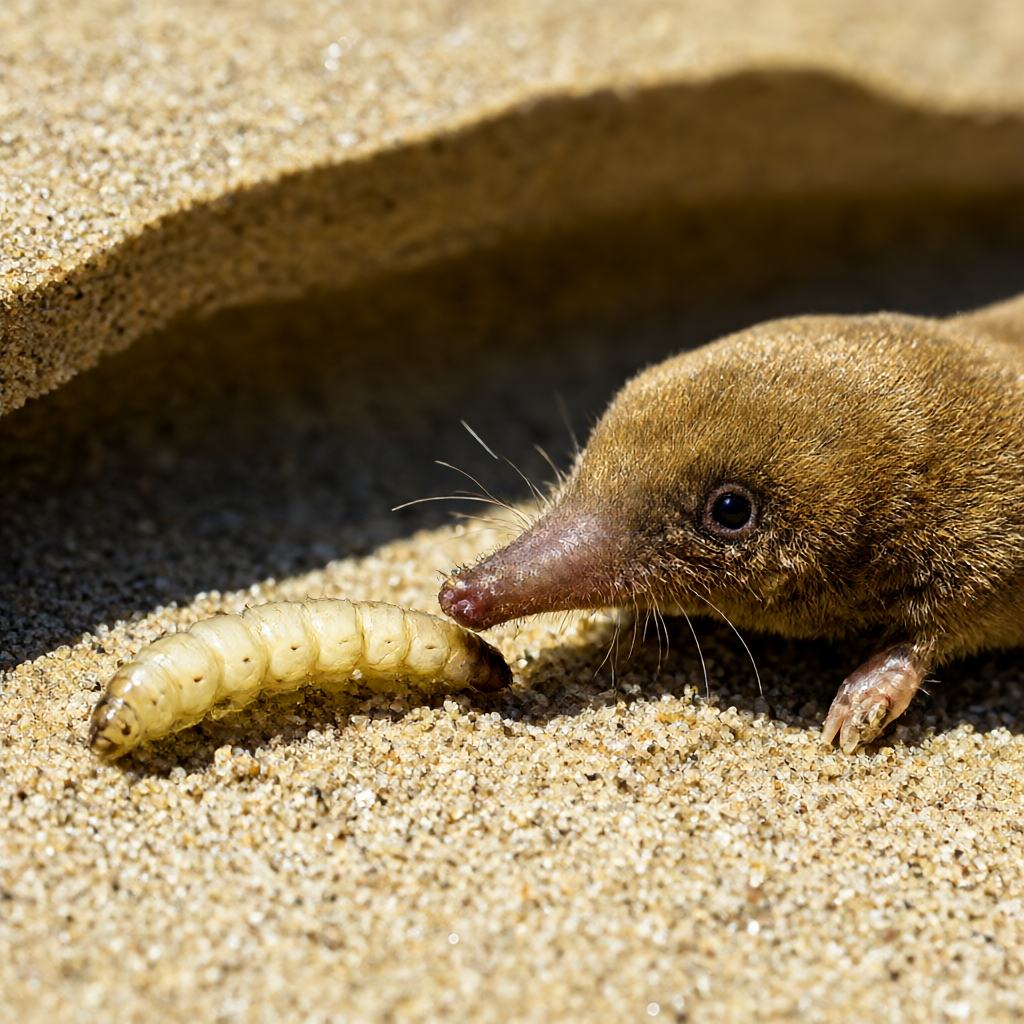
Insects make up most of the food. Beetle grubs and termites come first, and earthworms follow. Small lizards and legless skinks also fall prey, which few moles can catch because the prey moves fast.
Because prey cannot be seen, the mole reads vibration through the sand. It surfaces for a moment, takes an insect, and sinks again. A European Mole hunts the same way in soft soil, though it leaves a mound behind.
One or two, blind at birth
The breeding cycle
A female bears one or two young in a chamber deep in the sand. Newborns arrive blind and hairless. Metallic gloss comes later.
Because the nest stays warm, the young grow fast. The mother leaves them for short hunting trips, and two litters may follow in a good year if insects stay plentiful. Nothing else is known with any confidence, since the animal is hard to observe.
Pesticides, not collectors
Conservation
The Red List calls the species Least Concern. No survey finds a steep fall across the range. Pesticides may matter more than habitat loss.
Trends stay uncertain, because the species is hard to survey. Gardeners kill a number each year without meaning to. A spade that turns one up usually does more damage than the animal does to the garden around it.
Side by side
How It Compares
| Trait | Cape Golden Mole | European Mole |
|---|---|---|
| Family | Chrysochloridae | Talpidae |
| Length | 10-12 cm | 12-16 cm |
| Weight | 20-40 g | 70-130 g |
| Eyes | under a skin shield | tiny but open |
| Coat | bronze, purple, green | velvety black |
| Rating | Least Concern | Least Concern |
Common misreadings
What People Get Wrong
- Not a mole, despite the name. The family says otherwise. Golden moles sit in an old African line of their own, because the two groups solved the same problem in different ways.
- Not a sand swimmer by accident. The body works like a wedge. Because the coat stays smooth and the head runs narrow, the animal passes through loose sand without leaving a tunnel behind it.
- Not blind in the usual sense. A leathery shield covers each eye. The eye sits under the skin with no lens, so the animal reads vibration rather than light when it hunts.
Going further
Sources and Further Reading
Quick hits
Five things to remember
- The metallic sheen comes from flattened hair, and the colour changes with the angle of light.
- A golden mole can cross a garden path in sand and leave no mound at all behind it.
- Its body temperature runs lower than most mammals, and the animal saves energy that way.
- The animal has no ear flap, only a hole covered by skin and short hair.
- Its closest relatives live in Madagascar and the Caribbean, which no one expected.