 By Iris
Otocolobus manul | Pallas’s Cat
Species Profile · Felidae
Pallas’s Cat
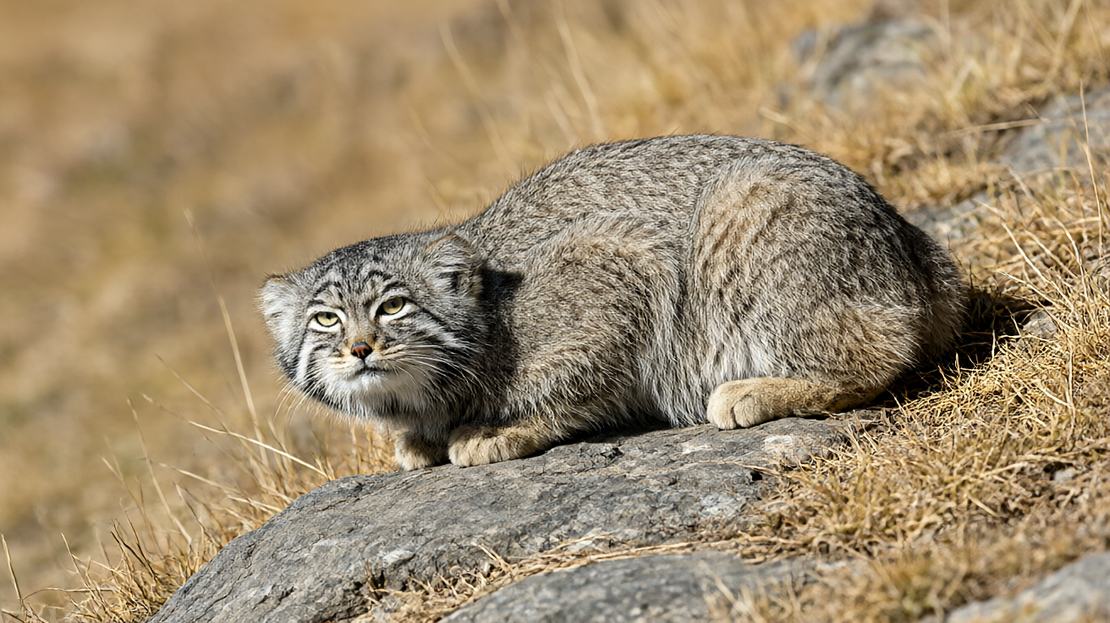
A cat with the densest fur of any feline sits still on a cold steppe.
Least Concern
Length
Tail
Weight
Coat
Litter
Rating
The Pallas’s Cat
The cat that hates open ground
A round grey cat sits among stones and becomes part of the slope. Its face looks flat, and the ears sit low on the skull. No other cat carries fur this dense. The animal hunts in open country across Central Asia, well above the tree line.
Pikas supply much of its food. Because the cat relies on ambush, it never runs far, and it stalks to within a few strides before it strikes. Most photographs of the species come from a handful of den sites.
Family tree
Felidae, the cats
Its proper name is Otocolobus manul, the only member of its genus, and three subspecies are recognised across the range. The genus split from other cats long ago, and nothing close lives. Because the split is old, the animal shows characters no other cat shares.
Its round pupils separate it from most small cats. Early writers placed it with the domestic cat, which was a mistake. Skull shape and ear structure now place it on its own branch.
Fur and flat face
How to tell one
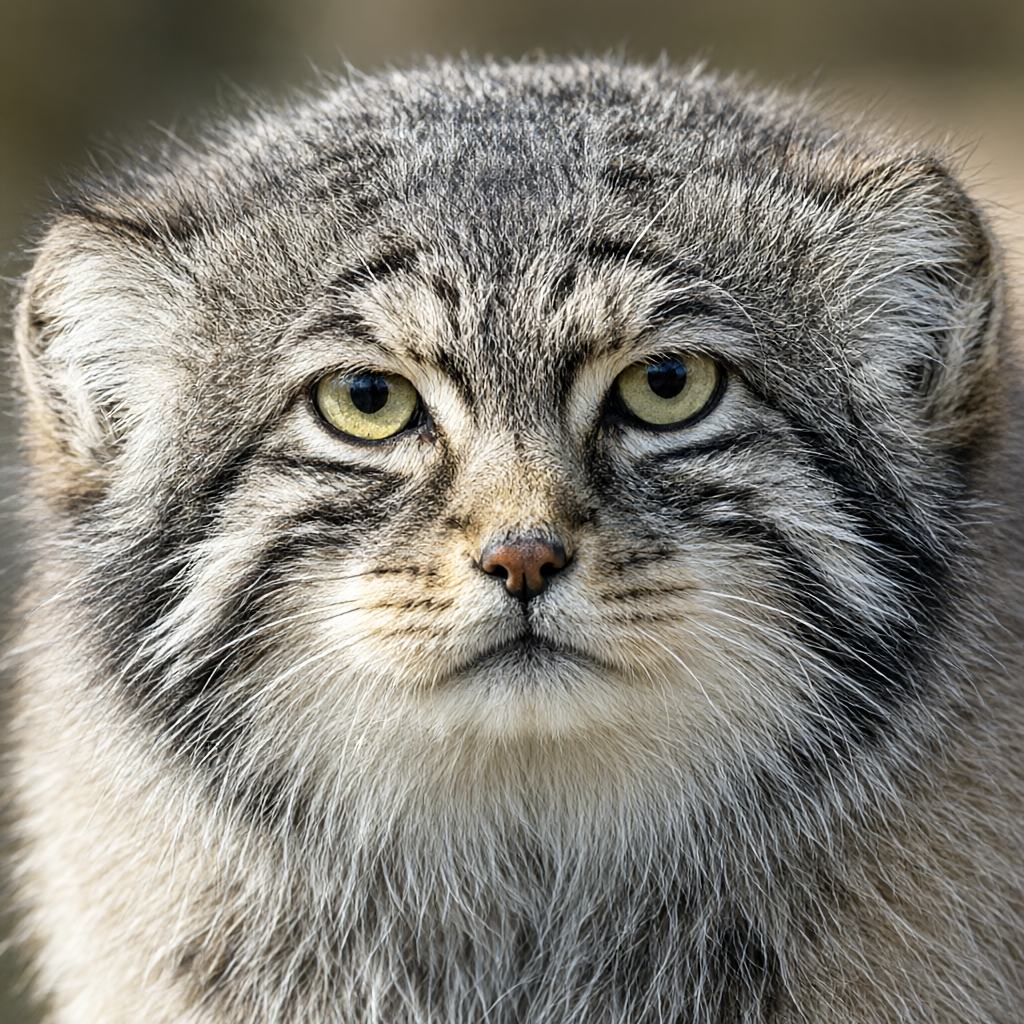
Adults run 46 to 65 cm from nose to rump. The tail adds 21 to 31 cm, and it runs thick and bushy. Weight falls between 2.5 and 4.5 kg. Fur reaches 9,000 hairs to the square centimetre, which is denser than any other cat.
Because the coat holds so much air, the animal stays warm at minus 30 degrees. Ears sit low and wide apart, and they barely rise above the skull. A flat face gives the eyes a wide field of view across open ground. Its body runs long and low, and the legs stay short.
Claws are short and blunt, since the animal digs after prey. Females run slightly smaller than males, though the fur hides the difference.
1
2
3
Steppe and rock
Where it lives
Steppe, semi desert and rocky slopes hold the species. Because the cat needs cover, it uses gullies, boulders and marmot burrows. It ranges up to 5,000 m in the mountains of Tibet. Snow cover helps it, since pale fur matches the ground.
Open flat ground offers nothing, so the animal avoids it. Livestock grazing can improve habitat by keeping grass short. A red-panda shares parts of that cold range, and both animals rely on thick fur rather than on fat.
Pikas and voles
What it eats
Pikas make up most of the diet. Voles, mice and ground squirrels get taken as well. Birds and insects add variety in summer.
Because the cat hunts from cover, it needs prey that passes close by. It waits at a burrow mouth and strikes when the animal emerges. A chameleon uses the same patient method on insects, though it has no fur to keep it warm.
Kittens in a crevice
The breeding cycle
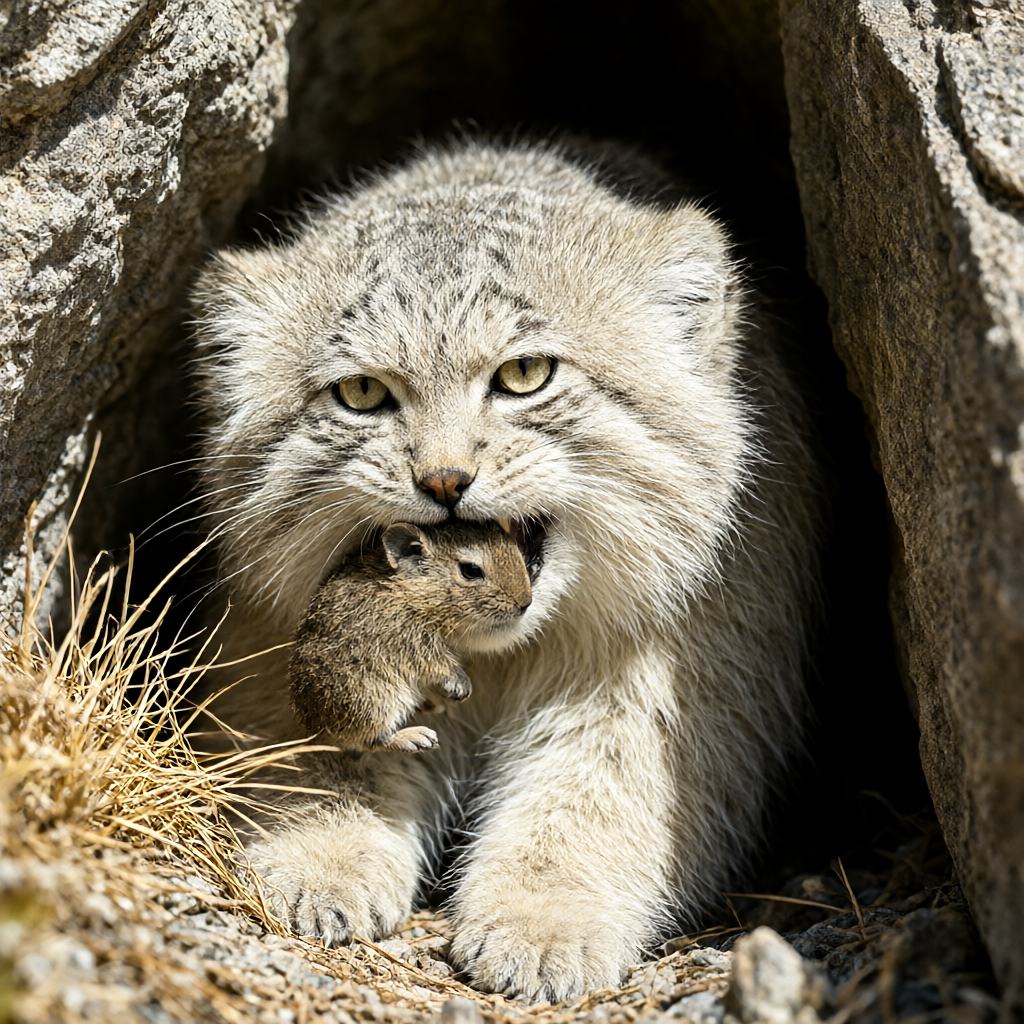
A female raises one litter each year. Three to six kittens are born after about 70 days. A den sits in a rock crevice or an old burrow. Because the young stay hidden for two months, few people see them.
The mother brings prey back to the den, and she moves the litter if disturbed. Independence comes in autumn, and the young disperse before winter. Males take no part in raising the young.
Poison and trapping
Conservation
The Red List calls the species Least Concern globally. Numbers fall where poisoning targets pikas. Because the cat is shy, the population is hard to count.
Hunting for fur continues in some countries. Mining and roads cut through the best habitat. Protected areas cover part of the range, and survey work continues.
Side by side
How It Compares
| Trait | Pallas’s Cat | Eurasian Lynx |
|---|---|---|
| Family | Felidae | Felidae |
| Length | 46-65 cm | 80-130 cm |
| Weight | 2.5-4.5 kg | 18-30 kg |
| Coat | densest of any cat | thick but shorter |
| Prey | pikas and voles | hares and deer |
| Rating | Least Concern | Least Concern |
Common misreadings
What People Get Wrong
- Not a fat cat. The animal looks round because the coat holds air. Fur reaches nine thousand hairs to the square centimetre, which keeps the body warm at minus thirty without extra fat.
- Not a mountain climber. It hunts in cover and avoids open ground entirely. Gullies, boulders and old marmot burrows give it the edge it needs, and flat snow offers nothing to hide behind.
- Not common in trade. Trapping and poison have cut numbers across the range. The cat is protected in most countries it lives in, yet pelts and live animals still move across borders at the edges of its range.
Going further
Sources and Further Reading
Quick hits
Five things to remember
- Its fur is the densest of any cat.
- Its ears sit low on the skull.
- It hunts pikas at burrow mouths.
- It lives above 4,000 m in Tibet.
- Its pupils are round, not slit.