 By Iris
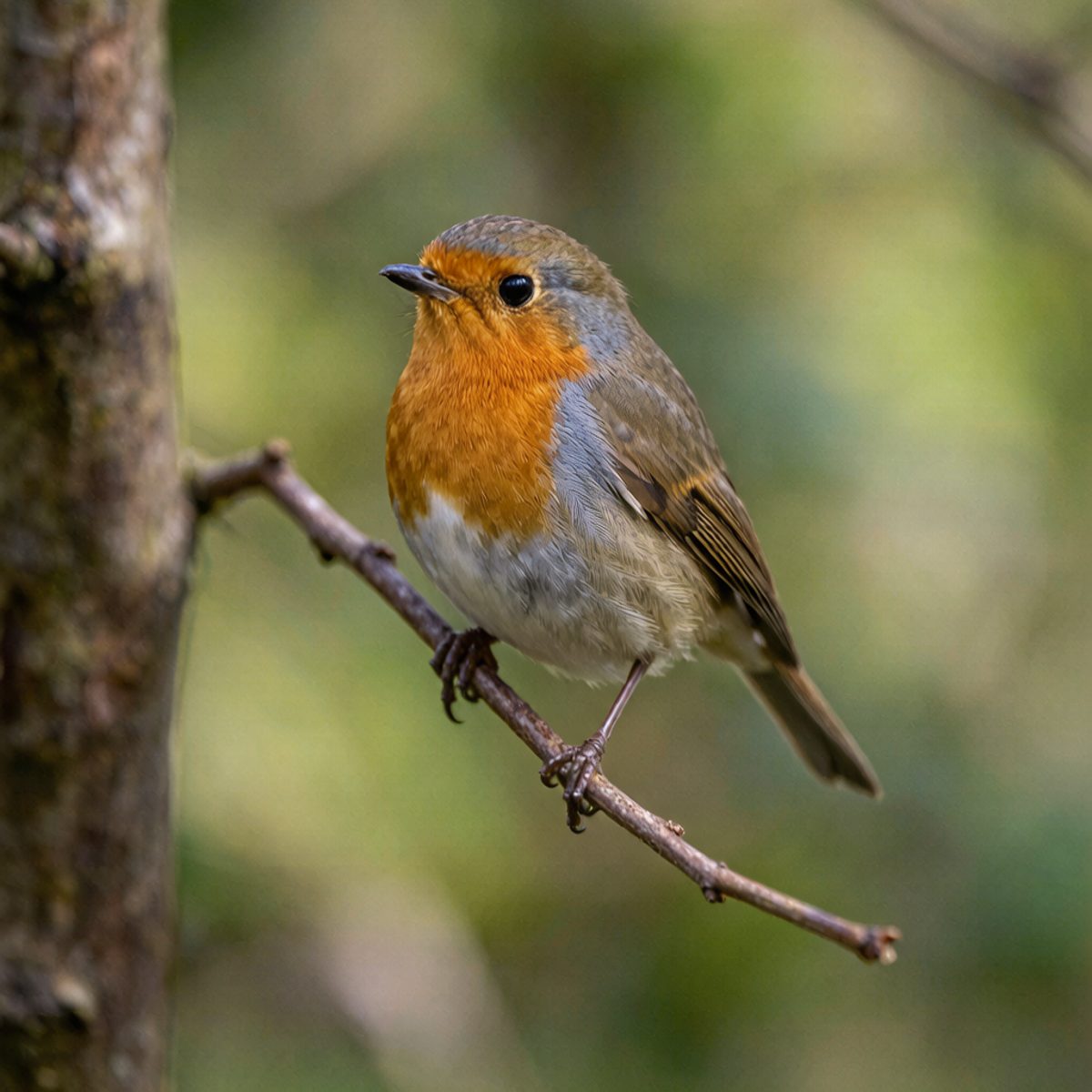
Erithacus rubecula | European Robin
Species Profile · Muscicapidae
European Robin
A small brown bird with an orange breast holds one garden patch all winter and fights any rival that steps inside it.
Least Concern
Length
Weight
Broods
Life span
Voice
Rating
A garden regular
The bird that follows a spade
A robin follows a spade. The same bird will attack a red rag hung in its own garden. One instinct drives both.
It defends a patch of ground all year. That orange breast is a warning, not decoration. Few garden birds fight this hard for so little space and food.
Adults hold their territory in winter, when most other songbirds have gone quiet. Because of that habit, people hear it sing in December.
A chat, not a thrush
Where it sits among songbirds
The species name is Erithacus rubecula, and the bird belongs with the chats. For a long time it sat with the thrushes, though the family has since changed. Genetic work moved it into Muscicapidae, the family of the Old World flycatchers.
Its closest relatives are the nightingale and other chats. The American robin is a thrush, and the shared name is pure chance. Atlantic islands hold their own forms, although the differences are slight.
Madeiran and Canary birds differ in size and voice. So a robin singing in Funchal is not quite the same bird as the one in a London garden. Although the two look alike, their songs tell them apart at once.
Orange, grey and brown
How to age and sex one
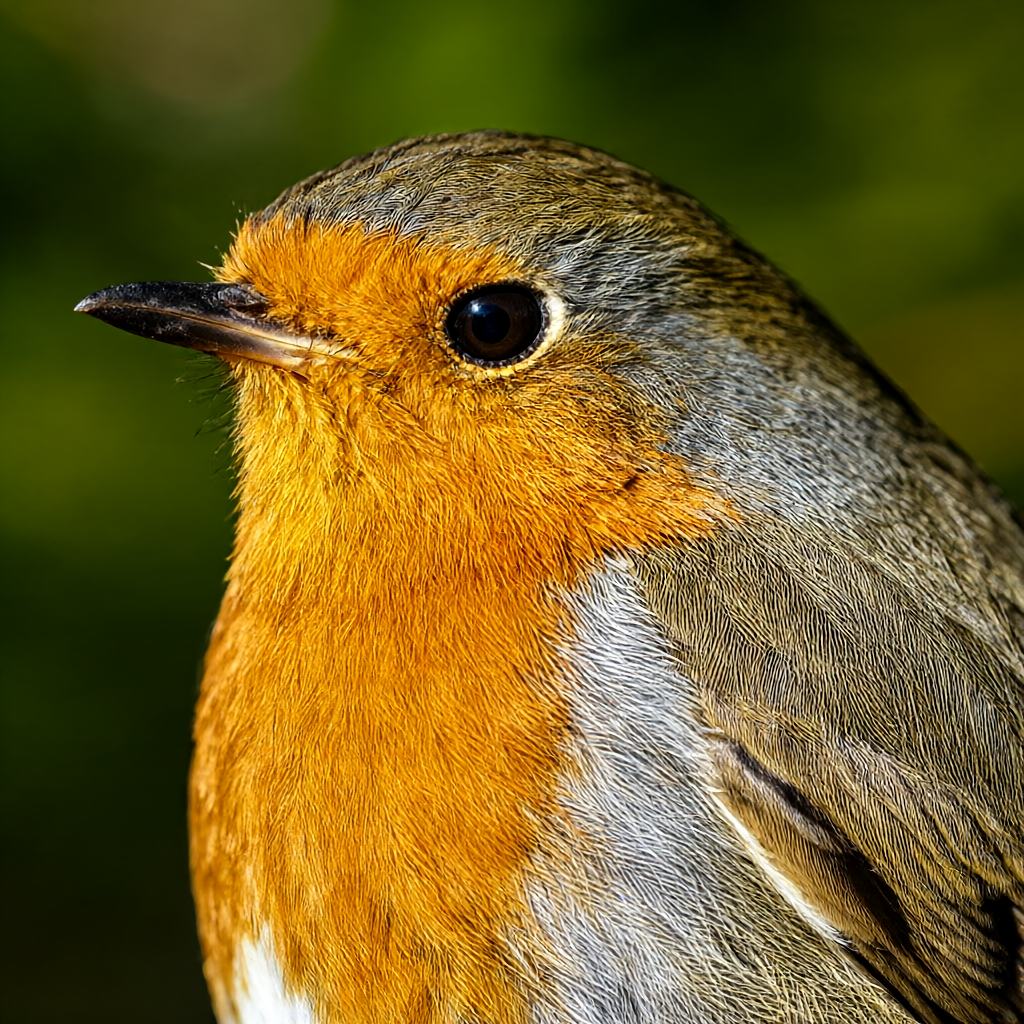
Adults run 12 to 14 cm long, with a wingspan of 18 to 22 cm. Weight sits near 20 g. Orange covers the face and breast, and the belly stays a dull white. Upperparts are olive brown, which hides the bird against dead leaf litter. A grey fringe runs along the breast, since that is where the two colours meet.
Young birds carry no red. They are mottled brown from head to tail, which keeps them hidden while they are still clumsy. That plain dress lasts until the first moult, which comes in late summer. A thin black bill points forward. Eyes sit large and dark on a rounded head.
Legs are pale brown and thin, built for hopping rather than for walking. Both sexes look identical, which is unusual among birds that defend a small territory so fiercely all year. Only a ring in the hand reveals which bird is which.
1
2
3
Hedges and bare ground
The cover it needs
Woodland with low cover suits the bird best, although it will use almost any scrub. Hedgerows, parks, churchyards and gardens all work. Bare ground nearby is the fixed need. Robins feed on soil, not in the canopy.
Damp shade holds far more invertebrates than a dry lawn or dusty path ever does. A stonechat shares that taste for low perches and open ground, and the two birds often feed within sight of each other. Northern birds move south once frost hardens the ground and food runs out. British birds mostly stay, and they hold territory right through the cold.
A garden with a feeder can carry several birds. Since each one owns a small patch, the visitors change by the hour.
Insects, worms and berries
What it eats
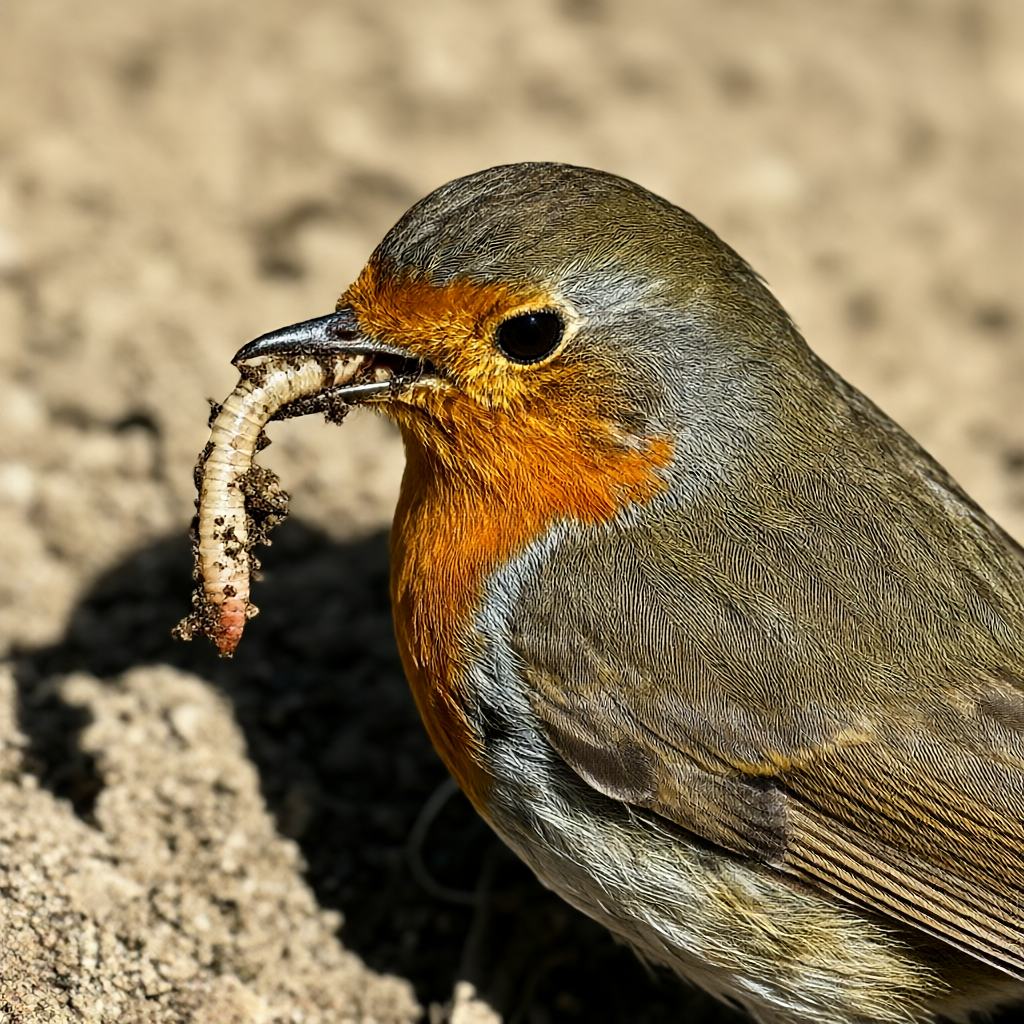
Insects, spiders, worms and snails form the summer diet. It takes them from soil, from leaves and from loose bark. It watches a digging spade and hops in behind it, since the blade turns up food.
That habit is not tameness at all, but a shortcut to freshly exposed food. In autumn the diet shifts to berries and fallen fruit. Hawthorn, rowan and ivy all get stripped bare in a hard winter.
Mealworms vanish fast, because a robin will take them within minutes. A robin will chase off any bird that comes too close to the food. Because it feeds on open ground, a long cold snap can kill a large share of the local birds.
Nests in odd places
The breeding cycle
Breeding starts in March, when the male sings from a high and exposed perch. She builds alone, and she chooses a remarkably strange range of sites. Nests turn up in kettles, boots, letter boxes and abandoned flower pots. Moss, grass and dead leaves form a neat cup, though the lining varies.
She lays five or six eggs, which are white and freckled with red brown speckles. Incubation takes about 13 days, and only she sits. Both parents feed the chicks for about 14 days before they leave the nest. Fledglings leave before they can fly.
Two or three broods follow in a good year, and the male often tends the first one alone. Cats and magpies take a heavy share of the young, so very few of them reach the autumn.
Weather, not hunting
Conservation
Red List status is Least Concern. Europe as a whole holds an estimated 130 to 230 million breeding birds. Britain alone carries about 6.7 million pairs. Numbers rise and fall with winter weather rather than with any hunting pressure.
A hard frost can kill a large share of the smallest birds. Average life is short, around 1.3 years; therefore few birds see a second winter. One ringed bird in Germany was recovered at more than 8 years of age. Gardens matter a great deal, since they hold food and cover when the fields around them are bare.
Intensive farming removes hedgerows, and with them the low cover the bird needs. Even so, the species is in no danger.
Side by side
How It Compares
| Trait | European Robin | Common Nightingale |
|---|---|---|
| Family | Muscicapidae | Muscicapidae |
| Length | 12-14 cm | 15-16.5 cm |
| Breast | orange red | plain buff |
| Song | bright, given all year | loud, mostly after dark |
| Nest | cup in a hole or a pot | cup low in dense scrub |
| Rating | Least Concern | Least Concern |
Common misreadings
What People Get Wrong
- Many people take the red breast for a courtship signal, yet it is a threat. Both sexes carry it and both use it to warn a rival away.
- The American robin is often called a close relative, though the two are unrelated. One is a thrush and the other belongs with the chats and flycatchers.
- Garden books describe a tame bird that seeks company, yet it is defending ground. It follows a spade because the blade turns up food, not out of trust.
Going further
Sources and Further Reading
Five things to remember
Quick hits
- The red breast warns rivals away.
- Both sexes sing, and both sing in winter.
- It will sing under streetlights long after dark.
- Chicks stay plain brown until the first moult.
- A 2015 poll made it Britain’s national bird.
[…] Adult common cuckoos measure 32 to 34 centimeters in length with a wingspan of 55 to 60 centimeters. The species exhibits sexual dimorphism: males have gray upperparts and a gray breast, while females may be gray or rufous morph. Both sexes have barred underparts and a distinctive yellow eye-ring. The slender body and long tail give the cuckoo a hawk-like silhouette in flight. This resemblance to raptors may help females approach host nests without raising alarm among smaller birds such as the European robin. […]
[…] to challenging environments, from high-altitude foraging to seasonal hibernation or migration. the European robin, the common blackbird, and the common chaffinch frequently coexist with the sturnus vulgaris across […]
[…] observers for centuries, featuring in folklore, art, and scientific illustration across Europe.the European robin, the common blackbird, and the goldcrest frequently coexist with the common redstart across shared […]
[…] observers for centuries, featuring in folklore, art, and scientific illustration across Europe.the European robin, the common blackbird, and the goldcrest frequently coexist with the bluethroat across shared […]
[…] naturalist Christian Ludwig Brehm in 1831. It sits within the genus Turdus, which includes the European Robin (though the robin is placed in a different genus, Erithacus) and the familiar blackbird. The […]
[…] the British countryside it forages alongside the Eurasian Robin in gardens and with the Song Thrush and the Common Blackbird on lawns, though the wagtail’s […]
[…] the garden avifauna it shares habitat with the Eurasian Robin, and the two are often seen in the same shrubbery, though the Dunnock is far shyer. It also […]