 By st20113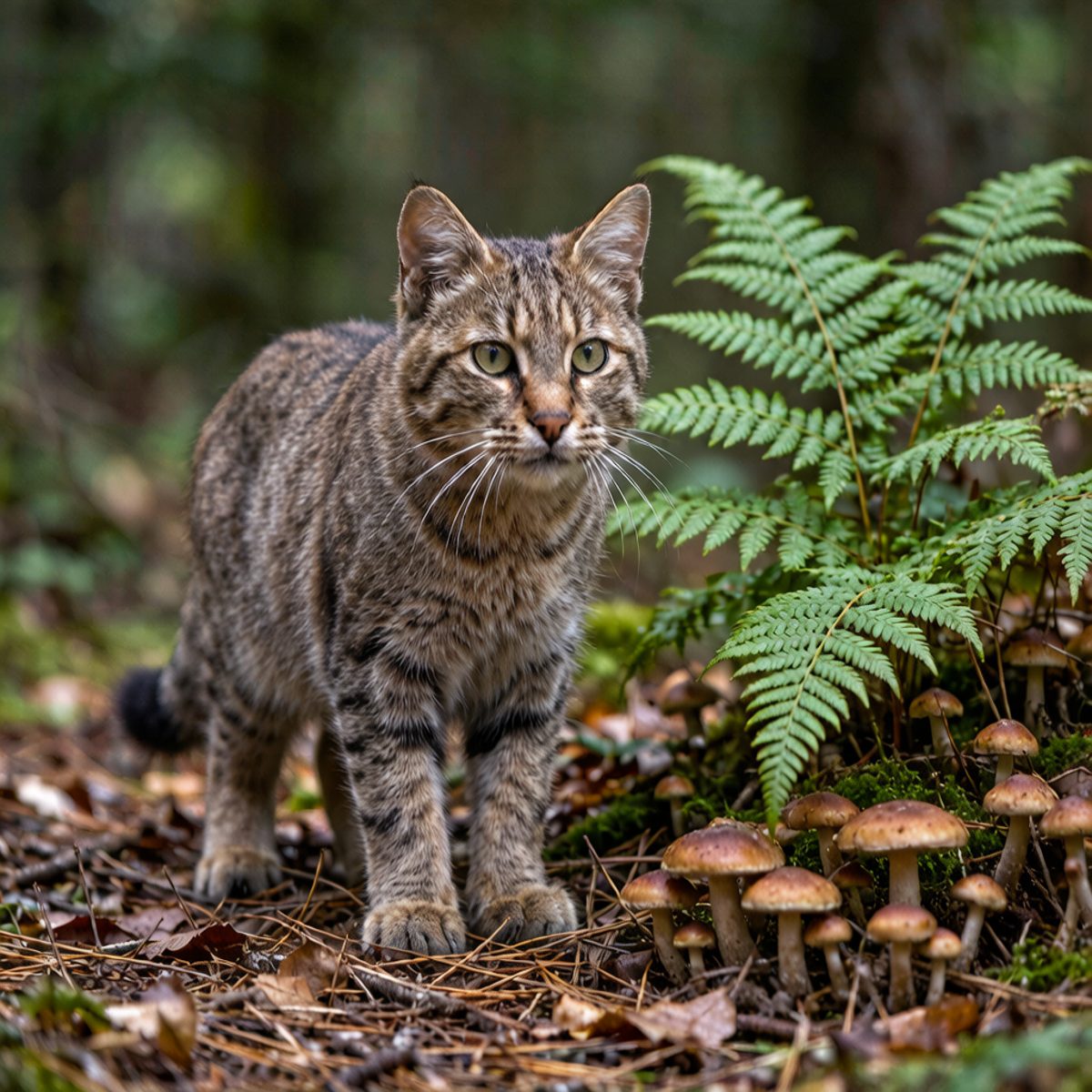
Introduction
The wildcat, known scientifically as Felis silvestris, is a small, elusive carnivore that is the wild ancestor of the domestic cat. Across Europe it inhabits forests, woodlands, and scrub, where it hunts by stealth and ambush. With its tabby-striped coat and bushy ringed tail, it is easily confused with a stray house cat, yet it is a truly wild animal that avoids human contact. Long persecuted and displaced, healthy populations survive in fragmented woodland across the continent. They vanish into brambles at the first sign of people and are far more often heard than seen, their presence betrayed only by a glimpse of a ringed tail slipping through ferns. In parts of Scotland and central Europe they remain numerous, while in lowland areas they cling to the largest unbroken forests. Conservation groups work to link woodlands with hedgerow corridors so that isolated cats can travel and breed without losing genetic diversity.
Taxonomy
The wildcat belongs to the family Felidae, the cats, within the genus Felis. It is closely related to the domestic cat and can interbreed with it, a fact that threatens pure wild populations. It shares the European wilderness with larger predators such as the red fox and the brown bear, though the wildcat is a solitary hunter of much smaller prey and keeps to dense cover.
Physical Characteristics
Wildcats are slightly larger and stockier than domestic cats, measuring 45 to 80 centimeters in length with a 25 to 35 centimeter tail, weighing 3 to 8 kilograms. Their coat is grey-brown with dark stripes along the body and a thick tail marked with black rings and a black tip. The face has lighter cheeks and dark lines from the eyes. Strong legs, retractable claws, and keen senses make it a superb nocturnal predator of small animals in the undergrowth.
Habitat
Wildcats favor broadleaved and mixed forests with plenty of ground cover, dense thickets, and rocky outcrops where they can hide and den. They also use hedgerows, scrub, and woodland edges, especially where human disturbance is low. Each cat holds a territory that it marks with scent, ranging over several square kilometers in search of food. They shelter in hollow trees, rock crevices, or abandoned burrows and are most active at dusk and night.
Diet
The wildcat is a dedicated carnivore that feeds mainly on small mammals such as voles, mice, and rabbits, supplemented by birds, reptiles, amphibians, and large insects. It hunts by patient stalking followed by a short, powerful dash. Unlike domestic cats, wildcats rarely eat plant matter and depend entirely on live prey. A single cat may take several small animals each night, playing a useful role in controlling rodent numbers across its woodland home.
Reproduction
Mating takes place in late winter or early spring, often with loud vocal contests between males. After a gestation of about 63 to 68 days, the female gives birth to two to five kittens in a hidden den lined with grass. The kittens are blind at birth and depend on their mother for around four months before learning to hunt. They disperse at roughly six to ten months to establish their own territories. Females usually breed once per year in the wild.
Conservation
The European wildcat is classified as Least Concern globally, but many regional populations are threatened by habitat loss, road mortality, and hybridization with feral domestic cats. Protection of connected forests and control of stray cats are key to preserving pure wildcat lines. In several countries reintroduction and monitoring programs have helped stabilize numbers. The species remains a symbol of Europe’s remaining wild woodlands and the need to keep them intact.
Fun Facts
A wildcat’s bushy tail with a black tip helps distinguish it from most domestic cats, which lack the uniform rings. It can leap several times its body length to catch prey among branches. Wildcats are fiercely solitary and will fight intruders rather than flee. Their striped coat breaks up the outline perfectly in dappled forest light. Unlike pets, they cannot be tamed and remain wary of people throughout life.