 By st20113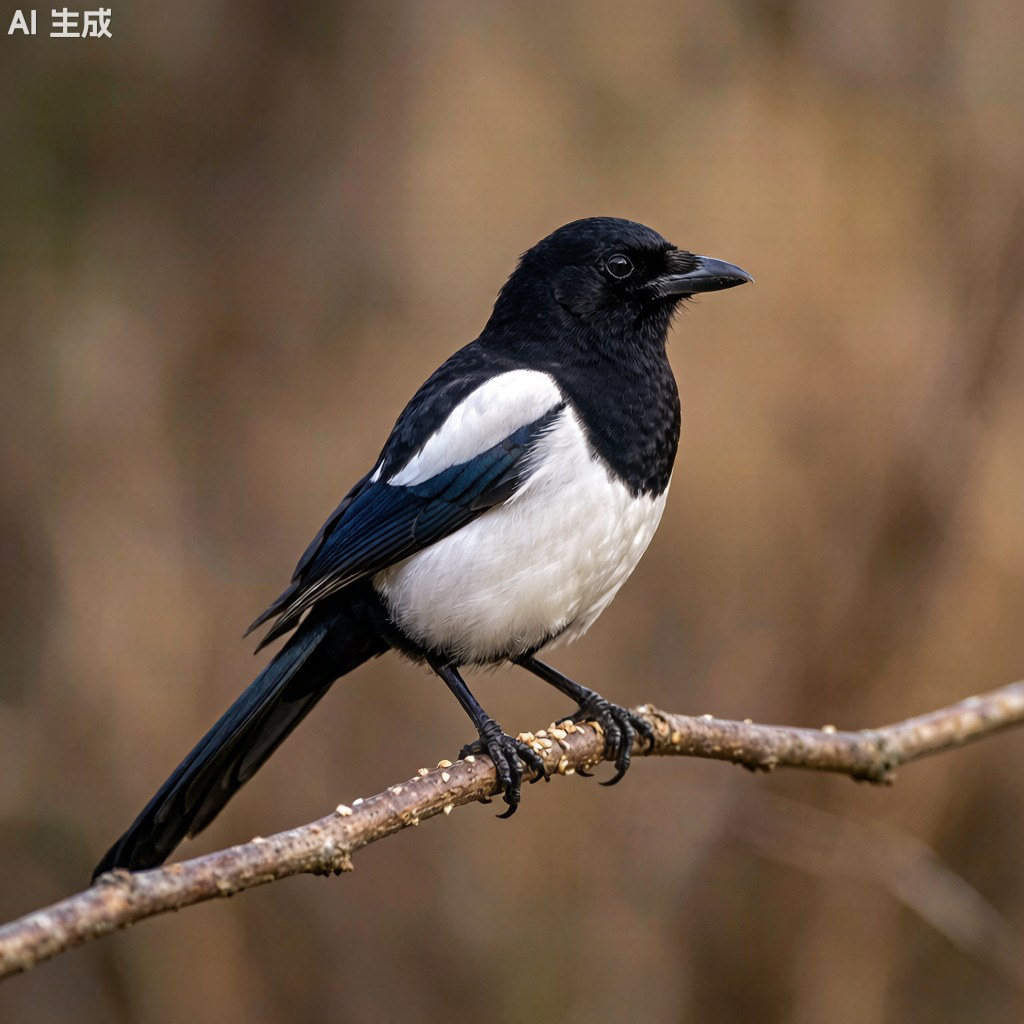
Introduction
The Eurasian magpie, known to science as Pica pica, is one of the most recognizable birds of Europe and Asia. A member of the crow family, it is famous for its striking black-and-white plumage and its reputation for intelligence and curiosity. Magpies thrive in farmland, parks, gardens, and woodland edges, often nesting close to human settlement. Long surrounded by folklore and superstition, this bird is now appreciated by scientists for its surprisingly sophisticated behavior.
Taxonomy
The Eurasian magpie belongs to the family Corvidae, which includes crows, ravens, and jays. Its genus Pica groups the long-tailed magpies of the Northern Hemisphere. Despite its common name, it is not closely related to the Eurasian jay, though both are clever corvids that cache food. The species has several regional forms across its vast range from Iberia to the Pacific coast of Asia.
Physical Characteristics
Measuring 40 to 50 centimeters in length including its long, graduated tail, the magpie weighs 160 to 260 grams. Its glossy black head, back, and breast contrast sharply with bright white shoulders and belly. In sunlight the black feathers reveal iridescent green and violet sheens. Its stout black bill, strong legs, and noisy chattering call make it easy to identify. The elongated tail, nearly as long as the body, gives the bird a distinctive silhouette in flight.
Habitat
Magpies favor open countryside with scattered trees, hedgerows, orchards, and suburban gardens where they can forage on the ground and nest in lofty branches. They avoid dense forest and treeless upland. Highly territorial during the breeding season, pairs defend a home range that includes feeding areas and a single large domed nest. Their adaptability to farmland and towns has made them one of the most successful birds across the continent. They readily exploit picnic sites, bird tables, and compost heaps, and patrol lawns for grubs and caterpillars. In autumn and winter, family groups may join loose flocks that roost together in dense thickets, gaining safety from owls and foxes at night. Magpies also drop hard-shelled nuts onto roads so passing cars can crack them, showing remarkable problem solving. Their keen intelligence helps them thrive alongside people across the continent.
Diet
Opportunistic and omnivorous, the magpie eats insects, worms, and other invertebrates, especially in spring and summer. It also takes small vertebrates, eggs, and nestlings of other birds, carrion, fruit, grain, and human food scraps. Foraging is mostly on the ground, where it hops and probes with its bill. Like other corvids it caches surplus food, hiding items in the ground or crevices to retrieve later, demonstrating remarkable spatial memory.
Reproduction
Magpies are monogamous and often pair for life. In early spring the pair builds a bulky, domed nest of twigs with a side entrance, lined with mud and grass, usually high in a tree. The female lays five to eight pale greenish eggs speckled with brown, incubating them for about three weeks. Both parents feed the chicks, which fledge after roughly three to four weeks but remain with the family group for some time afterward.
Conservation
Listed as Least Concern by the IUCN, the Eurasian magpie is abundant and expanding in many areas, benefiting from agricultural landscapes and suburban growth. Historically persecuted as a nest predator, it is now protected across much of Europe. Local declines can occur where intensive farming reduces insect prey, but overall the species remains common and well adapted to coexistence with people. Nevertheless, periodic poisoning campaigns and collisions with vehicles cause local losses that monitoring helps to track.
Fun Facts
Magpies are among the few animals known to recognize themselves in a mirror, a sign of self-awareness once thought unique to humans. Their attraction to shiny objects is real but exaggerated by legend. A group of magpies is sometimes called a “tidings.” They hold funereal gatherings around dead companions, a behavior that may be simple investigation. Their alarm calls can warn other garden birds of approaching cats and hawks.
[…] hedgerows, distinguished by its solid black plumage and squared tail. It is a close relative of the Eurasian Magpie, with which it shares the bold intelligence of the corvid […]