 By st20113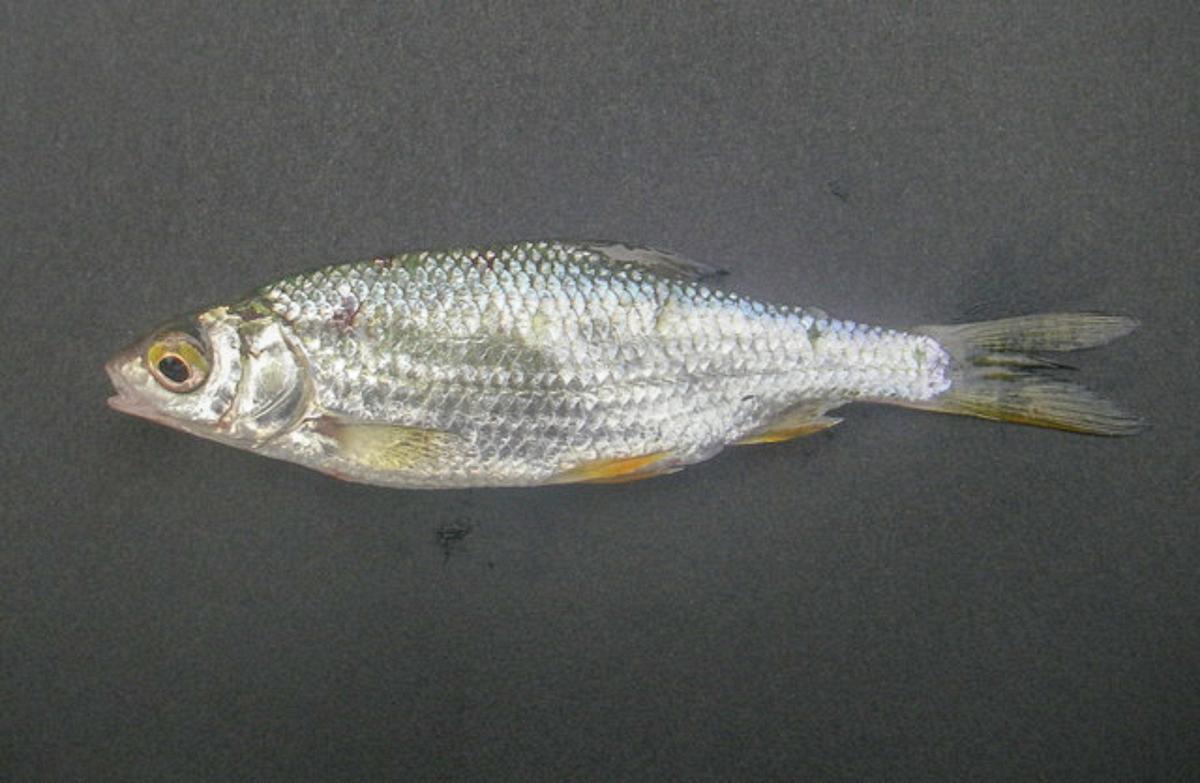
Introduction
The common roach (Rutilus rutilus) is a silvery freshwater fish of lakes, slow rivers, canals, and ponds across Europe and parts of Asia. Adults usually measure 15 to 35 centimeters and weigh a few hundred grams, though old fish can grow larger. It has a deep, laterally compressed body, a small downward-pointing mouth, and reddish fins that give the species its name. Roach are schooling fish that tolerate a wide range of conditions, including low oxygen and mild pollution, which makes them one of the most abundant and familiar fish for anglers. They form an important link in freshwater food webs, connecting microscopic algae to larger predators.
Taxonomy
The common roach belongs to the family Cyprinidae, the carps and minnows, the largest family of freshwater fishes. Its scientific name Rutilus rutilus was given by Linnaeus in 1758, with the species name meaning “reddish,” a reference to the fins. It is part of a widespread genus of roaches and rudd across Eurasia. Roach readily hybridize with closely related species such as rudd and bream, producing confusing intermediate forms. It is unrelated to the great white pelican, though such waterbirds may prey on small roach in shallow lakes. Genetic studies help distinguish true roach from their hybrids across their broad range.
Physical Characteristics
Common roach have a deep, oval body compressed from the sides and covered in large, easily shed scales. The back is greenish-bronze, the sides bright silver, and the belly white. The eyes are reddish in clear water. The mouth is small and tilted downward, suited to picking food from surfaces rather than chasing it. The dorsal and anal fins are bluish-grey with red edges, and the tail is forked. A slimy mucus coats the scales, aiding movement and protecting against parasites. Males develop small white breeding tubercles on the head and scales in spring. Their streamlined shape and schooling behavior help them evade predators in open water. The lateral line runs along the flank, sensing water vibrations.
Habitat
Roach thrive in slow or still waters: lowland rivers, oxbow lakes, reservoirs, canals, and ponds. They prefer vegetated margins and muddy bottoms where food is plentiful and cover is near. They tolerate lower oxygen than many fish, allowing them to survive in warm, weedy shallows. Schools move between open water and edges depending on season and temperature. They share lakes with the osprey only where the bird hunts, but more often with pike and perch that prey on them. Roach avoid fast, cold, highly oxygenated mountain streams, which suit trout instead.
Diet
Common roach are omnivorous bottom and mid-water feeders. They eat plant material, algae, seeds, and detritus, as well as small invertebrates such as insect larvae, crustaceans, and mollusks. Their downward mouth is ideal for grazing on surfaces and sifting mud for food. Young roach feed mostly on tiny zooplankton and insect larvae, shifting to plant matter as they grow. Because they consume algae and decaying matter, they help recycle nutrients in lakes and rivers. Their varied diet and tolerance of poor conditions explain their dominance in many European waters.
Reproduction
Roach spawn in spring when water temperatures rise above about 12 degrees Celsius. Females release adhesive eggs among submerged vegetation or roots near the shore, and males fertilize them externally in vigorous breeding rushes. A single female can lay tens of thousands of tiny eggs. The sticky eggs cling to plants, hatching within days into larvae that quickly begin feeding. Young roach join schools and grow rapidly in warm, productive water. They typically reach maturity at two to three years. Because so many eggs and fry are eaten by predators, high reproductive output sustains the population. Adults may live eight years or more in favorable conditions.
Conservation
The common roach is abundant and listed as Least Concern, and it is one of the most widely distributed freshwater fishes in Europe. It faces few threats at the species level, though local declines occur where waters are heavily polluted, drained, or invaded by non-native predators. Because roach tolerate degraded habitats, their presence alone does not indicate a healthy river, but their disappearance often signals serious problems. Sustainable fisheries management, pollution control, and the restoration of vegetated margins benefit roach and the many species that depend on them. They are also important in recreational angling, supporting a large casual fishing culture across the continent.
Fun Facts
Roach can survive in water with such low oxygen that many other fish would die, thanks to specialized gill function. Their reddish eyes and fins give the species its common name. A single female may release more than fifty thousand eggs in one spawning season. Roach often school with other cyprinids, forming mixed shoals for safety. They can hybridize with rudd to produce fish that confuse even experienced anglers. In winter they gather in deep, sluggish water and become sluggish until spring warming triggers spawning.
[…] to challenging environments, from high-altitude foraging to seasonal hibernation or migration. the common roach, the tench, and the common bream frequently coexist with the leuciscus leuciscus across shared […]
[…] freshwater fish of slow rivers, lakes and lowland ponds, easily told from its close relative the Common Roach by its silvery sheen and near-vertical mouth. Reaching about 30 to 40 centimetres, it is a sociable […]