 By st20113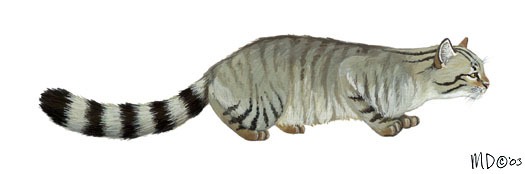
Introduction
The European Wildcat (Felis silvestris silvestris) is a powerful, robust felid native to the forests of continental Europe, Scotland, and the Caucasus. Often confused with large feral domestic tabbies, it is a distinct species with a thick striped coat, bushy ringed tail, and a broad flat skull. It is the wild ancestor of the modern domestic cat and shares its range with predators such as the red fox and the gray wolf.
Taxonomy and Evolution
The European Wildcat is classified as Felis silvestris within the family Felidae. Three subspecies are recognized: F. s. silvestris in Europe, F. s. caucasica in the Caucasus, and F. s. lybica in the Near East and North Africa, the ancestor of domestic cats. Genetic studies confirm that domestic cats descended from the African wildcat around 10,000 years ago, while the European wildcat remained genetically distinct with only negligible hybridization in most regions. Its lineage split from the pantherine cats some 11 million years ago.
Physical Characteristics
European wildcats are substantially larger and more muscular than domestic cats, weighing 4 to 8 kg with a head-body length of 50 to 75 cm. Their coat is thick grey-brown with irregular dark stripes along the body and flanks, a dorsal stripe from head to tail, and bold black rings on the bushy blunt-tipped tail. The face bears prominent whisker pads and large amber eyes. Their skull is broad with a distinct forehead profile, differentiating them from the more angular domestic cat. Thick winter fur adds significant bulk in cold months, and the ears are broad and rounded.
Habitat and Distribution
European wildcats occupy broadleaved and mixed forests with dense undergrowth, rocky outcrops, and water access. They range from Scotland across continental Europe to the Caucasus, often overlapping the range of the wild boar in lowland woodland. They avoid open farmland and urban areas but cross open terrain along woodland corridors. They require large home ranges of 2 to 20 square kilometers, males maintaining larger territories overlapping those of several females. Den sites include hollow trees, rock crevices, and old burrows of the red fox.
Diet and Feeding Behavior
As an obligate carnivore, the European wildcat hunts primarily small mammals, especially field voles, mice, and rabbits. It also takes birds, amphibians, reptiles, and insects when prey is scarce. Hunts are typically nocturnal, using a sit-and-wait strategy from concealment followed by a short explosive chase. Unlike the lynx it does not regularly take larger prey such as roe deer fawns, though it can kill animals up to the size of a hare. It consumes 200 to 400 g of prey daily and caches surplus kills under leaf litter for later retrieval.
Reproduction and Life Cycle
Wildcats breed once annually, with peak mating from January to March. After a 63 to 69 day gestation, females give birth to 1 to 7 kittens in a sheltered den. Kittens open their eyes at 10 days and begin solid food at 4 weeks. They are weaned at 2 to 3 months and hunt independently at 5 to 6 months, though they stay with their mother through the first winter. Sexual maturity is reached at 10 to 12 months. In the wild they live 6 to 8 years, while captives reach 12 to 15 years. Females often relocate kittens between dens to avoid detection.
Conservation Status
The European wildcat is Least Concern globally but Critically Endangered in Scotland, where hybridization with feral domestic cats threatens genetic integrity. Germany’s Black Forest population is among the strongest, numbering several hundred. Key threats include habitat fragmentation, vehicle collisions, persecution, and disease from domestic cats, particularly feline parvovirus and feline leukemia. The Scottish Wildcat conservation project uses captive breeding and release to bolster remnant populations, while a Europe-wide plan prioritizes habitat connectivity and feral cat management.
Fun Facts
European wildcats are so elusive that a single individual may account for most confirmed sightings in a region over years. Despite their fierce reputation they are highly intolerant of humans and flee at distances of 200 to 300 meters, far more skittish than the bold feral cats they are mistaken for. Scottish highlanders historically called them Cat Mhoir and believed them forest spirits. Their purr is unusually deep and rumbling compared to domestic cats, and they produce a wider vocal repertoire including a distinctive call during the breeding season.
[…] story is tightly linked to that of other European felids, particularly the more widespread European wildcat, a forest-dwelling relative with which it shares the peninsula but not the same ecological […]