 By st20113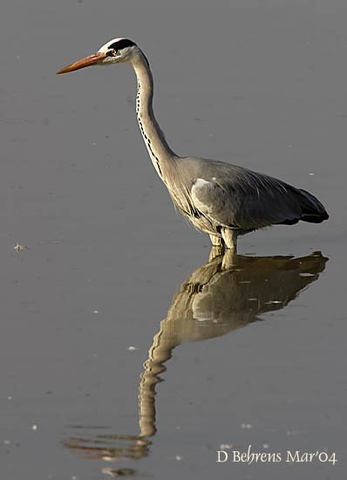
Introduction
The grey heron (Ardea cinerea) is a tall, elegant wading bird found across Europe, Asia, and parts of Africa, instantly recognisable by its long legs, S-shaped neck, and slow, deliberate stride through shallow water. A patient and efficient hunter, it stands motionless for long periods before striking with a lightning-fast jab of its dagger-like bill. Grey herons inhabit wetlands, rivers, lakes, and coastal shores, and have also adapted to ponds, estuaries, and even urban parks. Their widespread presence and distinctive silhouette make them one of the most familiar wetland birds of the Old World, sharing habitats with species such as the kingfisher.
Taxonomy
The grey heron belongs to the family Ardeidae, the herons and egrets, within the order Pelecaniformes. Described by Linnaeus in 1758, Ardea cinerea is one of the larger members of the genus Ardea, which includes the great blue heron of North America. Several subspecies are recognised across its broad range. Herons are closely related to storks, ibises, and pelicans, sharing a common ancestor among the long-legged wading birds. Fossil relatives indicate the heron lineage extends back tens of millions of years with little change in body plan.
Physical Characteristics
Grey herons are large, standing 84 to 102 centimetres tall with a wingspan of 155 to 195 centimetres and weighing 1.0 to 2.1 kilograms. Their plumage is predominantly grey above with a white head and neck marked by a black stripe extending from the eye down the neck. A long, yellowish bill and pale, extended legs complete the profile. In flight, the neck is tucked into an S-shape and the broad wings beat slowly. Males and females are similar, though males are slightly larger. During the breeding season, adults develop long ornamental plumes on the back of the head and a reddish hue on the thighs.
Habitat
Grey herons occupy a broad range of aquatic habitats including rivers, lakes, ponds, marshes, estuaries, coastal lagoons, and rice paddies. They require shallow water for foraging and trees, reed beds, or cliffs for nesting, often in mixed colonies called heronries. They are largely sedentary in mild climates but northern populations migrate south in winter. The species has proven adaptable, colonising urban lakes and ornamental ponds where fish are abundant. Trees near water are preferred for roosting and breeding, though reed beds are used where trees are absent.
Diet
Grey herons are opportunistic piscivores and generalist predators. Fish are the staple, but they also take amphibians, small mammals, reptiles, insects, and crustaceans depending on availability. They hunt by standing still or wading slowly, then striking with a rapid thrust of the bill to impale or grasp prey. Larger prey may be manipulated and swallowed whole, sometimes after drowning. They may also use a foot to stir sediment and flush hidden prey. Herons are solitary feeders that defend foraging patches, and a single bird can consume a substantial volume of fish relative to its body size.
Reproduction
Grey herons are colonial nesters, gathering in heronries that may contain dozens to hundreds of pairs, often alongside other waterbirds. Both sexes build a bulky stick nest, typically in a tree, where the female lays three to five pale blue-green eggs. Incubation lasts about 25 to 26 days, shared by both parents. Chicks are altricial and demanding, fed regurgitated food by both adults. They fledge at roughly seven to eight weeks but continue to be fed near the nest for a time. Young herons disperse after fledging, and first breeding usually occurs at two to three years of age.
Conservation
The grey heron is listed as Least Concern, with a large and stable population across its extensive range. It suffered historical persecution and wetland drainage but has recovered and even expanded into urban areas. Local threats include disturbance at nesting colonies, pollution, and the loss of reed beds and wet grassland. Legal protection of heronries and the restoration of wetlands support healthy populations. Because herons are sensitive to water quality and fish availability, they also serve as useful indicators of the health of freshwater and coastal ecosystems.
Fun Facts
A grey heron can remain statuesque for many minutes, waiting for the perfect moment to strike with millimetre precision. Its neck contains an extra vertebral joint that enables the characteristic quick, spring-loaded jab used to catch fish. Herons have specially adapted neck vertebrae that allow them to fold the neck into the tight S-shape seen in flight. In medieval Europe, herons were considered prestigious quarry for falconry and noble hunts. Despite their elegant appearance, grey herons are vigorous competitors and will aggressively defend a productive fishing spot from rivals.
[…] Ardea itself dates to Linnaeus. It is a member of the family Ardeidae and closely related to the Grey Heron, which it resembles in size but not in coloration or […]
[…] bird shares the family with the Grey Heron. Bitterns differ from other herons in their striped plumage. They boom instead of calling with a […]