 By st20113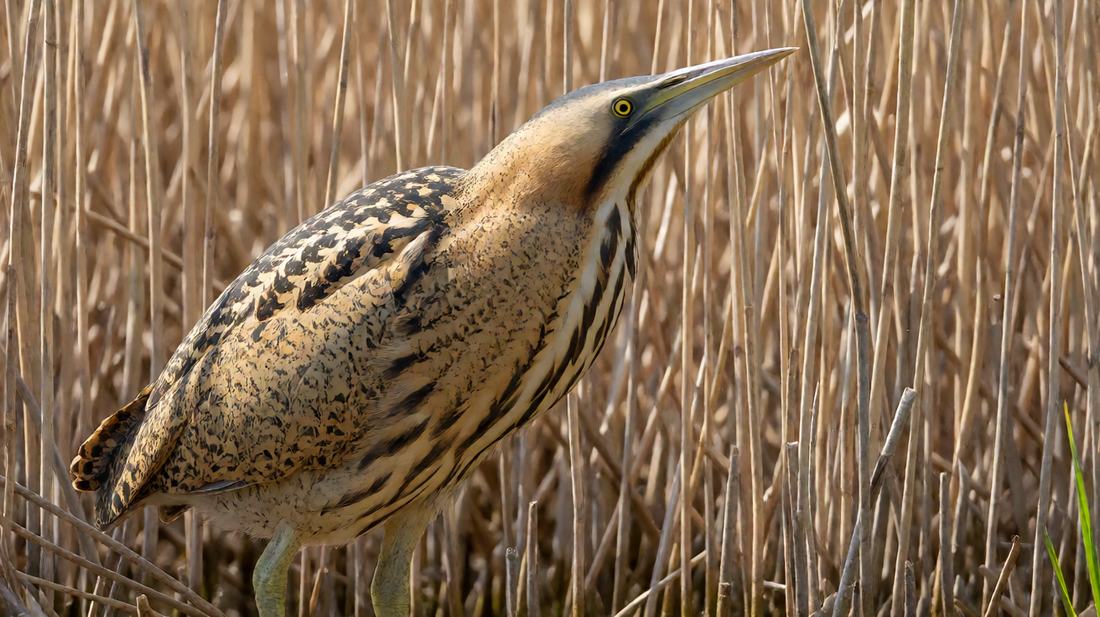
Botaurus stellaris | Eurasian Bittern
Species Profile · Ardeidae
Eurasian Bittern
A secretive heron of large reed beds that freezes with its bill to the sky and fills the marsh with a deep booming call in spring.
A striped heron that hides in reeds and booms across the marsh
Length
Wingspan
Weight
Eggs
Incubation
Booming call
The Eurasian Bittern
A striped heron of the reed bed
The Eurasian Bittern is a secret bird of large reed beds. Its brown plumage carries dark streaks from head to tail. The pattern hides it among dry reed stems.
The bird stands still with its bill pointed upward when danger comes. It is far more often heard than seen. Its spring call travels across the marsh at night.
Family tree
Pelecaniformes, Ardeidae
The species sits in the family Ardeidae, the herons. Its order is the Pelecaniformes. The genus Botaurus holds 3 or 4 bitterns in all.
Our bird shares the family with the Grey Heron. Bitterns differ from other herons in their striped plumage. They boom instead of calling with a loud croak.
The species was named by Linnaeus in 1758. All herons carry long bills and long toes.
75 cm of bird among reed stems
How to tell one
The bird measures about 75 cm from bill to tail. The wings span about 130 cm across. The body weighs about 1 kg.
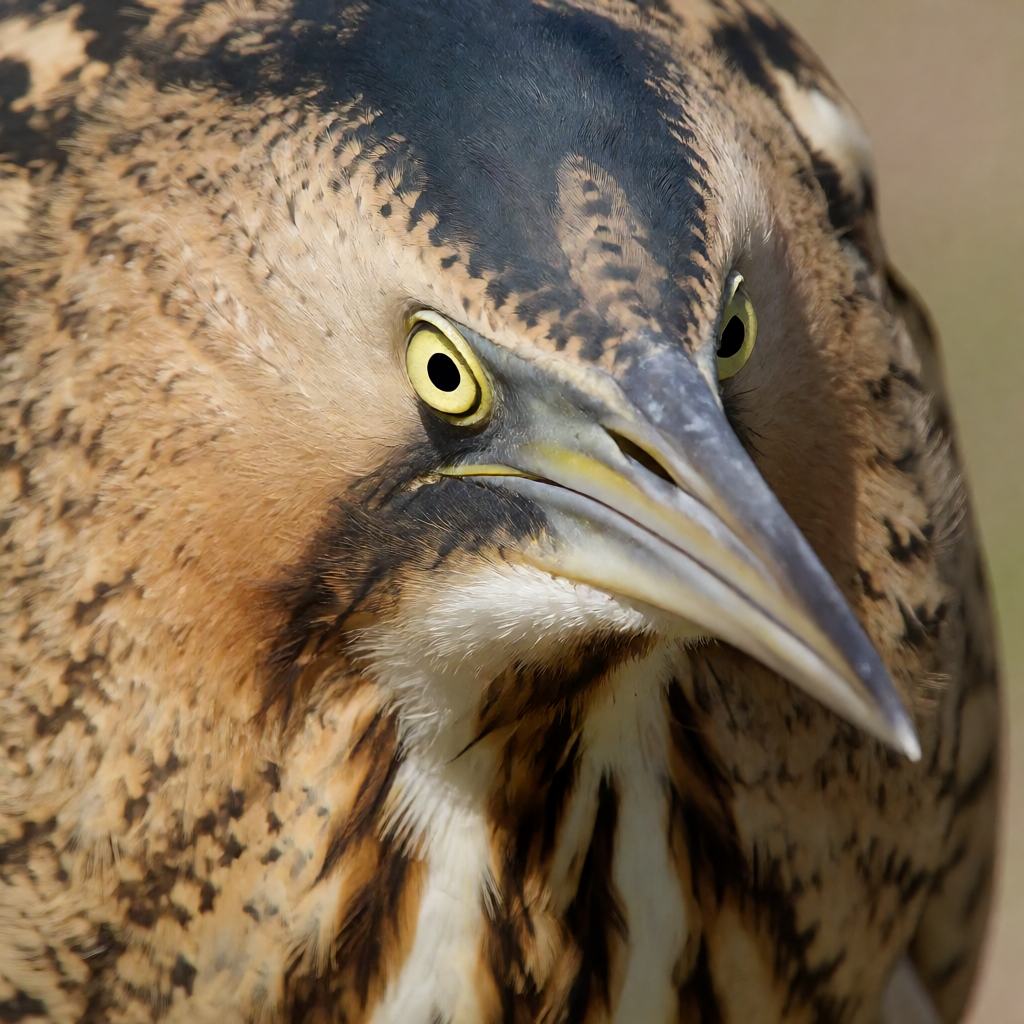
The plumage is warm buff with heavy dark streaks. The crown is dark and the neck sides are pale. The bill is long, straight and yellowish.
The legs are greenish yellow. The eye is pale yellow with a dark pupil.
1
2
3
Large wet reed beds and marshes
Where it lives
The species needs large wet reed beds and marshes. It feeds in shallow water beside dense cover. Reeds cut in rotation offer the best nesting places. The bird also uses sedge, rush and willow carr.
It needs quiet ground with no people nearby. Deep water with open banks holds no birds at all. A reed bed must cover several hectares to work.
Fish, frogs and water insects
What it eats
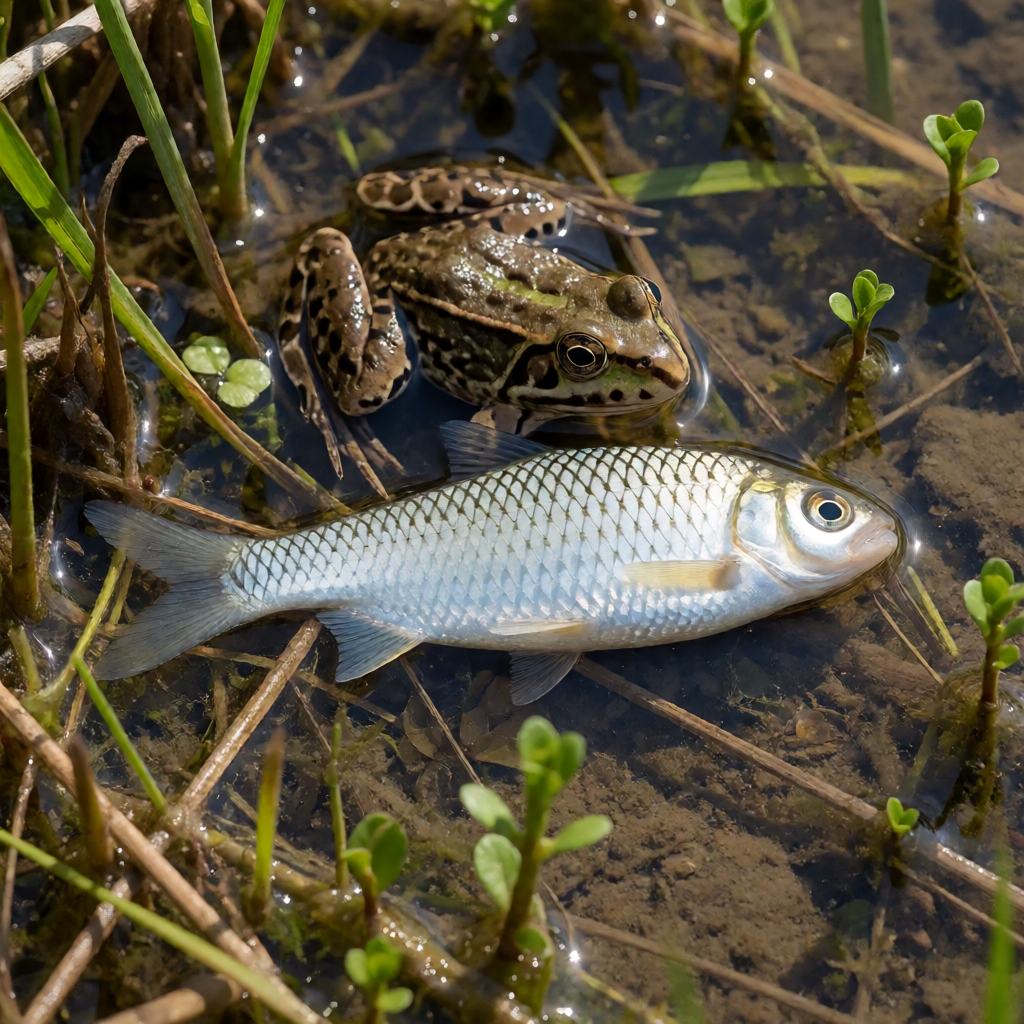
The bird eats fish, frogs and large water insects. It also takes small mammals and young birds. It hunts by standing still at the water edge. A slow strike of the head catches the prey.
It swallows food whole without chewing it. Most hunting happens in the hours around dawn. Its food changes with the season and the water level.
5 eggs in a reed platform
The breeding cycle
The male booms from a reed platform in spring. The low sound carries about 5 km on a still night. The female builds a nest of reed stems above water. She lays about 5 eggs over several days.
The eggs hatch after about 25 days. She feeds the young on partly digested food. The chicks climb from the nest at about 2 weeks old.
Drainage, reed cutting and reserves
Conservation
The species is listed as Least Concern by the IUCN. Numbers fell hard in western Europe during the 1900s. Drainage and reed cutting removed much of its home. Britain held only 11 booming males in 1997.
Careful reed management brought the bird back. More than 200 males now boom there each spring. Wetland reserves remain vital for the species.
Quick hits
Five things to remember
- A frightened bird points its bill at the sky and freezes.
- The male call sounds like someone blowing across a bottle.
- The bird can puff its neck feathers out to look twice as wide.
- It can swallow a fish almost as long as its own bill.
- The female raises the chicks without any help.