 By st20113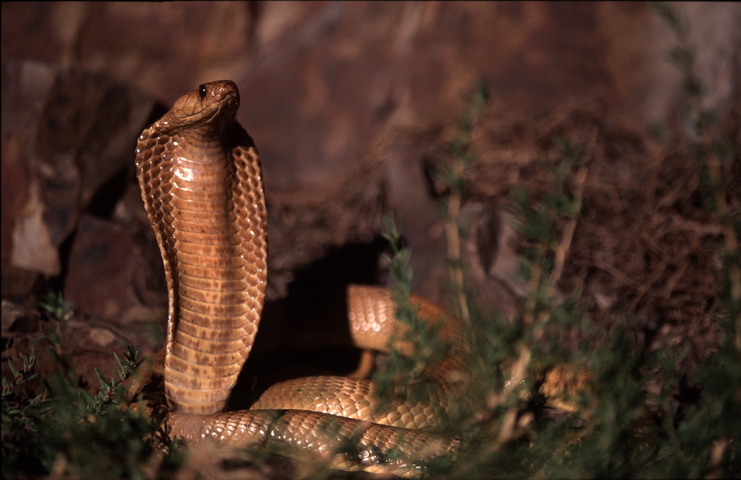
Introduction
The Indian cobra (Naja naja), also known as the spectacled cobra, is a highly venomous snake native to the Indian subcontinent, famous for the hood it flares when threatened and its prominent role in Indian culture and snake-charming. One of the “Big Four” snakes responsible for the majority of human snakebite deaths in the region, it commands both fear and reverence. Despite this, the Indian cobra is a shy, nocturnal hunter that prefers to avoid people. It occupies a remarkable range of habitats from forests to farmland and city fringes, making human encounters frequent across South Asia, where it shares the landscape with other reptiles such as the lizard.
Taxonomy
The Indian cobra belongs to the family Elapidae, the elapid snakes, which includes cobras, mambas, and coral snakes. The genus Naja contains the true cobras, with Naja naja described by Linnaeus in 1758. The species was long considered to encompass several regional forms, some of which are now recognised as distinct species. Elapids are characterised by fixed front fangs and potent neurotoxic venom. Molecular studies have clarified the relationships among South and Southeast Asian cobras, revealing a complex of closely related species across the region.
Physical Characteristics
Indian cobras are medium to large snakes, typically 1 to 1.5 metres in length, though individuals exceeding 2 metres occur. Their most famous feature is the cervical rib-supported hood, an expansion of the neck skin and muscle displayed when the snake rears up and spreads. Coloration is highly variable, from yellowish and brown to black, often with a characteristic “spectacle” or ocular marking on the hood. They have round pupils, smooth scales, and a slender, cylindrical body. Like all elapids, they possess short, fixed fangs at the front of the upper jaw through which venom is delivered.
Habitat
Indian cobras are highly adaptable, occupying forests, grasslands, agricultural land, wetlands, and the outskirts of villages and cities across India, Pakistan, Sri Lanka, Bangladesh, and Nepal. They prefer areas with rodent-rich habitats, abundant cover such as burrows, termite mounds, and rubble, and access to water. They are primarily terrestrial but climb well and may take refuge in trees or buildings. Nocturnal for much of the year, they may bask by day in cooler seasons. Their tolerance of human-modified landscapes brings them into frequent, sometimes dangerous, contact with people.
Diet
Indian cobras are carnivorous, feeding mainly on rodents, frogs, toads, lizards, and occasionally birds and other snakes. They are sit-and-wait and active foragers, locating prey by scent and sight before striking and envenomating. Venom quickly subdues prey, which is then swallowed whole. Rodent control is an important ecological service they provide, though this also draws them toward human settlements and grain stores. They may fast for extended periods and are capable of surviving on relatively infrequent meals, an adaptation to variable prey availability across seasons.
Reproduction
Indian cobras are oviparous, laying eggs rather than giving live birth. Mating occurs in the cooler months, and the female deposits 10 to 30 eggs in a warm, sheltered location such as a termite mound, burrow, or rotting vegetation, which provides both protection and incubation heat. She may guard the clutch until hatching about 50 to 60 days later. The hatchlings are independent from birth, fully venomous, and measure roughly 20 to 30 centimetres. Sexual maturity is reached at around three to four years. Lifespan in the wild is uncertain but may exceed 20 years in captivity.
Conservation
The Indian cobra is listed as Least Concern, remaining widespread and abundant across its range despite heavy cultural and economic exploitation. It is persecuted and killed out of fear, captured for the snake-charmer trade, and harvested for skin and traditional medicine, yet populations persist because of high reproductive output. The species is protected under national wildlife laws in several countries, though enforcement is uneven. Public education on snakebite first aid and the ecological value of cobras is key to reducing both human mortality and unnecessary killing of these snakes.
Fun Facts
The Indian cobra’s hood is not inflated with air but spread by specially adapted ribs that expand the neck skin into a defensive display. Its “spectacle” marking on the hood resembles a pair of eyes, possibly to startle predators. Despite their fearsome reputation, cobras are shy and will usually retreat if given space, resorting to the hood display only when cornered. The species features prominently in Hindu mythology as the companion of the god Shiva. Snake charmers’ flutes do not actually charm the snake; cobras respond instead to the visual movement of the instrument.