 By st20113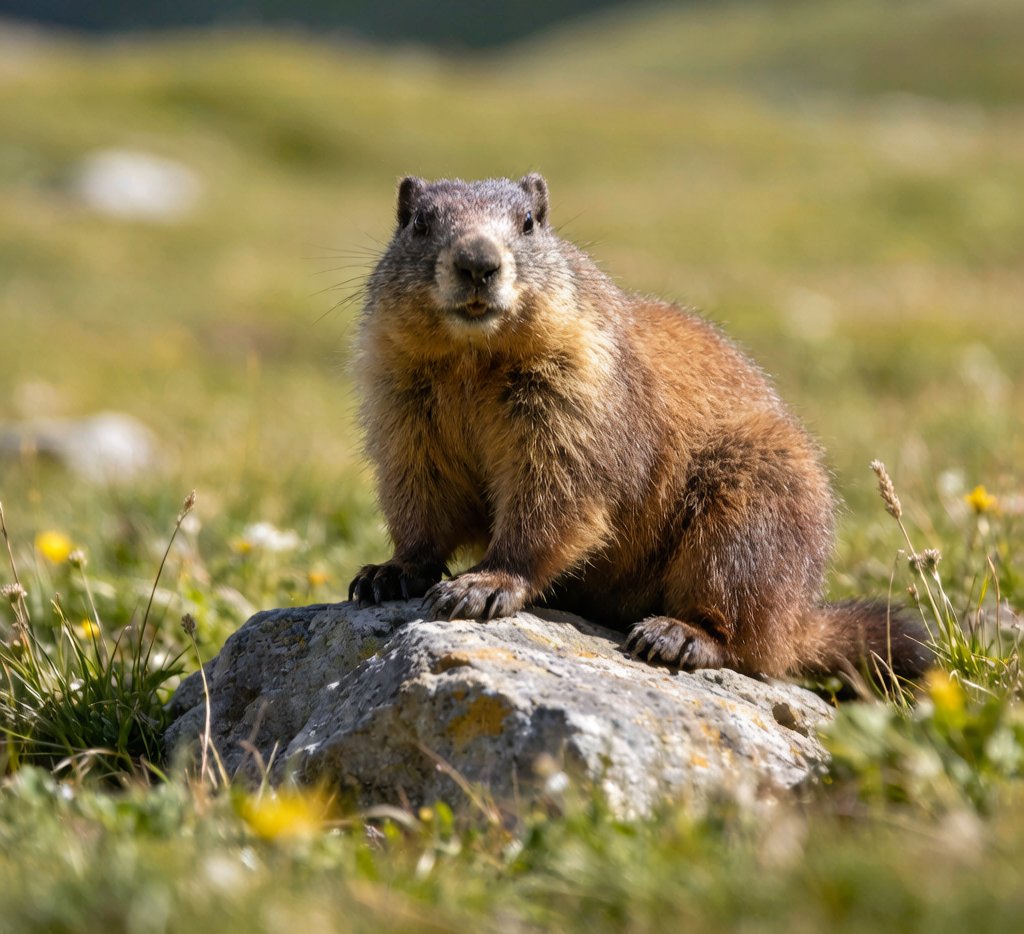
Introduction
The Alpine marmot is the largest member of the squirrel family in Europe and one of the most characteristic mammals of the continent’s high mountain environments. Found in rocky meadows and alpine pastures of the Alps, Apennines, Carpathians, and Pyrenees, this robust rodent is celebrated for its complex social structure, elaborate burrow systems, and its spectacular seasonal transformation from active forager to deep hibernator. It plays an important ecological role as both a prey species for large carnivores and an ecosystem engineer whose burrowing reshapes alpine soils.
Taxonomy
The Alpine marmot belongs to the order Rodentia, the family Sciuridae, and the genus Marmota, a group of large, ground-dwelling squirrels that includes approximately 15 species across North America, Europe, and Asia. Its full scientific name, Marmota marmota, was established by Linnaeus in 1758. The Alpine marmot belongs to the subgenus Marmota alongside the steppe marmot and the Himalayan marmot, which is its closest living relative. The two species are thought to have diverged during the Pleistocene, when glacial cycles isolated populations in different mountain ranges. No subspecies are recognised.
Physical Characteristics
The Alpine marmot is a heavily built rodent with a stocky, bear-like silhouette. Adults typically weigh between 3 and 8 kilograms by late summer, with males generally larger than females. Body length ranges from 45 to 60 centimetres, to which a bushy, flattened tail of 13 to 20 centimetres adds further bulk. The dense, woolly fur provides excellent insulation against cold alpine conditions, ranging from tawny brown on the upperparts to greyish-brown on the face. The feet are broad and powerful with long, curved claws for digging in compacted alpine soils, and the ears are small and rounded to reduce heat loss.
Habitat
The Alpine marmot inhabits alpine meadows, pastures, and rocky slopes above the treeline, typically at elevations between 800 and 3,200 metres. The species requires south- or east-facing slopes with well-drained soils deep enough for extensive burrow systems yet free-draining enough to prevent flooding during snowmelt. Burrow networks are engineering marvels: a single colony may maintain tunnels extending over 100 metres and reaching depths of up to 3 metres, with separate chambers for sleeping, food storage, and waste. These burrows provide crucial thermal refuge during cold spells and shelter for many other alpine species. The species is often associated with beaver habitats near alpine lakes and streams.
Diet
The Alpine marmot is a generalist herbivore whose diet varies with altitude, season, and local plant community. In summer the bulk of its diet consists of the leaves, stems, flowers, and seeds of alpine grasses, legumes, and herbs, supplemented by roots and bulbs when available. As autumn approaches the diet shifts to seeds and nuts, and individuals undergo rapid fattening that can increase body weight by 50 percent or more. The species retreats to its burrow for up to eight months of the year and relies entirely on accumulated fat reserves for energy.
Reproduction
Alpine marmots mate shortly after emerging from hibernation in April or May, with a gestation of approximately five weeks. Litter size is typically two to six pups, born blind and naked in the underground nest chamber. Both parents participate in caring for the young, and remarkably, juveniles from the previous year’s litter often remain with their parents and assist in raising the new brood—a form of cooperative breeding rare among rodents. Young are weaned at around six weeks and begin making short above-ground excursions by early summer. Dispersal occurs the following spring. Adults may live 15 years or more in the wild, though average life expectancy is lower due to predation by red fox, Eurasian lynx, and golden eagles.
Conservation
The Alpine marmot is classified as Least Concern by the IUCN, reflecting its wide distribution and large overall population. Within the Alps, however, the species faces locally significant threats. Tourism infrastructure—including ski resorts and hiking trails—destroys and fragments alpine habitat, while overgrazing by domestic livestock reduces food quality and availability. Climate change poses a longer-term risk by pushing the treeline upward and compressing suitable alpine habitat. In the Apennines and Pyrenees, where smaller, more isolated populations occur, the risks of habitat fragmentation and inbreeding are more acute.
Fun Facts
The Alpine marmot performs a distinctive greeting ceremony when family members reunite, involving nose-to-nose contact and a complex series of chirps and squeaks that encode information about the individual’s identity and social status. Perhaps the most remarkable aspect of Alpine marmot biology is its hibernation: during winter months, the animal lowers its body temperature to just above freezing, slows its heart rate to a few beats per minute, and suppresses its brain activity to a fraction of normal levels. Brown bear and golden eagle are among the most significant predators, and the marmot’s elaborate alarm-call system—一套 series of high-pitched whistles that carry across alpine meadows—is one of the most effective early-warning systems in the animal kingdom.