 By Iris
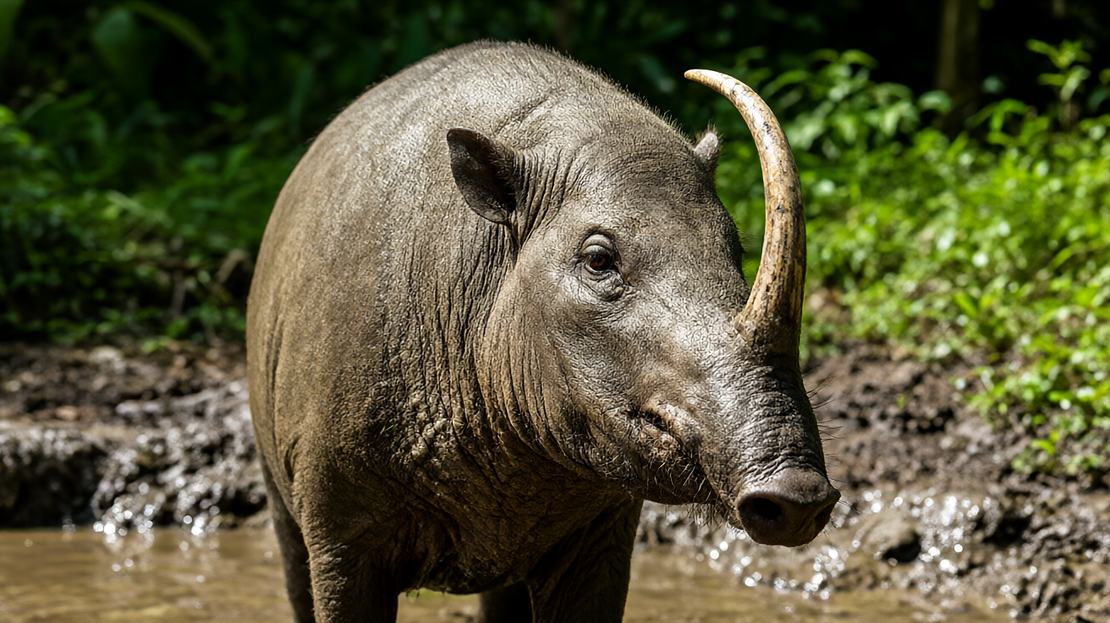
Babyrousa celebensis | Babirusa
Species Profile · Suidae
Babirusa
A pair of tusks curls back toward the skull.
Vulnerable
Length
Weight
Gestation
Tusks
Range
Rating
The Babirusa
Teeth that curve backward
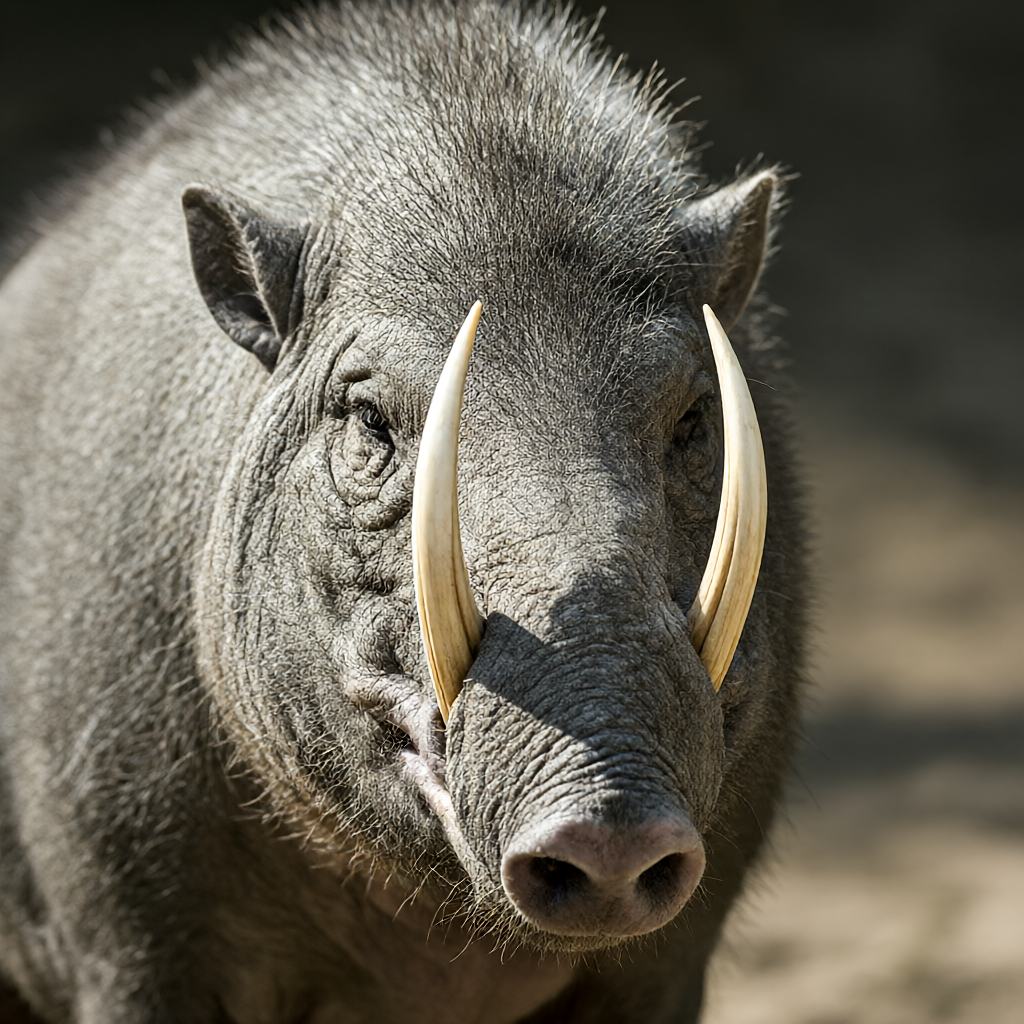
A pair of tusks curls back toward the skull. No other pig grows teeth like these. Tusks push up through the snout, and they bend backward as it ages.
Older males carry curves that almost touch the forehead. Its skin stays grey and nearly bare, and deep wrinkles run down the flanks. Nothing about it looks built for speed, yet it swims well and runs fast when pressed.
Family tree
Suidae, an early branch
Babyrousa celebensis is one of four babirusas, and all of them live on Sulawesi and nearby islands. Their name comes from Malay, where babi means pig and rusa means deer. Earlier workers treated every babirusa as one species, though skull work later split the group apart, and four names now stand. Its teeth point away from the boar line rather than toward it, and the genus separated early.
DNA places the genus close to other pigs, since the family tree keeps them together. Celebensis refers to Celebes, the old name for Sulawesi. One cousin, the Wild Boar, keeps its tusks inside the jaw and roots for food.
Tusks, bare skin, long legs
How to tell one
Adults run 85 to 110 cm from snout to rump. Weight falls between 60 and 100 kg. Males grow heavier than females, and the tusks stay longer too. A short mane covers the neck, and the rest of the coat stays sparse.
Two lower tusks sit in the jaw as well, and those stay short and sharp. Its legs run long for a pig, which gives it a steady trot. One odd detail stands out, because the upper tusks serve no chewing job at all.
1
2
3
Wet lowland forest
Where it lives
Forest covers most of the range. The pig also uses river banks, swamps and thickets near water. Marshes suit it, since it swims without trouble and wallows often.
Its range is small, and it holds only Sulawesi and a few neighbouring islands. Lowland forest carries the highest numbers, though hill forest holds animals too. Cleared ground loses the species fast, because the pig needs cover by day and the young stay hidden in thickets for weeks.
Fruit, leaves, fungi
What it eats
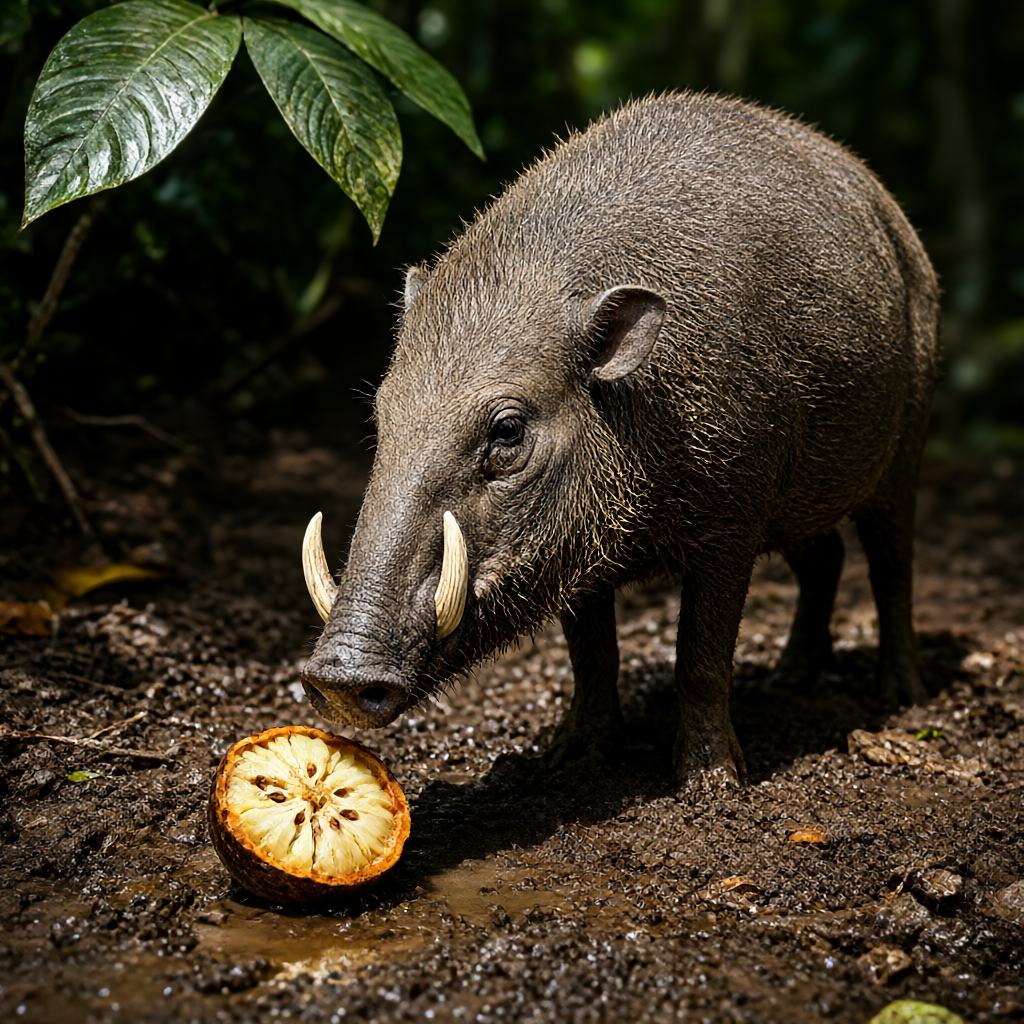
Fruit fills most of the diet. Leaves, roots, fungi and grubs cover the rest. It walks long distances for fallen fruit, and it follows fruiting trees across the forest.
A babirusa stomach differs from a domestic pig’s, and it handles less rough forage than a boar does. Salt licks draw the species, since minerals stay scarce in wet forest. Nothing gets dug deep, because the snout stays soft and the tusks stay clear of the soil.
One or two, striped at birth
The breeding cycle
A sow carries her young for about 155 days. Litters stay small, and one or two piglets arrive at a time. Newborns wear faint stripes at first, and the pattern fades within weeks.
Females reach breeding age near one year, though males wait longer. Because the sow nests alone, the piglets stay hidden for the first days, and the mother returns only to nurse them. Breeding runs all year, and captive animals produce two litters in some years.
Hunted for meat
Conservation
Its status stands at Vulnerable. Hunting drives the decline, because the meat is prized and it moves slowly. Its range keeps shrinking, and forest clearing removes cover each year.
Traps catch pigs near farmland, though the losses go unrecorded. Protected areas hold the best remaining numbers, and enforcement varies widely between them. Trends point down, since hunting pressure grows faster than the breeding rate, and a sow raises one piglet at a time.
Side by side
How It Compares
| Trait | Babirusa | Wild Boar |
|---|---|---|
| Family | Suidae | Suidae |
| Length | 85-110 cm | 90-180 cm |
| Weight | 60-100 kg | 50-200 kg |
| Tusks | upper canines, through the snout | lower canines, curving out |
| Skin | bare and wrinkled | coarse bristles |
| Rating | Vulnerable | Least Concern |
Common misreadings
What People Get Wrong
- Not a deer, despite the name. The Malay name means deer pig. Malay gives the animal both halves of its name, and the tusks rather than any antler explain why early visitors reached for the comparison.
- Not a tusk for fighting. The upper canines grow through the snout. No study has shown the tusks used in combat, though males carry them from an early age and the curves keep moving all through life.
- Not a forest specialist only. Marshes and river banks suit it. Because the animal swims well and wallows often, wet ground holds as many pigs as dry forest does.
Going further
Sources and Further Reading
Quick hits
Five things to remember
- Upper tusks grow through the skin, and they never stop moving upward.
- Old males carry curves long enough to touch the top of the skull.
- It swims well, and it crosses rivers without hesitation.
- Piglets wear faint stripes for a few weeks, and the pattern then disappears.
- Local stories say the tusks hook branches, though no study supports that idea.