 By st20113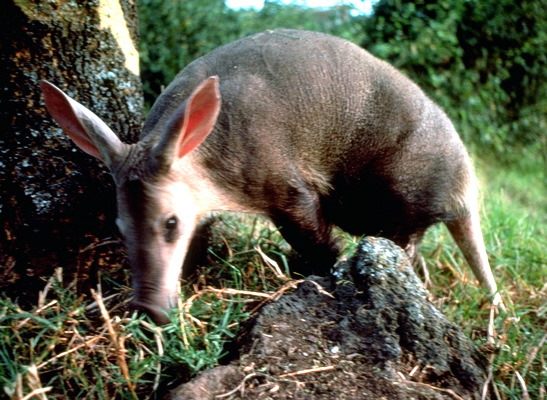
Introduction
The aardvark (Orycteropus afer) is one of the most unusual mammals on Earth, so distinct from all other living animals that it occupies its own order, Tubulidentata. Found throughout sub-Saharan Africa, it is recognized by its arched, pig-like body, sparse pinkish-gray hair, elongated snout, and enormously powerful claws built for excavating burrows and tearing open termite mounds. Despite its pig-like appearance, the aardvark represents an ancient lineage that diverged from other placental mammals more than 50 million years ago. Its name, from the Afrikaans and Dutch for “earth pig,” reflects its burrowing habits. The aardvark plays a critical ecological role as a natural pest controller, consuming thousands of termites each night and aerating soils across the African savanna.
Taxonomy
Orycteropus afer is the sole living species in the order Tubulidentata, a group so isolated it has no close living relatives. First formally described by Georg August Goldfuss in 1820, it belongs to the only family Orycteropodidae and the only surviving genus Orycteropus. Its evolutionary history is poorly understood due to a sparse fossil record, but ancestors diverged very early in the Cenozoic era. Extinct relatives such as Leptorycteropus and Myorycteropus have been identified from African fossil sites. Aardvarks share convergent features with the pangolin and giant anteater, which independently evolved similar adaptations for eating social insects.
Physical Characteristics
The aardvark measures 100 to 155 centimeters in length and weighs 40 to 80 kilograms. The head is elongated into a tubular snout tipped with a nostrils-rich nose for probing termite mounds. The ears are long and tubular, folding flat during digging to keep out soil. The mouth is small with vestigial, rootless teeth arranged in columns. Its most remarkable feature is four powerful claws on each front foot and five on each hind foot, used to tear open termite mounds with remarkable speed. The long, sticky tongue extends up to 30 centimeters to collect insects.
Habitat
Aardvarks range across sub-Saharan Africa from Senegal and Mauritania west to Ethiopia and Somalia east, and south to South Africa. They inhabit savannas, grasslands, woodlands, and scrubland, but are absent from dense forests and true deserts. They require loose, sandy, or loamy soils for easy digging, and their presence correlates with termite mounds, their primary food source. Burrows can extend more than 10 meters in length and several meters deep, with multiple chambers for sleeping, raising young, and sheltering from temperature extremes. Each individual maintains several burrows across a home range spanning several square kilometers.
Diet
The aardvark is an almost exclusive insectivore, consuming tens of thousands of termites in a single night. Using its keen sense of smell to locate active mounds, it tears open the hard crust with powerful front claws and extends its sticky tongue into the galleries. While termites dominate the diet, aardvarks also eat beetle larvae, pupae, and occasionally small vertebrates. They avoid termite species with defensive secretions. Aardvarks forage alone, covering several kilometers per night along regular circuits. In burned areas, they follow fires to feed on fleeing and exposed termites.
Reproduction
Aardvarks are solitary, coming together only to mate. Breeding is seasonal, with births timed to peak termite activity. After a seven-month gestation, a single well-developed young is born in a burrow chamber lined with grasses. Newborns have pink, naked skin and closed eyes but open them within hours. The mother nurses for approximately four months while the calf remains in the burrow. After weaning, the young accompanies the mother on foraging trips before establishing its own territory. Aardvarks reach sexual maturity between two and three years.
Conservation
The aardvark is classified as Least Concern by the IUCN, reflecting a wide distribution and large population across sub-Saharan Africa. However, habitat loss from agricultural expansion, particularly in West and Central Africa, has reduced suitable foraging and burrowing habitat. Climate change alters fire regimes and termite population dynamics, threatening food availability. Aardvarks are occasionally hunted for meat and their body parts are used in traditional medicine. Increased human disturbance and savanna-to-farmland conversion are causing declines in some areas.
Fun Facts
The aardvark’s name comes from Afrikaans and Dutch meaning “earth pig,” referencing its snout and burrowing. Its teeth are unique among mammals, composed of thousands of tiny hexagonal tubes of dentine rather than enamel. Despite its solitary nature, the aardvark is an excellent swimmer. The species rarely drinks water, obtaining all moisture from its termite prey. Its closest living relatives include elephants, manatees, and dugongs, a remarkably distant group sharing an ancient common ancestor.