 By st20113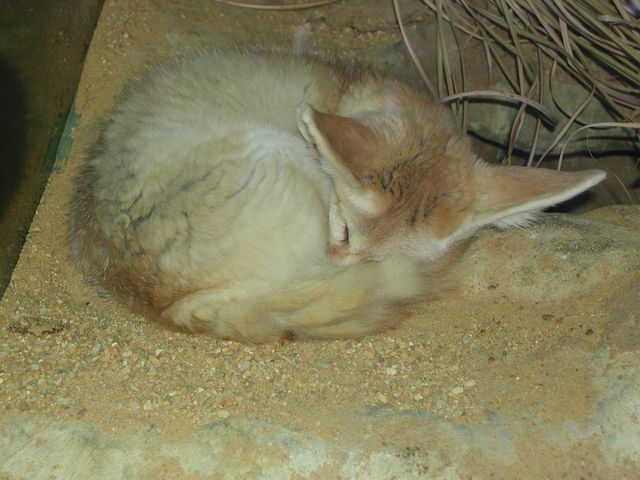
Introduction
The fennec fox (Vulpes zerda) is the world’s smallest fox species, instantly recognizable by its enormous, bat-like ears and diminutive size. Native to the sandy deserts of North Africa, the Sahara, and the Arabian Peninsula, this nocturnal canid has evolved extraordinary adaptations for desert survival. Weighing just 0.8 to 1.5 kilograms and standing 20 centimeters at the shoulder, the fennec fox is remarkably resourceful, excavating complex burrows and thriving in environments where temperatures exceed 38 degrees Celsius and free water is scarce. Its oversized ears, acute hearing, and ability to survive on moisture from food alone have made it one of the most distinctive desert specialists among all canids.
Taxonomy
Vulpes zerda belongs to the family Canidae and the order Carnivora, first formally described by Georg Friedrich Schreber in 1777. Genetic analysis confirms its placement within the genus Vulpes alongside other true foxes such as the red fox and arctic fox, though some researchers have advocated for a separate genus, Fennecus, based on morphological distinctions. The species has no recognized subspecies, as populations across its wide range show uniform morphology. Its closest relatives include the pale fox and Ruppell’s fox, with which it shares parts of its North African and Middle Eastern range.
Physical Characteristics
The fennec fox’s most striking feature is its extraordinarily large ears, growing up to 15 centimeters in length, roughly one-third of the animal’s body height. Richly supplied with blood vessels, the pinnae dissipate excess body heat and enable exceptionally acute hearing for detecting insects underground. The coat is creamy pale yellow to sandy, providing excellent camouflage against desert dunes. The soles of the feet are furred, protecting against hot sand and enabling silent movement. Adults weigh 0.8 to 1.5 kilograms, with a body length of 24 to 41 centimeters plus a 20-centimeter tail.
Habitat
Fennec foxes inhabit arid regions from Morocco and Mauritania in the west, east to Egypt and the Sinai Peninsula, and south into Sudan and Niger. They prefer stable sand dunes, arid scrubland, and sparse vegetation where loose sand allows easy burrowing. Associated with the desert ecosystem, they survive in extremely arid environments where surface water is absent for months, obtaining moisture entirely from prey and plant material. Elaborate burrow systems with multiple entrances and chambers provide refuge from daytime heat and nighttime cold. Fennec foxes are strictly nocturnal, emerging at dusk to forage and remaining underground during scorching daylight hours.
Diet
The fennec fox is an opportunistic omnivore whose diet is dominated by insects. Primary prey includes beetles, locusts, grasshoppers, and termites, supplemented by small rodents, lizards, and birds. Plant matter such as roots, leaves, and fruits contributes hydration and nutrition. The fox uses acute hearing to locate insects beneath the sand, pouncing with precision. The species can survive indefinitely without free-standing water, relying on prey moisture. Hunting occurs at night, with individuals covering several kilometers per foraging bout. Insects typically constitute more than 80 percent of the diet by frequency.
Reproduction
Fennec foxes are monogamous and form long-term pair bonds. Breeding peaks between January and February, with gestation lasting 50 to 53 days. Females give birth to one to four kits in a burrow chamber lined with vegetation. Newborn kits are born blind, weighing 25 to 50 grams. Both parents participate in care, with the male providing food for the nursing female. Kits open their eyes after 10 to 14 days, venture from the burrow by five weeks, and are weaned at around 60 to 70 days. Sexual maturity is reached at approximately 10 months, with captive individuals living 10 to 14 years.
Conservation
The fennec fox is classified as Least Concern by the IUCN, reflecting a broad distribution and presumed large population. Major threats include habitat degradation from human encroachment and agricultural expansion, and the illegal pet trade. In some North African countries, fennec foxes are captured for the exotic pet market because of their small size and appealing appearance. The species is legally protected in Morocco, Algeria, Tunisia, Egypt, and Israel. Climate change poses an emerging concern by altering desert precipitation patterns and affecting insect prey availability.
Fun Facts
The fennec fox holds the record for the largest ears relative to body size of any canid. Its kidneys are uniquely adapted to minimize water loss, enabling indefinite survival without free water. During territorial disputes, kits and adults communicate with high-pitched yipping and foot drumming on sand. The species is the only fox that is strictly nocturnal. Its name is derived from the Arabic word for fox, and its burrows maintain a comfortable temperature regardless of extreme conditions outside.