 By st20113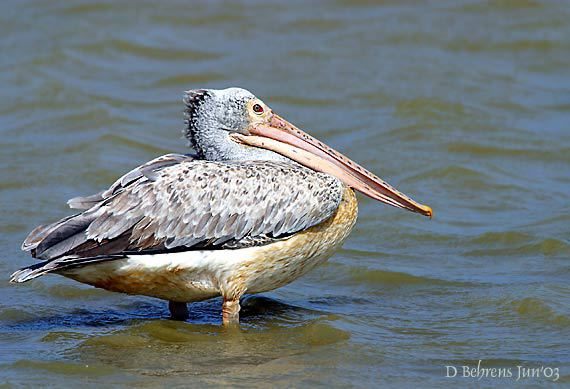
Introduction
The great white pelican, Pelecanus onocrotalus, is one of the largest and most visually dramatic flying birds on Earth, with a wingspan reaching 3.6 meters, brilliant white plumage, and the iconic expandable throat pouch that can hold up to 13 liters of water and fish. Found from southeastern Europe through Central Asia to sub-Saharan Africa, it inhabits lakes, wetlands, and coastal waters where it nests in enormous colonies and feeds cooperatively, driving fish into dense schools before scooping them up in its remarkable bill. Also known as the eastern white pelican, it is one of only two predominantly white pelican species in the world.
Taxonomy
The great white pelican belongs to the family Pelecanidae within the order Pelecaniformes, which also includes herons, ibises, spoonbills, and the shoebill. The genus name Pelecanus is Latin for pelican, and the species name onocrotalus derives from Greek, translating to “onocrotalus goose” — a historical reference to a bird thought to be a cross between a goose and a pelican. The great white pelican is one of eight recognized pelican species worldwide. Genetic studies suggest it diverged from its sister species, the Australian white pelican, roughly 5 million years ago. It is closely related to the greater flamingo and the great blue heron, sharing the elongated body plan and aquatic foraging strategy of the Pelecaniformes order.
Physical Characteristics
The great white pelican is among the world’s largest flying birds, with a body length of 140 to 180 centimeters, a wingspan of 226 to 360 centimeters, and a weight of 9 to 15 kilograms, males being larger. Adults are predominantly white with bold black primary flight feathers visible in flight. In the breeding season, adults develop a vivid yellow-orange wash on the chest, a pale crest, and bright pink facial skin. The bill is up to 47 centimeters long, supporting an enormous distensible throat pouch of pinkish-orange skin capable of holding 13 liters — a fishing net, cooling organ, and feeding apparatus for regurgitating food to chicks, all in one remarkable structure.
Habitat
The great white pelican inhabits shallow freshwater and brackish wetlands — lakes, marshes, river deltas, floodplains, and coastal lagoons — from the Balkans through the Middle East and Central Asia to sub-Saharan Africa. Key breeding sites include the Danube Delta in Romania, Lake Prespa on the Balkan border, the lakes of the Mongolian steppe, and Lake Rukwa in Tanzania. Outside breeding season, enormous flocks of tens of thousands gather at major wetland sites such as Lake Nakuru and Lake Victoria. Northern populations are largely migratory, wintering in Africa, while African populations are mostly resident.
Diet
The great white pelican consumes up to 1.4 kilograms of fish per day, primarily cyprinids, cichlids, carp, and mullet. Unlike the diving brown pelican, the great white pelican is a surface feeder: it swims in a coordinated line or arc with conspecifics, driving fish into shallow water before scooping them up in its massive throat pouch. The pouch acts as a net, trapping fish while water drains through the sides, and fish are swallowed headfirst. Cooperative feeding dramatically increases hunting efficiency. Large colonies may consume several tonnes of fish daily, bringing the species into occasional conflict with commercial fisheries.
Reproduction
Great white pelicans nest in enormous, densely packed colonies on remote islands in large lakes or coastal wetlands where mammalian predators are scarce. The nest is a simple ground scrape, sometimes lined with sticks or feathers. Clutches of one to three eggs — most commonly two — are incubated by both parents for 29 to 36 days. Both parents feed chicks through trophallaxis, regurgitating food from the throat pouch. Sibling aggression is common; in food-scarce years the smaller chick often dies from starvation or attacks by its larger sibling. Chicks first fly at 10 to 12 weeks and become independent shortly thereafter.
Conservation
The great white pelican is classified as Least Concern by the IUCN, with a global population estimated at 270,000 to 370,000 individuals. However, the species faces serious localized threats. Habitat loss through wetland drainage and urban development has destroyed many key breeding and foraging sites. Climate change is an emerging threat through shifts in precipitation patterns affecting the lakes the species depends on for breeding. Several populations are legally protected, and major wetland sites are designated as Ramsar sites under international convention.
Fun Facts
The great white pelican inspired the medieval legend of the self-sacrificing pelican that wounded itself to feed its young with its own blood — a symbol appearing in coats of arms and religious art to this day. In reality, observers were watching parents regurgitate food from their vividly vascularized throat pouches, which could appear blood-stained after feeding on fish. The throat pouch can hold 13 liters — roughly a large bucket — and drains in seconds. During hot weather the pouch acts as a radiator, with the bird panting through the highly vascularized membrane to shed excess heat.