 By st20113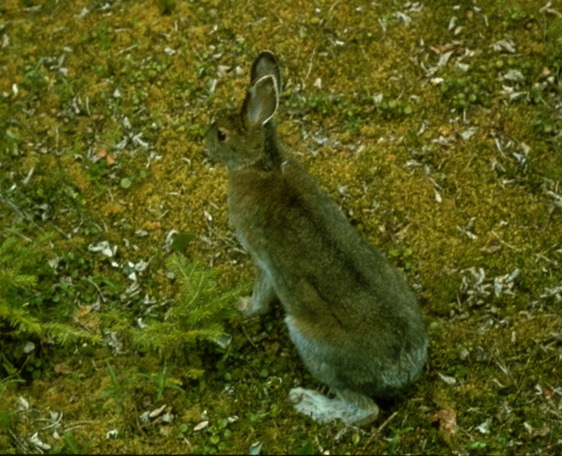
Introduction
The European hare (Lepus europaeus), often called the brown hare, is a large species of hare native to Europe and western Asia. Unlike rabbits, hares do not live in burrows; instead they shelter in shallow depressions in the ground known as forms, resting motionless during the day to avoid detection. Active mostly at dusk and through the night, the European hare is built for speed and endurance, relying on powerful hind limbs to escape predators across open ground. It is among the fastest small mammals of the countryside and a familiar sight in rural landscapes.
Taxonomy
The European hare belongs to the family Leporidae within the order Lagomorpha, a group it shares with rabbits and pikas. Its scientific name, Lepus europaeus, was assigned by the German naturalist Peter Simon Pallas in 1778. Several subspecies are recognised across its broad range, differing slightly in size and coat colour. The genus Lepus is among the oldest lineages of lagomorphs, with a fossil record stretching back millions of years, and related species occupy similar open habitats on several continents.
Physical Characteristics
Adult European hares typically weigh between 3 and 5 kilograms and measure 50 to 70 centimetres from head to tail. They are distinguished by very long ears tipped with black, a grizzled yellowish-brown coat, and long, muscular hind legs built for bounding. Their large eyes sit high on the skull, giving a wide field of vision to detect approaching danger from almost any direction. In winter the coat may turn paler, though it does not turn fully white as the snowshoe hare does. Males are usually slightly smaller than females.
Habitat
European hares favour open countryside: arable farmland, meadows, pasture, and lightly wooded steppe. They thrive where a mosaic of crops and fallow ground provides both food and cover through the seasons. Although they avoid dense forest, they use field edges, hedgerows, and ditches as daytime refuge. The species has adapted well to human-modified landscapes and remains common across much of rural Europe, from lowland plains to rolling hills.
Diet
As a herbivore, the European hare feeds mainly on grasses, herbs, and the leaves of crops such as wheat and clover. In autumn and winter, when green vegetation is scarce, it turns to bark, twigs, buds, and the root crowns of plants. Like all lagomorphs, it practices caecotrophy, re-ingesting soft faeces to extract additional nutrients from its plant diet. This double digestion allows the hare to survive on relatively low-quality forage and to make the most of seasonal food supplies.
Reproduction
Breeding begins in early spring and can continue into late summer, with females producing three to four litters per year. Unlike rabbits, hare young, called leverets, are born fully furred and with open eyes in a nest lined above ground rather than in a burrow. A typical litter contains two to five leverets. The female does not stay with the young, visiting only briefly at dawn and dusk to nurse them, a strategy that reduces the risk of attracting predators to a single location.
Conservation
The European hare is classified as Least Concern by the IUCN, with a large total population. However, numbers have declined sharply in parts of western Europe because of agricultural intensification, loss of field margins, and earlier hay cuts that destroy nests. Several countries now monitor hare populations and promote wildlife-friendly farming to reverse the trend. The species remains a popular game animal across its range, carefully managed in many regions.
Fun Facts
European hares are famous for their spring courtship behaviour, when males and females leap, chase, and appear to box one another with their front paws. This “boxing” is usually a female fending off an unwanted suitor rather than two males fighting. Hares can sprint at speeds above 70 kilometres per hour and can leap several metres in a single bound. They are also a favoured prey of the red fox and share the countryside with species such as the wild boar, making them an integral part of open-country food webs.