 By st20113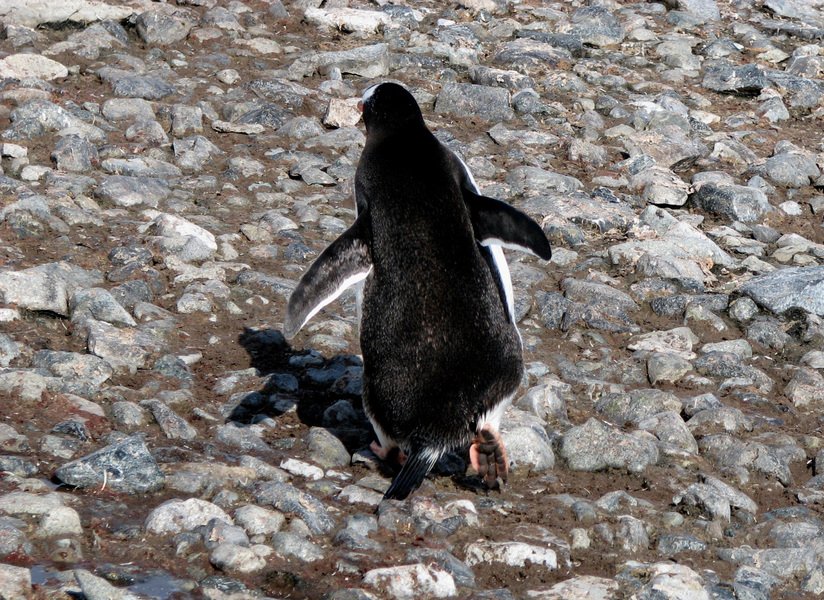
Introduction
The gentoo penguin is one of the most distinctive penguin species, instantly identified by its brilliant white eye patch and striking orange-red bill that contrasts boldly with its black and white plumage. Pygoscelis papua is the largest of the brush-tailed penguins, named for their distinctive elongated tail feathers that sweep along the ground as they walk. Found exclusively in the Southern Hemisphere, gentoo penguins are circumpolar in distribution, breeding on sub-Antarctic islands and the Antarctic Peninsula in colonies ranging from a few pairs to more than 60,000 breeding pairs. They are among the fastest swimming of all penguin species, capable of reaching speeds of 36 kilometers per hour underwater. Unlike more colonial species like the king penguin or emperor penguin, gentoo penguins are relatively calm, with organized nesting arrangements.
Taxonomy
Gentoo penguins belong to the genus Pygoscelis, which contains three living species: the gentoo penguin, the chinstrap penguin (Pygoscelis antarcticus), and the Adelie penguin (Pygoscelis adeliae). The genus name derives from the Greek words for “rump” and “leg,” a reference to the elongated central tail feathers unique to this group. Two subspecies are recognized: Pygoscelis papua papua in the sub-Antarctic islands of the Indian and Atlantic Oceans, and Pygoscelis papua ellsworthi in the Antarctic Peninsula. Molecular phylogenetic studies suggest the genus diverged from other penguin lineages approximately 20 to 25 million years ago during the Miocene epoch.
Physical Characteristics
The gentoo penguin is the third-largest living penguin species, after the emperor and king penguins, with adults standing 70 to 90 centimeters tall and weighing between 4.5 and 8.5 kilograms. The most distinctive feature is the broad white patch extending from above each eye across the crown of the head. The back, wings, and head are black, while the face and underparts are pure white, creating the classic penguin countershading that provides camouflage during swimming. The sturdy, orange-red bill is well adapted for catching slippery fish. Gentoo penguins possess the most elongated tail feathers of any penguin species, sweeping along the ground as the bird walks.
Habitat
Gentoo penguins breed in the broadest latitudinal range of any Pygoscelis species, from the cold shores of the Antarctic Peninsula at approximately 65 degrees south to the milder sub-Antarctic islands at approximately 46 degrees south. Major breeding sites include the Falkland Islands, South Georgia, Kerguelen Islands, Crozet Islands, Prince Edward Islands, Heard Island, Macquarie Island, and numerous islands along the Antarctic Peninsula. Within these locations, gentoo penguins prefer gentle, sloping beaches and grassy areas close to the sea. Unlike Adelie penguins, which require rocky terrain for nesting, gentoo penguins can establish colonies on sand, grass, or bare rock.
Diet
The gentoo penguin has the most varied and fish-heavy diet of any Pygoscelis species, with fish making up approximately 75 to 85 percent of the diet by weight in many populations. Preferred prey includes various nototheniid fish, myctophid fish (lanternfish), and in some regions, small squid. Krill and other crustaceans comprise the remainder. Gentoo penguins are pursuit divers, chasing prey underwater using powerful flippers. They typically dive to depths of 20 to 100 meters, though dives exceeding 200 meters have been recorded, particularly during winter.
Reproduction
Gentoo penguins are socially monogamous, forming pair bonds that typically persist across multiple breeding seasons. The breeding season begins in May or June in most colonies, allowing gentoo chicks to be fully fledged before the harshest winter weather. Males return to the nest site first, performing elaborate mutual displays with their mate. The nest is built from pebbles, bones, feathers, and vegetation, with pairs maintaining the same nest year after year. Clutch size is typically 2 eggs, and both parents participate in the approximately 35 to 37 day incubation period. Both parents share brooding duties for newly hatched chicks, which form creches with other chicks while both parents forage.
Conservation
The gentoo penguin is classified as Least Concern by the International Union for Conservation of Nature, reflecting a global population of approximately 300,000 to 350,000 breeding pairs. However, this conceals significant regional trends. On the Antarctic Peninsula and some sub-Antarctic islands, gentoo populations have increased substantially in recent decades, due to warming temperatures creating more favorable breeding conditions and reduced sea ice. This contrasts sharply with dramatic declines in Adelie penguin populations, which are highly dependent on sea ice. In other parts of the range, including Kerguelen and Heard Island, populations have declined significantly.
Fun Facts
Gentoo penguins are the fastest swimming of all penguin species, capable of reaching speeds up to 36 kilometers per hour when pursuing prey. On land, they have been observed leaping clear of the water surface to breathe and observe their surroundings, a behavior known as porpoising also seen in dolphins. Like the Atlantic puffin, gentoo penguins are monogamous and form strong pair bonds, with each bird having a unique voice. They are vulnerable to a wide range of predators including giant squid, leopard seals, and orcas.