 By st20113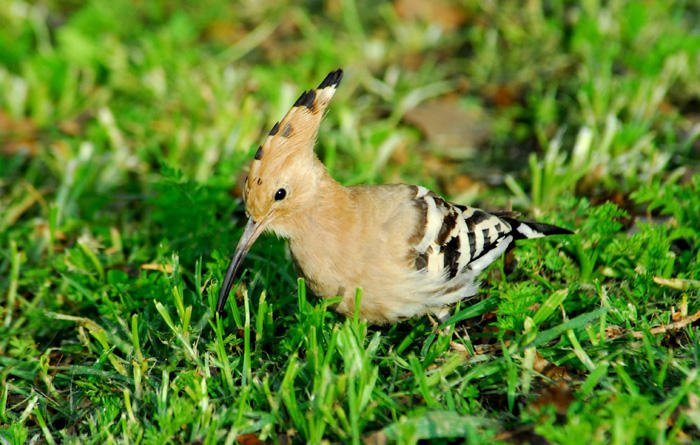
Introduction
The Hoopoe (Upupa epops) is one of the most distinctive birds on Earth. Its erectile, cinnamon-tipped crest, warm cinnamon-and-white barred plumage, long curved bill, and far-carrying “hoop-hoop-hoop” call make it unmistakable across its vast range in Europe, Asia, and Africa. A ground-foraging bird of open woodlands, orchards, vineyards, and steppe, it probes soil and dung for insects with a technique few other birds share, and its striking looks have made it a favourite of folklore, art, and mythology.
Northern populations migrate to sub-Saharan Africa and the Indian subcontinent for the winter, while tropical birds stay put year-round. In parts of western Europe the species has declined as agricultural intensification and the loss of old, hollow trees have removed its nesting sites.
Taxonomy
The Hoopoe is the only surviving member of the family Upupidae and sits within the order Bucerotiformes, alongside woodhoopoes and hornbills. Both its genus name, Upupa, and its species name, epops, imitate its call. Four subspecies are recognised, differing mainly in size and plumage tone, and molecular studies suggest the African forms may eventually be split into species of their own.
Physical Characteristics
Hoopoes measure 25 to 32 centimetres in length, with a wingspan of 44 to 48 centimetres. Their most famous feature is the large, erectile crest that rises like a crown when the bird is alarmed or excited. The body is rich cinnamon-orange barred with bold black-and-white stripes on the wings and tail, and the long, slender, down-curved bill is perfectly shaped for probing soil, crevices, and dung. The feet are zygodactyl, with two toes pointing forward and two back, and the bird walks with a deliberate, striding gait rather than hopping.
Habitat
Hoopoes prefer open, sunny landscapes with scattered trees: oak and pine woodland, olive groves, vineyards, orchards, parkland, and semi-arid steppe. They nest in natural tree cavities, old woodpecker holes, rock crevices, and holes in walls and earth banks, so old, decaying trees are essential. Where hollow trees are scarce, competition for nest sites with other cavity-nesters such as Barn Owls can limit breeding opportunities.
Diet
The Hoopoe feeds mainly on insects, including beetles, caterpillars, crickets, grasshoppers, ants, and termites, as well as spiders and other invertebrates, occasionally adding small lizards and frogs. Its long bill probes soft soil, turns over stones, and works through animal dung and rotting wood, reaching prey that few other birds can exploit. A remarkable defence is the foul, rancid secretion of its preen gland, smeared over the bird’s feathers and its nestlings; combined with a habit of spraying droppings at intruders, it deters nest predators such as Red Foxes.
Reproduction
Breeding runs from April to July in Europe and somewhat earlier in Africa. Males attract mates with aerial display flights and courtship feeding, and pairs nest in cavities two to five metres above the ground. The female lays five to twelve greyish or olive eggs and incubates them alone for 15 to 18 days while the male brings food. The chicks are altricial, hatching blind and helpless, and fledge at about three weeks; when disturbed, they hiss and sway like tiny snakes, a startling defence that often drives predators from the nest hole.
Conservation
The Hoopoe is listed as Least Concern by the IUCN, thanks to its enormous range and large global population. Even so, western and northern European populations have declined significantly as farming intensified, hedgerows and veteran trees disappeared, and pesticide use cut insect prey. Conservation efforts there focus on retaining old trees, restoring wood-pasture landscapes, reducing pesticide use, and erecting nest boxes where natural cavities are missing.
Fun Facts
The Hoopoe is steeped in symbolism: sacred in ancient Egypt, a messenger in Islamic tradition, and the transformed king Tereus in Greek mythology, and it became the national bird of Israel in 2008. Despite its elegance, its nest becomes famously foul during the breeding season, thanks to accumulated droppings and pungent preen oil. Once hunted as a delicacy in parts of Europe, the Hoopoe is now protected across most of the continent and remains one of the most eagerly awaited spring migrants for European birdwatchers.