 By st20113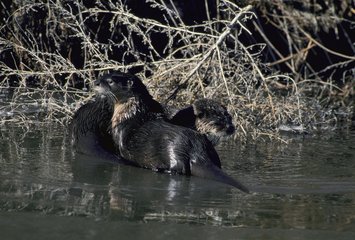
Introduction
The North American river otter, Lontra canadensis, is one of the most playful and ecologically important predators in freshwater ecosystems across the continent. Known for its boundless energy, fluid swimming ability, and often irreverent behavior, the river otter is a favorite of wildlife enthusiasts. Its sleek, streamlined body, webbed feet, and water-repellent fur make it one of the most efficient aquatic hunters in North America, while on land it moves with surprising agility. The river otter is equally comfortable on land and in water, unlike the sea otter, which rarely comes ashore. Today the river otter is a conservation success story, having recovered significantly from near-extirpation due to the fur trade.
Taxonomy
Lontra canadensis belongs to the family Mustelidae, a large group that includes weasels, ferrets, minks, wolverines, and badgers. The genus Lontra comprises four recognized species of New World otters distributed from southern Canada through Central and South America. The North American river otter is thought to have diverged from its closest relative, the marine otter (Lontra provocax) of southern South America, approximately 1 to 2 million years ago. The river otter exemplifies the family’s evolutionary flexibility from a terrestrial to a semiaquatic lifestyle.
Physical Characteristics
The river otter has a sleek, streamlined body built for efficient swimming, with adults measuring 90 to 130 centimeters in total length, including the thick, tapering tail that accounts for roughly one-third of that length. Males typically weigh 5 to 14 kilograms, females 4 to 9 kilograms. The fur is dark brown on the back and lighter grayish-brown on the belly. The undercoat is remarkably dense, with approximately 50,000 to 60,000 hairs per square centimeter, providing exceptional insulation. The tail serves as a powerful rudder during swimming, and the feet are webbed between all five toes. Like the sea otter, river otters have sensitive whiskers that detect water movements created by swimming fish.
Habitat
River otters require clean, well-oxygenated water bodies with abundant prey and suitable resting sites. They are found in rivers, streams, lakes, ponds, marshes, and coastal marine environments across most of North America, from the Arctic tundra of Alaska to the subtropical wetlands of Florida. The species prefers areas with complex shorelines including fallen trees, root masses, and dense vegetation. River otters do not dig their own dens but readily use burrows excavated by beavers, or natural cavities among tree roots and undercut riverbanks.
Diet
The river otter is a carnivorous predator with a strong preference for live fish, which typically comprise 70 to 90 percent of its diet. A wide variety of fish are consumed, from small minnows and sunfish to larger catfish, suckers, and carp. The river otter hunts primarily by chasing prey underwater, using excellent swimming ability and sensitive whiskers. An adult river otter consumes approximately 1 to 1.5 kilograms of food per day. When fish are scarce, river otters supplement their diet with crayfish, crabs, frogs, turtles, aquatic insects, water birds, and small mammals. Like the raccoon, river otters are highly opportunistic feeders.
Reproduction
River otters are polygynous, with males typically mating with multiple females during a breeding season that peaks in late winter or early spring. Like many mustelids, river otters exhibit delayed implantation, whereby the fertilized egg enters a period of dormancy lasting up to 8 months before implanting. This ensures pups are born during the most favorable season, typically spring, when prey is abundant. Litters typically number 1 to 4 pups, with 2 to 3 being most common. Newborns are born blind and helpless. The mother is solely responsible for raising the young, nursing them for 3 to 4 months while gradually introducing solid food. Like young wolverines, river otter pups are taught to swim by their mother.
Conservation
The North American river otter was nearly extirpated from large portions of its range during the peak of the North American fur trade, when hundreds of thousands were harvested annually for their dense fur. Beginning in the 1970s and 1980s, coordinated reintroduction programs led by state wildlife agencies successfully reestablished river otter populations across much of the eastern United States. These efforts are among the most successful wildlife restoration programs in North America. Today, river otter populations are stable and abundant in many regions.
Fun Facts
River otters are renowned for their playful behavior, including repeated sliding down muddy or icy riverbanks, playing with objects, and mock fighting. These activities are thought to hone hunting skills, establish social hierarchies, and strengthen social bonds. A well-established river otter slide appears as a smooth, polished patch of mud running down an embankment to the water’s edge. River otters can close their ears and nostrils underwater while their eyes remain functional, allowing productive foraging beneath ice during winter.
[…] Molecular studies place it as sister to the smooth-coated otter (Lutrogale perspicillata), with the river otter as a more distant relative within the otter […]