 By st20113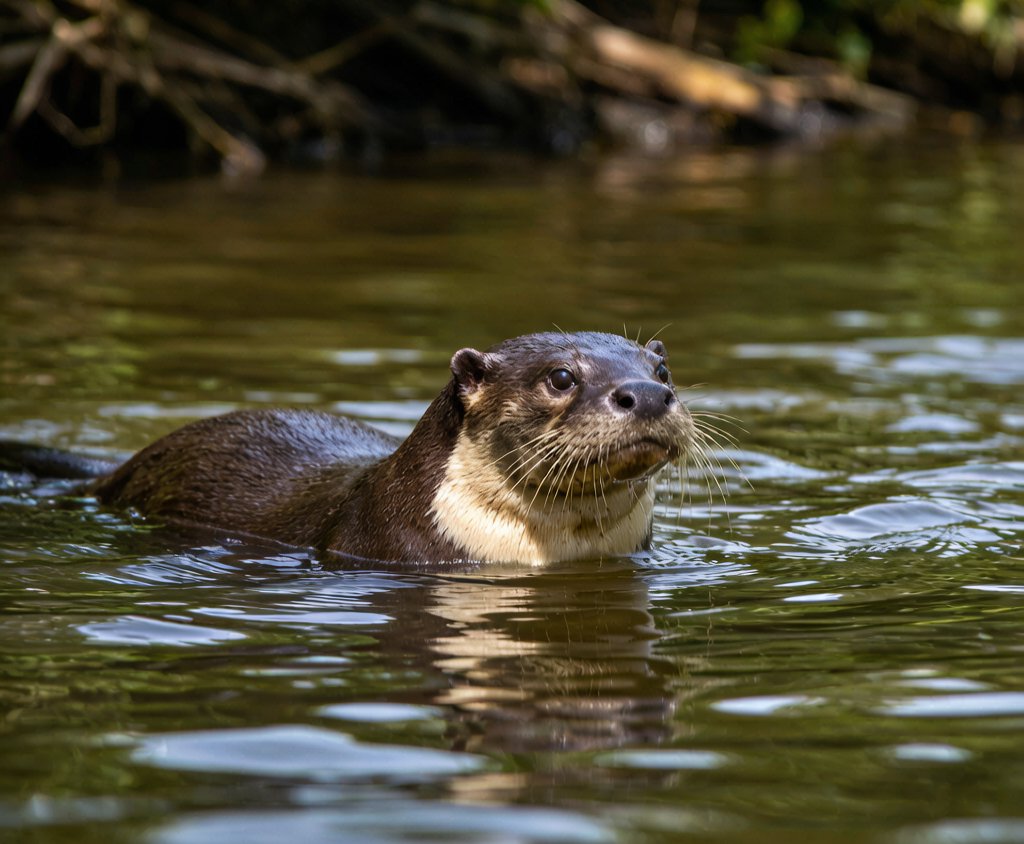
Introduction
The giant otter (Pteronura brasiliensis) is the longest member of the weasel family, reaching lengths of up to 1.8 metres from nose to tail tip. Native to the freshwater rivers, lakes, and seasonally flooded forests of South America, this highly social creature is one of the most vocal and playful of all otter species. Despite its imposing size and aquatic prowess, the giant otter remains vulnerable to human encroachment and is classified as Endangered by the IUCN. Its striking cream-coloured throat patches and its reputation as a fierce apex predator make it one of the most remarkable mammals of the Amazon basin.
Taxonomy
The giant otter is the sole member of the genus Pteronura, belonging to the subfamily Lutrinae within the family Mustelidae. The species was first formally described by the Austrian naturalist Georgina in 1777. No subspecies are currently recognized, although regional populations display subtle variations in skull morphology and coat colour. Molecular studies place it as sister to the smooth-coated otter (Lutrogale perspicillata), with the river otter as a more distant relative within the otter subfamily.
Physical Characteristics
Adult giant otters weigh between 26 and 35 kilograms, with males averaging slightly heavier than females. Their streamlined, cylindrical body is covered in a dense, velvety coat of rich dark-brown fur that appears almost black when wet. The single most diagnostic feature is the distinctive creamy-white to golden patch that covers the throat, chin, and upper chest, displaying a unique pattern in every individual — much like a human fingerprint. Their eyes are large and round, providing excellent underwater vision. They possess short, powerful limbs with partially webbed toes, and their tail, the broadest of any otter species, serves as a powerful rudder during swimming.
Habitat
Giant otters inhabit the calm backwaters, oxbow lakes, flooded forests, and slow-moving rivers of the Amazon and Orinoco basins across nine South American countries. They require clean, well-oxygenated water bodies with abundant fish populations and adjacent undisturbed riverbank vegetation for creating communal dens. These den sites, called holts, are excavated into riverbanks and can extend several metres underground, with multiple entrance holes below the waterline. Seasonal flooding shapes their habitat use dramatically, with family groups moving between permanent water bodies and temporarily flooded forest areas throughout the year.
Diet
As apex aquatic predators, giant otters feed almost exclusively on fish, including cichlids, characins, catfish, and electric eels. Their diet is opportunistic, shifting seasonally with fish abundance. An adult giant otter consumes approximately 3 to 4 kilograms of fish daily. Uniquely among otter species worldwide, they are strictly diurnal hunters that work cooperatively in family groups, coordinating underwater pursuit of fish in a behaviour reminiscent of wolf pack hunting. Each individual can consume up to 10 percent of its body weight in food per day during periods of high activity.
Reproduction
Giant otters form monogamous pair bonds that are maintained for life, living in stable family groups of two to ten individuals that include the breeding pair, their offspring of multiple years, and occasionally adopted young. Breeding typically occurs during the dry season, with a single litter of one to five pups born after a gestation of about 65 days. Both parents, along with older siblings, participate actively in pup-rearing. Cubs are born blind and helpless, beginning to open their eyes at around one month of age and learning to swim confidently by three months under the close supervision of all family members.
Conservation
Classified as Endangered by the IUCN, giant otter populations have declined by more than 30 percent over the past 15 years across their range. The primary threats include gold mining operations that pollute rivers with mercury, large hydroelectric dams that fragment habitat and alter flood cycles, accidental entanglement in fishing nets, and direct persecution by fish farmers who view them as competitors. Conservation programs in Brazil, Peru, and Suriname have successfully protected several key populations within national parks and indigenous territories, providing hope for the species’ long-term survival.
Fun Facts
Giant otters produce at least 22 distinct vocalizations, including a loud “percussive” splash used as an alarm call and a unique contact call described as a wah sound that family members use to maintain cohesion during group hunts. Each individual has a unique throat patch pattern, allowing researchers to identify and track specific animals non-invasively. They are known to spend hours each day grooming their fur meticulously, working from head to tail to maintain the waterproofing properties essential for their aquatic lifestyle.