 By st20113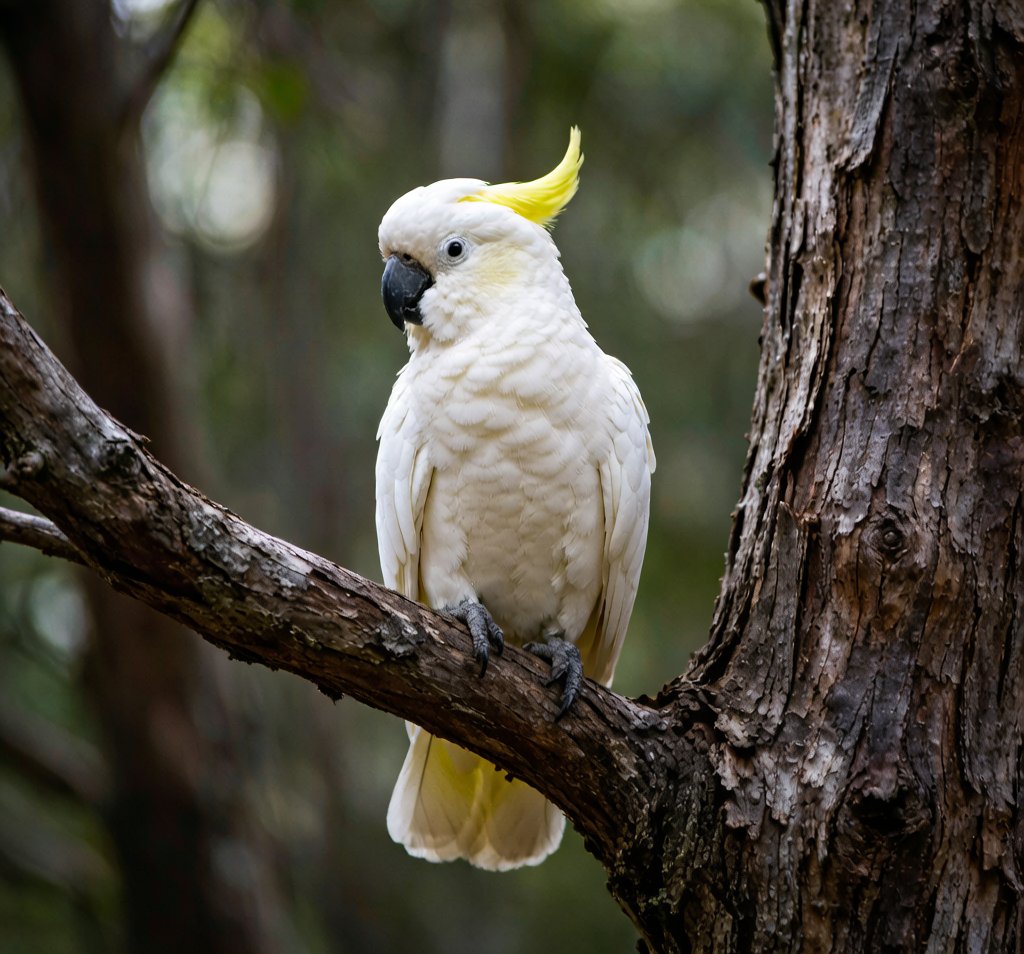
Introduction
The sulphur-crested cockatoo (Cacatua galerita) is one of Australia’s most iconic and intelligent birds—a large, long-lived parrot instantly recognizable by its brilliant white plumage and spectacular forward-curving sulphur-yellow crest. Found across northern and eastern Australia, New Guinea, and nearby islands, this charismatic species inhabits diverse environments from dense rainforest to open savanna and has even thrived in major cities like Sydney and Melbourne. Known for its loud, harsh calls, playful personality, and impressive ability to mimic human speech, the sulphur-crested cockatoo is beloved by bird enthusiasts worldwide while simultaneously being regarded as an agricultural and urban pest in parts of its range.
Taxonomy
Cacatua galerita belongs to the family Cacatuidae, the cockatoos, which form a distinct lineage within the order Psittaciformes, the parrots. The species was first formally described by the Dutch zoologist Coenraad Jacob Temminck in 1849. Four subspecies are currently recognized: the greater sulphur-crested cockatoo (C. g. galerita) of eastern Australia, the Triton cockatoo (C. g. triton) of New Guinea, the Eleonora cockatoo (C. g. eleonora) of the Aru Islands, and the Timor cockatoo (C. g. fitzroyi) of northern Australia. The genus name Cacatua derives from the Malay word for cockatoo, while galerita means “wearing a hat” in Latin, a poetic reference to the raised yellow crest resembling a crown.
Physical Characteristics
The sulphur-crested cockatoo is a large parrot, measuring 44–55 cm in length and weighing 800–1,000 grams, with females slightly larger than males. Its plumage is predominantly pure white, with yellow washes on the undersides of wings and tail visible in flight. The crown and crest are striking sulphur yellow, raised in moments of excitement, alarm, or social display. The powerful beak is dark gray to black, shaped so the upper mandible curves over the lower to create an almost hook-like tool capable of cracking the hardest seeds and tree nuts. Like the red fox, which uses its paws with surprising dexterity, the cockatoo’s zygodactyl feet—two toes forward, two backward—provide exceptional grip for climbing, manipulating objects, and holding food while eating.
Habitat
Sulphur-crested cockatoos occupy a remarkable range of habitats including tropical and temperate forests, monsoon woodlands, savannas, agricultural lands, and urban parks. In Australia, they are most strongly associated with open eucalyptus woodland and forest edges, where large hollow-bearing trees provide critical nesting sites. They have proven remarkably adaptable to urban environments, forming large noisy flocks in many Australian cities, roosting in palm trees, raiding garden bird feeders, and chewing on wooden structures with destructive enthusiasm. The availability of large tree hollows is a critical limiting factor, and competition for these limited resources with bears and other hollow-nesting species can be intense in some regions.
Diet
The diet of the sulphur-crested cockatoo is primarily herbivorous, centered on seeds, nuts, berries, fruits, roots, and leaf buds. They are particularly fond of native grass seeds, which they extract with their powerful beaks while hanging acrobatically from grass heads. In agricultural areas, they cause significant damage to ripening corn, sunflower, sorghum, and fruit crops, bringing them into direct conflict with farmers. Cockatoos drink water daily, often gathering in large numbers at watering holes. Foraging is highly social—birds call to each other as they feed, with sentinels watching for predators while others eat.
Reproduction
Sulphur-crested cockatoos are monogamous and form lifelong pair bonds that persist year-round. They nest in large tree hollows, preferably in eucalyptus or paperbark trees, lining the cavity with wood chips and bark. The female lays 1–3 eggs and incubates them alone for approximately 25–27 days while the male feeds her. Both parents regurgitate food for hatchlings, which remain in the nest for 60–70 days after hatching. The extended parental care period means pairs typically breed only every two years in the wild. Like the cheetah, which also invests heavily in few offspring over extended periods, this reproductive strategy reflects the high value of each offspring in a long-lived species.
Conservation
The sulphur-crested cockatoo is listed as a species of Least Concern, with populations estimated in the millions across its range. However, localized threats are significant. Destruction of old-growth forest reduces the availability of large nesting hollows, particularly in agricultural landscapes. Illegal trapping for the avicultural trade, though reduced by CITES Appendix II restrictions, still occurs. Conservation strategies focus on preserving large hollow-bearing trees, installing nest boxes where natural hollows are scarce, and public education about the species’ ecological role as seed dispersers.
Fun Facts
Sulphur-crested cockatoos are world-renowned for their intelligence and vocal mimicry, learning not only human speech but also telephone ring tones, car alarms, chain saws, and the calls of other bird species. In a remarkable example of urban animal innovation, some city cockatoo populations have learned to open residential trash bin lids using their beaks and feet—a technique that has spread to other birds through social learning, a striking example of animal cultural transmission in real time. Like the African elephant, which shapes its environment by dispersing seeds across vast distances, cockatoos play a significant role as seed dispersers in their native ecosystems. Like the blue whale, which uses low-frequency sounds to communicate across ocean basins, the cockatoo’s loud calls carry several kilometers through forest canopy.